Before the name Uncle Sam became a familiar face in American cartoons, it was already a nickname people used for the United States government. A Library of Congress folklorist points to two records that push the name’s documented history earlier than the popular Samuel Wilson story: an 1803 letter from a government arms inspector and an 1810 journal entry by a U.S. Navy midshipman.
A nickname in an armorer’s letter
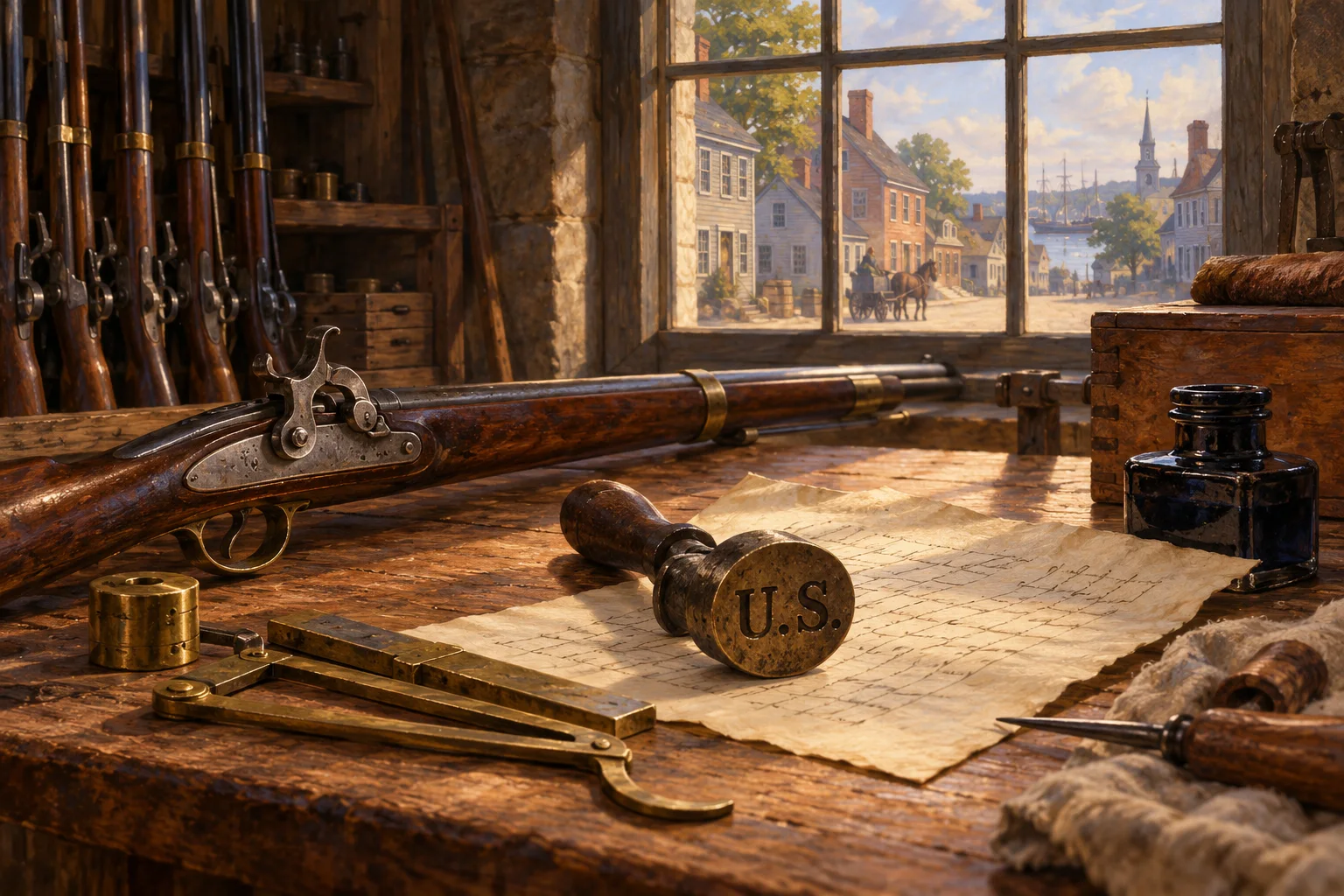
On June 7, 1803, Massachusetts master armorer Robert Orr wrote to his son about a planned trip to New Haven. Orr expected to inspect rifles being made by Eli Whitney “for Unkel Sam 500,” according to the letter quoted by Library of Congress folklife specialist Stephen Winick. The context identifies “Unkel Sam” with the United States government, which had contracted for the firearms.
Orr’s casual wording is the clue. He offered the phrase as something already understood, rather than explaining a new joke. The letter therefore gives researchers an early, dated example of the nickname in use. Winick notes that Orr regularly inspected batches of rifles and that surviving Whitney rifles carry his “US–ORR” inspection stamp.
A sailor’s journal adds another early example
Seven years later, Midshipman Isaac Mayo used the nickname in a private journal entry about a rough passage at sea. Writing in March 1810, Mayo joked that “Uncle Sam, as they call him” would lose the services of at least one sailor if Mayo could have reached shore. The phrase “as they call him” similarly presents the name as familiar language.
Newspaper references from 1812 and an 1816 explanation involving “Uncle Sam’s Lazy Dogs” add more pieces to the record. Together, these dated appearances show the name circulating before the familiar story tied it to Samuel Wilson, a meat supplier whose government contracts began in 1813.
How the later origin story took shape
The Wilson account remains one of America’s best-known nickname stories. In the familiar version, workers connected “U.S.” markings on government provisions to Wilson’s initials and began calling the supplies “Uncle Sam’s.” The earliest surviving published account linking the name to Wilson appeared in 1830, decades after the 1803 letter and the 1810 journal entry.
Winick offers a possible explanation: government inspectors and other workers may already have used “Uncle Sam” as occupational folklore. A later observer who heard an inspector use the phrase around Wilson’s supplies could have understood it as a fresh joke about the contractor. That interpretation is a hypothesis, Winick says, rather than a settled account of how the nickname began.
A name with room for an unfinished origin
The records give the nickname a firm early footprint while leaving its first moment open. Robert Orr’s letter places “Unkel Sam” in 1803; Isaac Mayo’s journal shows it in use in 1810; later accounts help explain how the Samuel Wilson story joined the tradition. The name’s history is a small example of folklore at work: a phrase can travel through everyday speech long before a printed story gives it a memorable origin.
Sources: The Library of Congress’s Folklife Today series traces the early references and compares the competing origin stories. The institution’s America 250 collection also summarizes the evidence for the nickname’s early use.