A Congreve rolling-ball clock makes time feel tangible. A polished steel ball travels a zigzag path across a gently tilting brass tray; each arrival at the end of the course triggers the tray’s return journey and advances the clockwork.
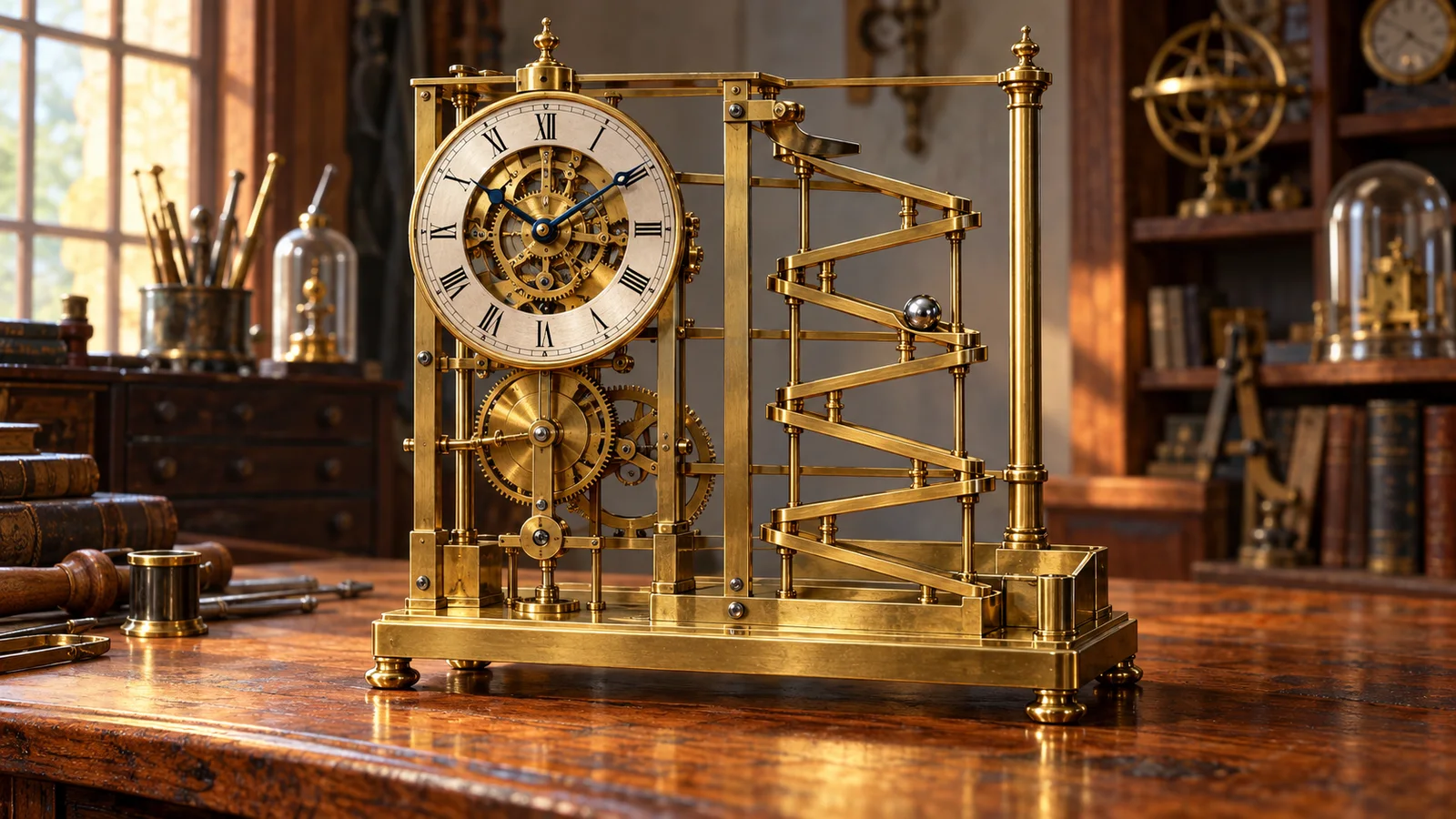
The form is associated with Sir William Congreve, whose rolling-ball clock design received a patent in 1808. The National Museums Scotland preserves a related clock made by Edinburgh clockmaker Robert Bryson in 1804, a detail that gives the mechanism an especially intriguing paper trail. The museum explains that Congreve claimed credit for the design and patented it four years later.
A ball, a lever, and a tilting track
Its moving parts turn a familiar clock principle into a miniature performance. The steel ball rolls through the track’s turns until it reaches a lever. That action releases the mechanism that tips the platform the other way, sending the ball back along the same route. Each trip also moves the hands forward. National Museums Scotland describes its example as advancing by 15 seconds on each pass, 5,760 times in a day.
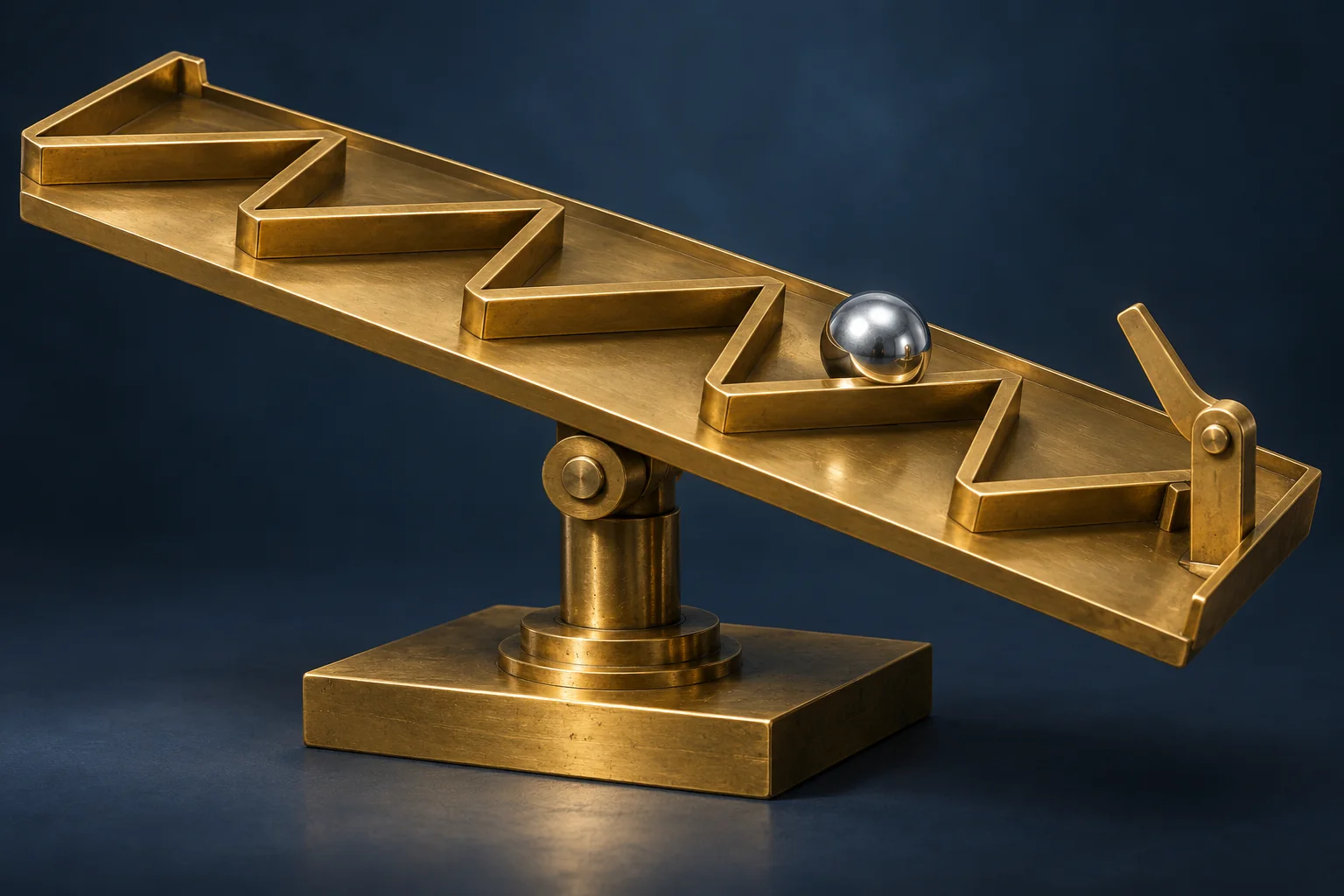
The Science Museum Group Collection records the same essential sequence in a later rolling-ball clock: a plate can tilt after the ball reaches the end and releases a catch. Its catalogue estimates that the ball in that design travels 2,522 miles over a year.
Precision asks for patience
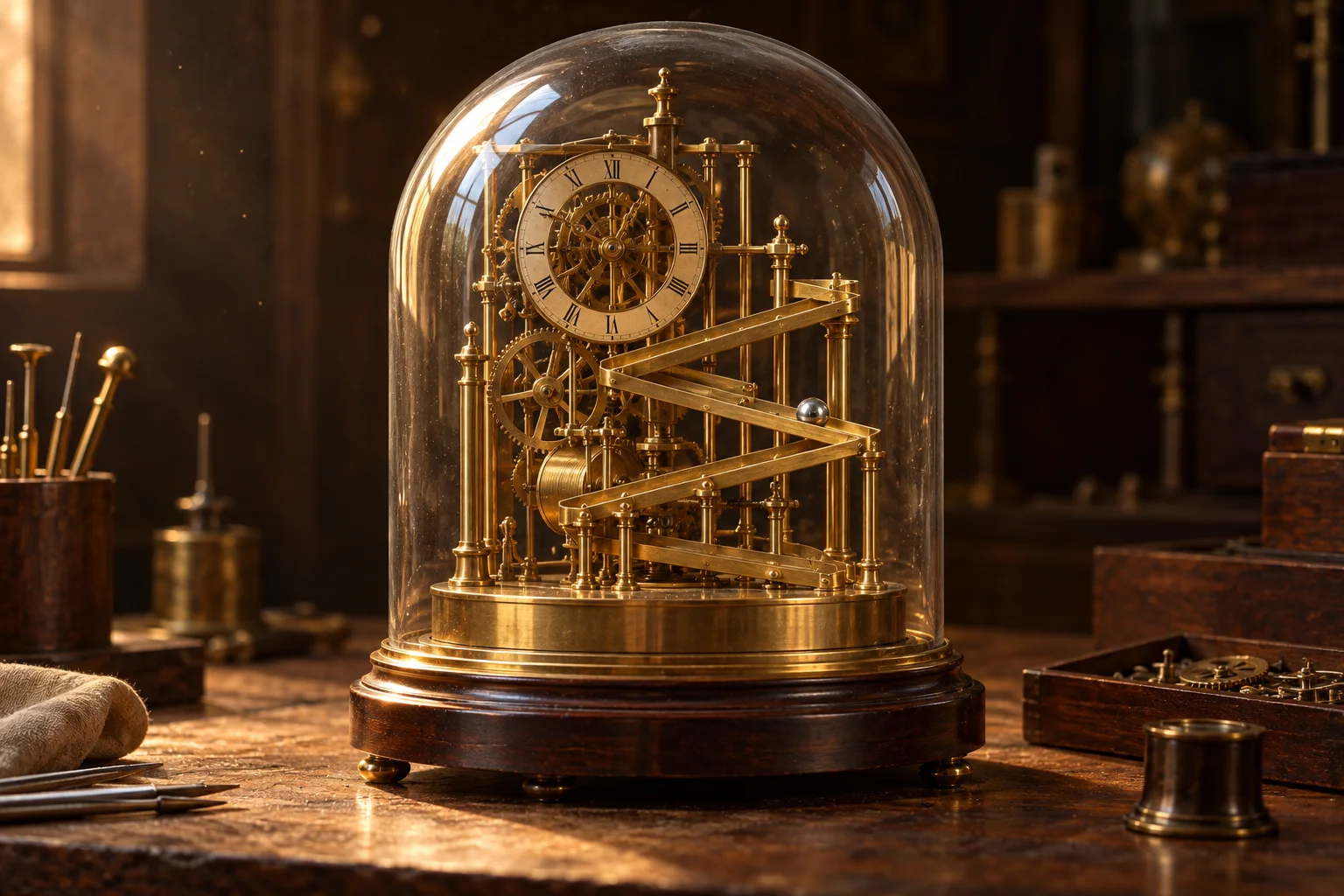
The visual charm comes with a demanding maintenance routine. A tiny trace of dust changes the ball’s movement; temperature changes alter the dimensions of the metal track and ball. National Museums Scotland’s conservation account records how those details could shift a clock’s daily result by minutes or much more. The mechanism rewards steady conditions, careful adjustment, and a close eye.
That sensitivity helps explain why rolling-ball clocks remain such memorable objects. They convert a quiet, unseen measure of time into a visible journey: a small steel sphere crossing brass turns, one measured trip after another.
Leave a Reply