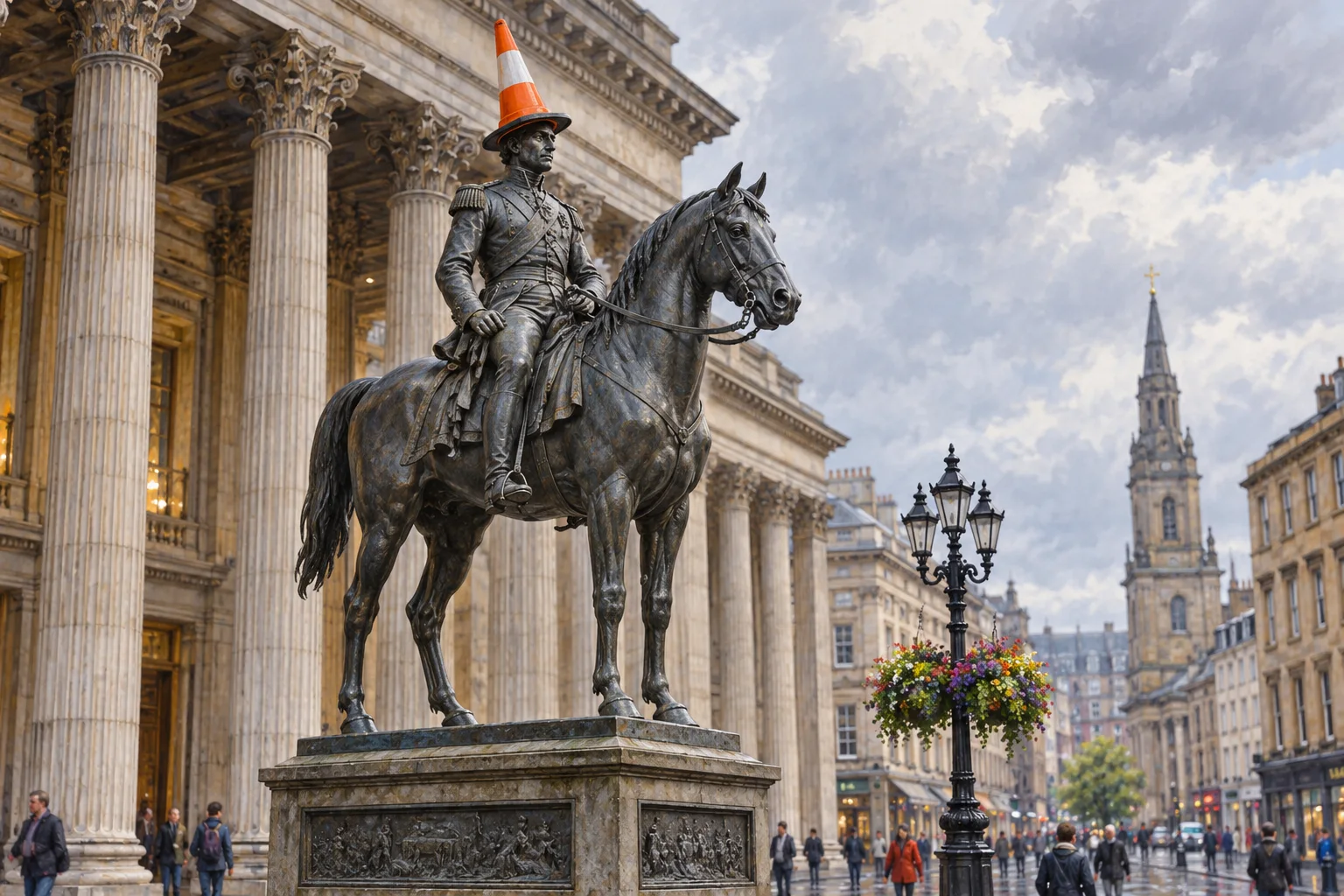
Outside Glasgow’s Gallery of Modern Art, the Duke of Wellington rides through the city centre with a bright orange traffic cone balanced on his head. The scene is instantly recognizable: a bronze monument, a royal square, and one cheerful flash of street humor.
The statue was created by Carlo Marochetti and has stood at Royal Exchange Square since 1844. Its rider, Arthur Wellesley, the first Duke of Wellington, became a familiar Glasgow landmark long before the cone joined the picture. Today the gallery’s own team describes the cone-topped statue as a local landmark and a point of reference for visitors.
A custom with a hazy first chapter
The first cone’s identity remains an open question in Glasgow’s historical record. In a 2025 study for the Review of Scottish Culture, folklorist Joel Conn records accounts that reach back to the 1970s and 1980s, alongside firmer evidence that cones were appearing by the late 1990s. That careful distinction gives the custom its folk character: people remember different beginnings, while the traceable story grows clearer over time.
The cone drew public attention by 2000, when a regional tourism board removed it from a promotional photograph. Glasgow’s then-Lord Provost defended the image as an expression of the city’s mix of culture and humor. Other civic voices favored a more formal view of the monument. The exchange captured the custom’s central tension: a prank could also become a shared city symbol.
From street joke to civic emblem
As the cone appeared on postcards, shirts, and travel material, Glasgow’s relationship with it shifted. Conn’s study follows the practice through years of removal efforts, local debate, and official campaigns that began using the image themselves. A 2013 plan to raise the statue’s plinth to 1.8 meters prompted a public backlash, and the council withdrew the planning application within days.
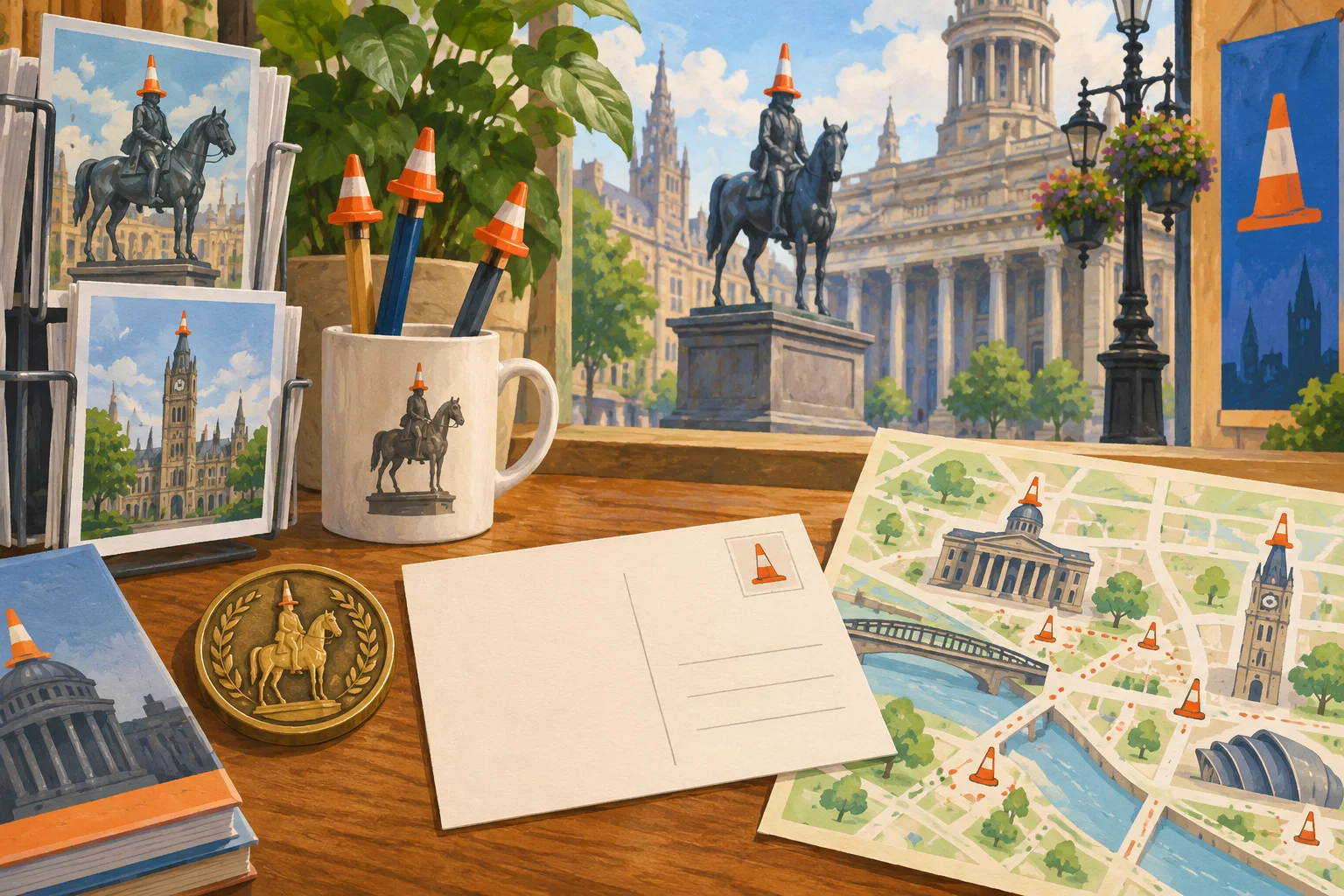
In 2014, a glowing-cone version of the statue appeared in the Commonwealth Games opening ceremony. Since then, the motif has found a place in city branding, artwork, and souvenirs. Glasgow Life’s museums even devoted a segment of their Curious City podcast to the question, “Why does the Duke of Wellington always wear a traffic cone?”
A landmark people make together
The cone’s appeal lies in its scale. It turns a grand monument into a small, repeatable joke that visitors can recognize and residents can claim as their own. Conn’s research describes how the image travelled from a folk act into a flexible emblem used across Glasgow’s public life.
Preservation and visitor safety remain part of the story: placing anything on the statue involves a climb, and the bronze deserves careful stewardship. The custom’s most durable home is now the idea it carries—Glasgow’s willingness to meet civic grandeur with an unmistakably human wink.
Leave a Reply