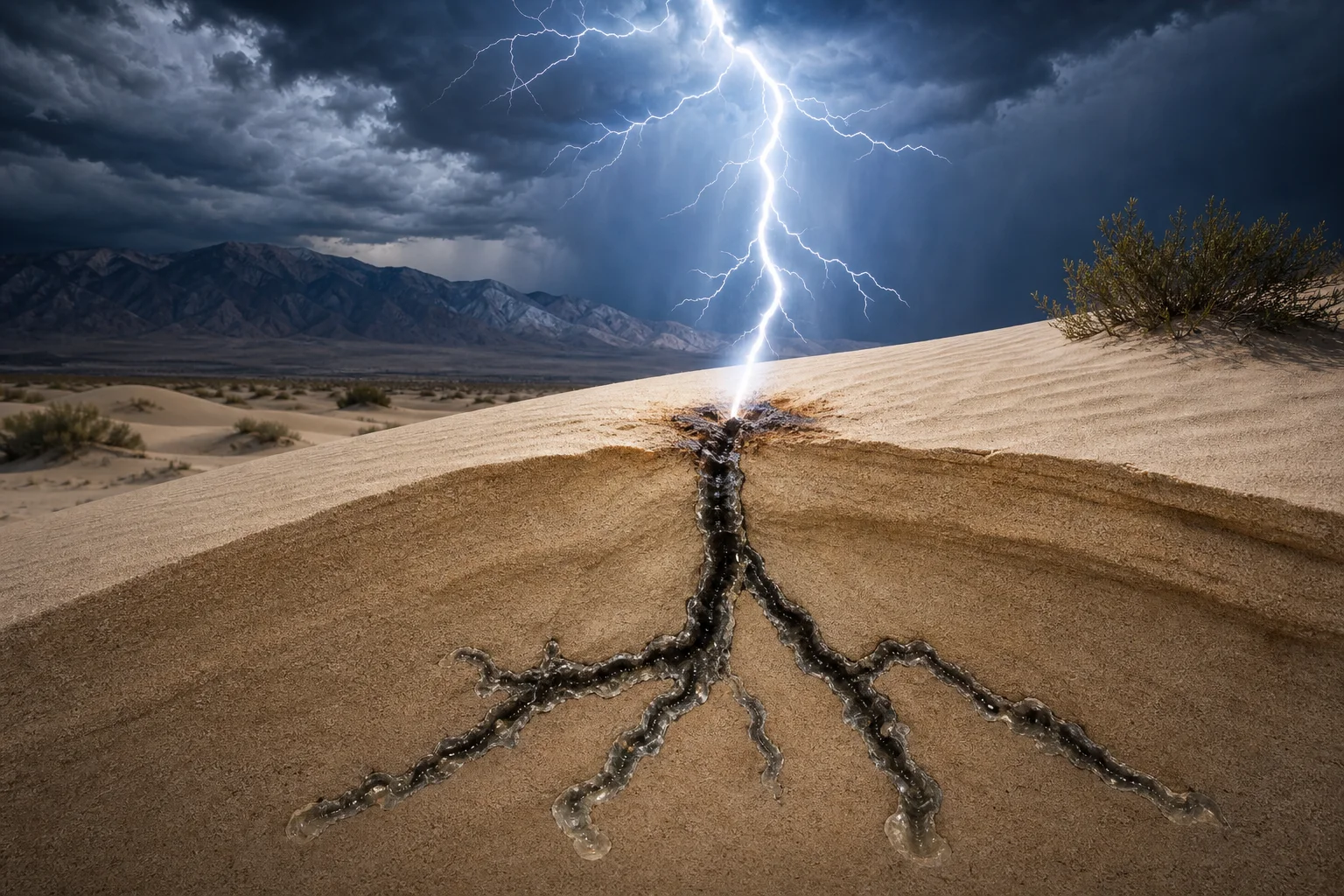
Editorial illustration
A thunderstorm can leave behind something that looks more like a root, a burnt twig, or an artifact from a fantasy film than a mineral. It is called a fulgurite: a fragile tube or branching mass of natural glass made when lightning strikes suitable ground.
The usual version begins in sand. A bolt delivers an enormous burst of energy along a narrow path, melting the grains around it. As that material cools, it can preserve the bolt’s underground route as a dark, rough-walled tube. At Great Sand Dunes National Park and Preserve, the National Park Service describes fulgurites as blackish glass tubes formed when lightning strikes the dunes.
A lightning strike, preserved below the surface
Fulgurites are often found after erosion exposes them, which helps explain their odd silhouette. The central channel may be hollow, while the outside can retain grains of sand fused into a craggy skin. Some specimens branch. That is a visual echo of the way electrical paths can split through the ground, not evidence that the material grew there over time.
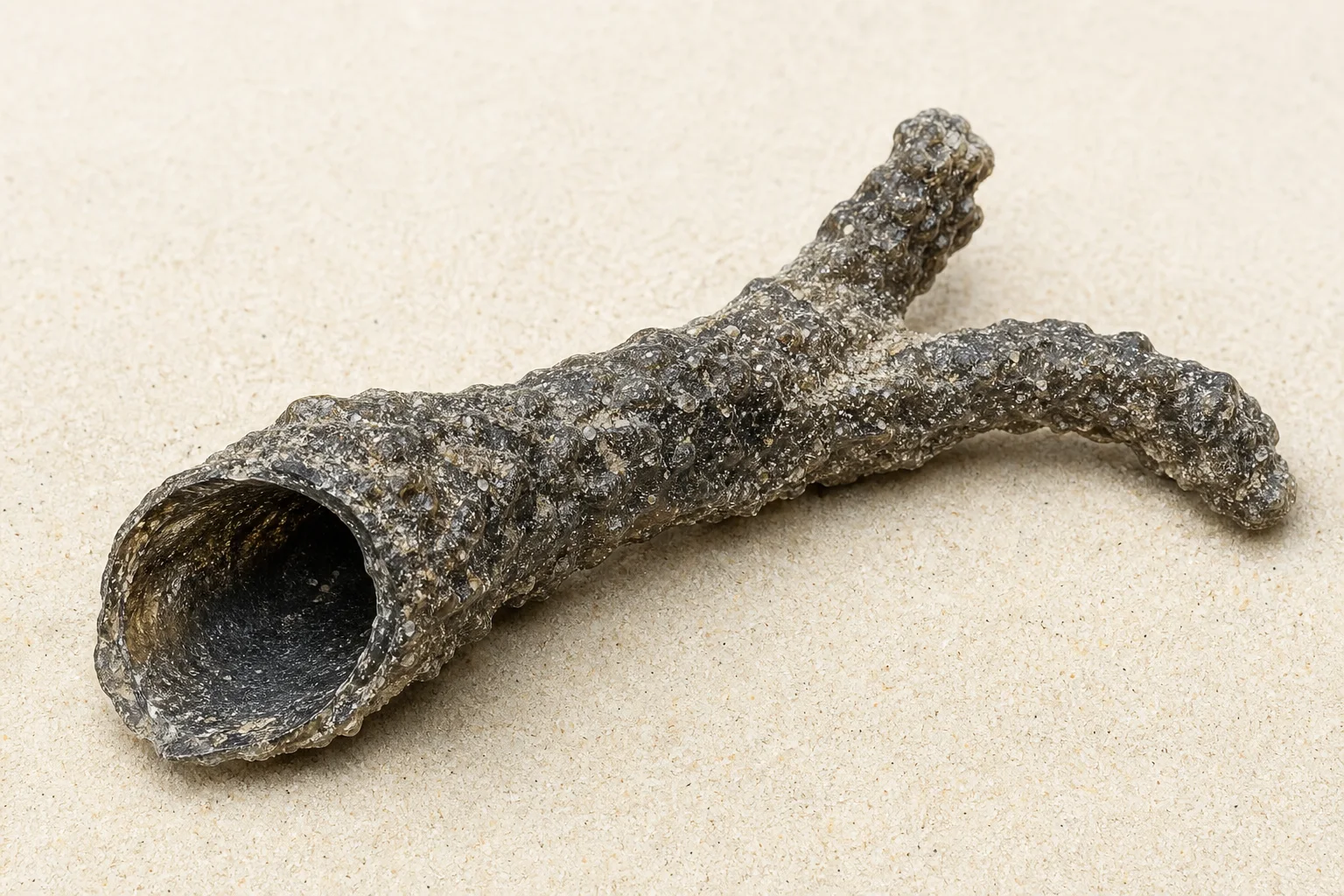
Sand is not the only starting material. The Smithsonian National Museum of Natural History maintains a fulgurite collection that includes both rock and sand specimens struck by lightning. Its collections overview also distinguishes pseudofulgurites: glassy material made by other intense heat sources, including burning coal seams and downed power lines. In other words, a dramatic-looking glassy tube needs context before it can be confidently identified as a lightning relic.
Why they do not look like ordinary glass
Window glass is manufactured from a carefully controlled melt. A fulgurite is the opposite: an instant, uneven melt of whatever mineral mixture was already present in one small patch of ground. That is why color, thickness, texture, and branching can vary so much from one specimen to another. A specimen formed in quartz-rich sand can look different from one made where lightning fused solid rock.
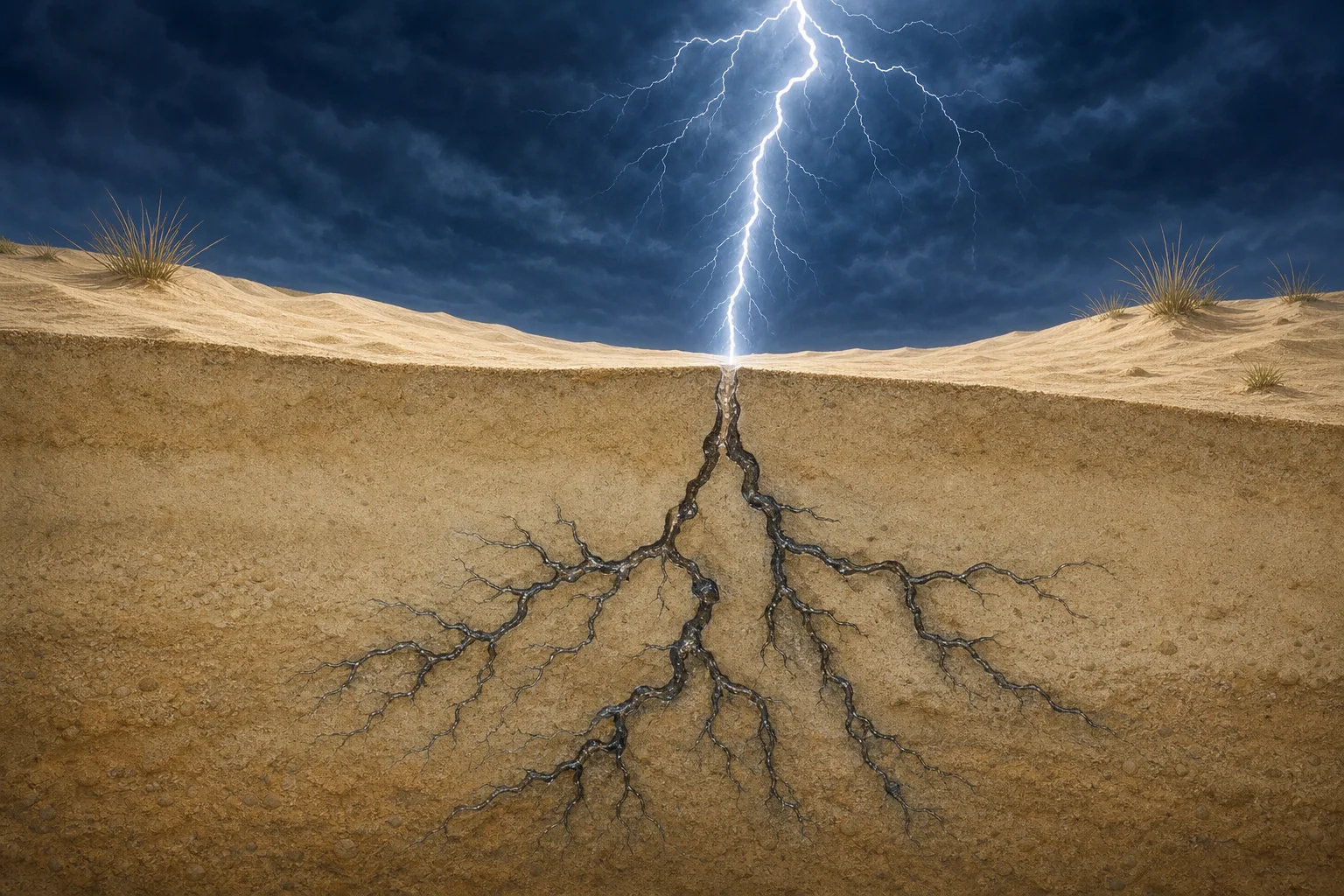
They are also easy to break. What survives is only a fraction of a very fast event, then exposed to shifting sand, water, weather, and curious hands. That fragility is part of the appeal: a fulgurite is a physical trace of a moment that lasted only an instant.
Look, do not collect
The strange part of a fulgurite is not that lightning can melt material. It is that the result can remain recognizable after the storm is gone. But it is not a reason to chase thunderstorms or dig into dunes. The National Park Service warns visitors at Great Sand Dunes to come down from the dunes when storms approach, and says fulgurites there should be left in place because park resources are protected for future visitors.
So the best way to appreciate a fulgurite may be the least dramatic one: after the weather is safely past, learn how to recognize the phenomenon, enjoy documented examples, and leave protected finds where their story can continue.
Leave a Reply