In Alaska, one mountain tunnel switches between rail and road traffic. The Anton Anderson Memorial Tunnel reaches Whittier through Maynard Mountain, and its single lane serves cars and trains in scheduled turns. A rail line runs directly beneath the roadway, giving the passage a rare double life.
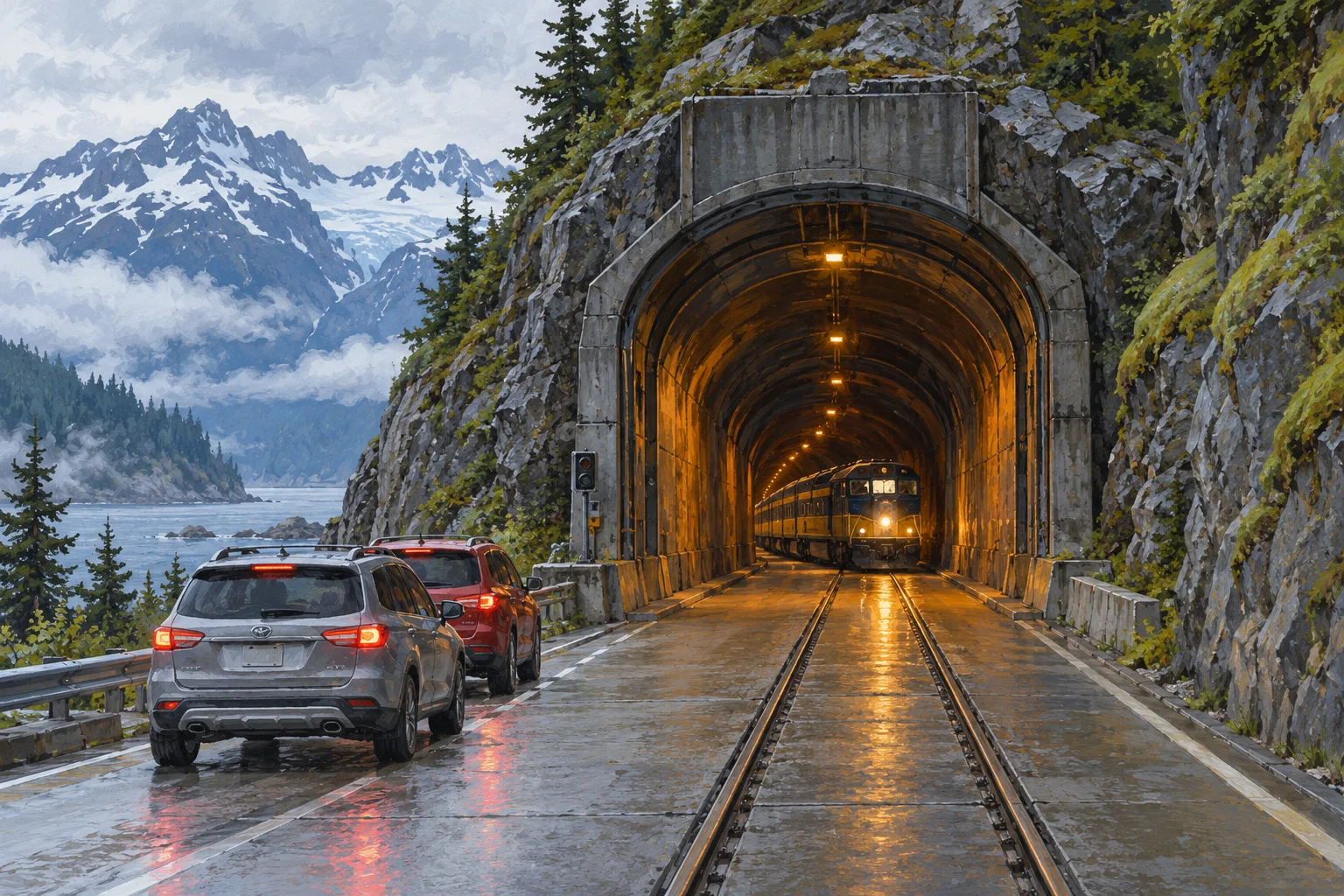
A wartime rail link through the mountain
The route began as a railroad project. In 1941, the U.S. Army started building a rail spur between Whittier and Portage, with Army engineer Anton Anderson leading the work. The line connected a deep-water port on Prince William Sound to Alaska’s rail network. Workers completed the spur on April 23, 1943; it included a 2.5-mile tunnel through Maynard Mountain.
The Alaska Department of Transportation’s project history describes Whittier’s role as a supply link during World War II. The tunnel later carried rail traffic while Whittier developed as a port and community.
Turning a railroad tunnel into a road
For decades, the railroad helped vehicles cross the mountain by loading them onto flatcars. A later highway project sought a more direct connection to Whittier. Rather than build a separate highway tunnel, engineers adapted the existing passage for alternating rail and vehicle use.
During the winter of 1998–1999, crews replaced the original rail ties and ballast with precast concrete driving panels. The panels fit around the rails, leaving the track flush with the roadway. According to the state’s virtual drive guide, this arrangement lets a single lane of automobiles travel over the railroad-track area, with trains and vehicles taking turns.
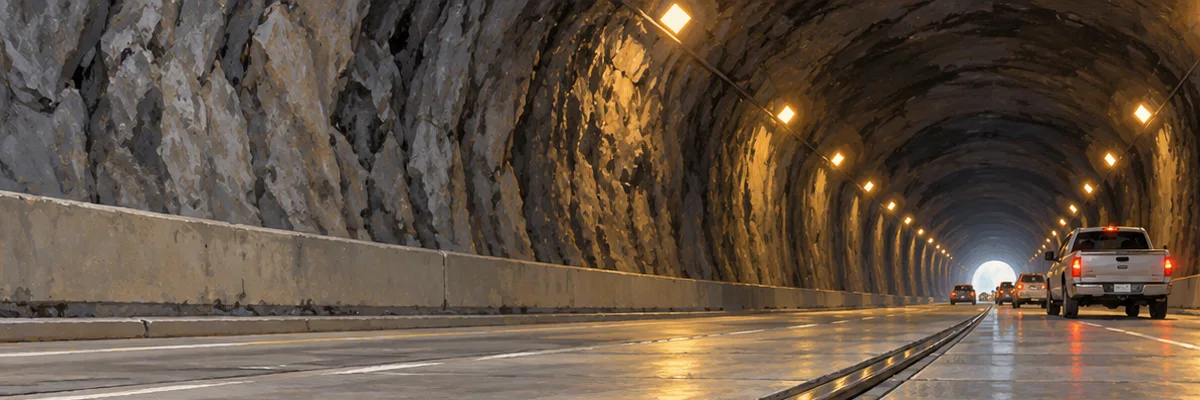
A timetable shared by cars and trains
At the tunnel’s staging areas, vehicles wait for their scheduled opening. Operators manage the direction and type of traffic so the narrow passage is used by one movement at a time. The state describes the tunnel as operating for highway use during much of the day, while rail service uses assigned periods.
That makes a trip through the mountain part of the engineering story: the roadway depends on the same corridor as the railroad, and the schedule coordinates both. The state’s frequently asked questions explain that the highway project was selected after engineering and economic studies as a cost-effective dual-use design.
A practical passage with an unusual second job
Today, the tunnel links Whittier with the Portage Glacier Highway. Its name honors Anton Anderson, the chief engineer whose work helped bring rail access to the port; the state dedicated the tunnel to him in 1976. One corridor now continues that connection by hosting two kinds of travel, with a roadway resting over the rails until the next train’s turn.
Leave a Reply