In Queen Maud Land, Antarctica, Lake Untersee holds a remarkable freshwater world beneath a lasting cover of ice. The lake’s clear water, unusual chemistry and cone-shaped microbial structures make it one of the planet’s most distinctive natural laboratories.
A lake beneath permanent ice
NASA’s Earth Observatory describes Lake Untersee as one of East Antarctica’s larger and deeper surface lakes. Its ice cover usually measures about two to four meters thick, creating a sheltered setting where the water’s chemistry develops on a very different timetable from an open lake.
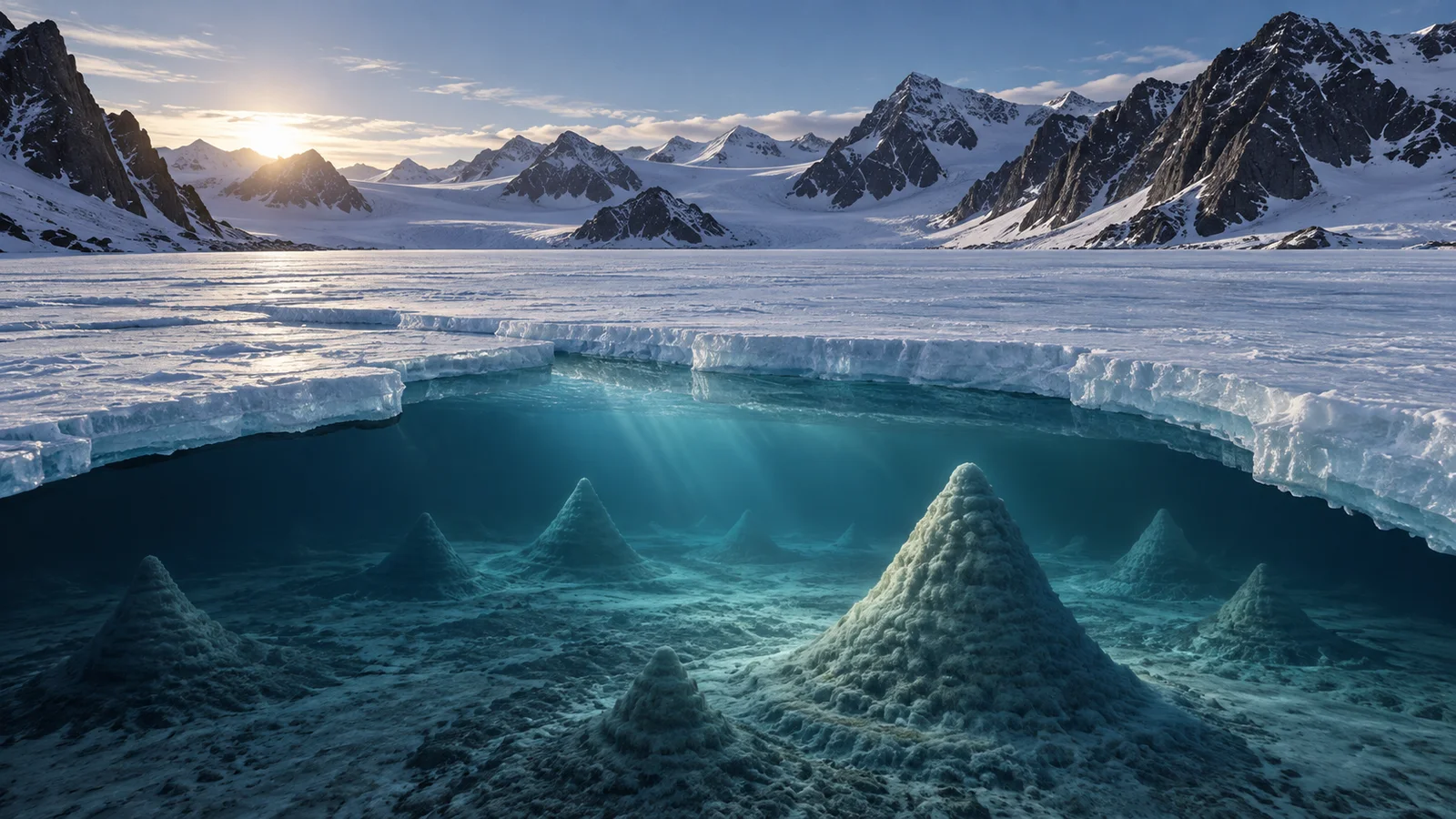
The lake sits in a cold, dry landscape, yet its water holds exceptionally high dissolved oxygen and methane, low dissolved carbon dioxide and a high pH. Those conditions give researchers a detailed setting for studying how microbial communities organize themselves in an extreme freshwater environment.
Cones assembled by microscopic life
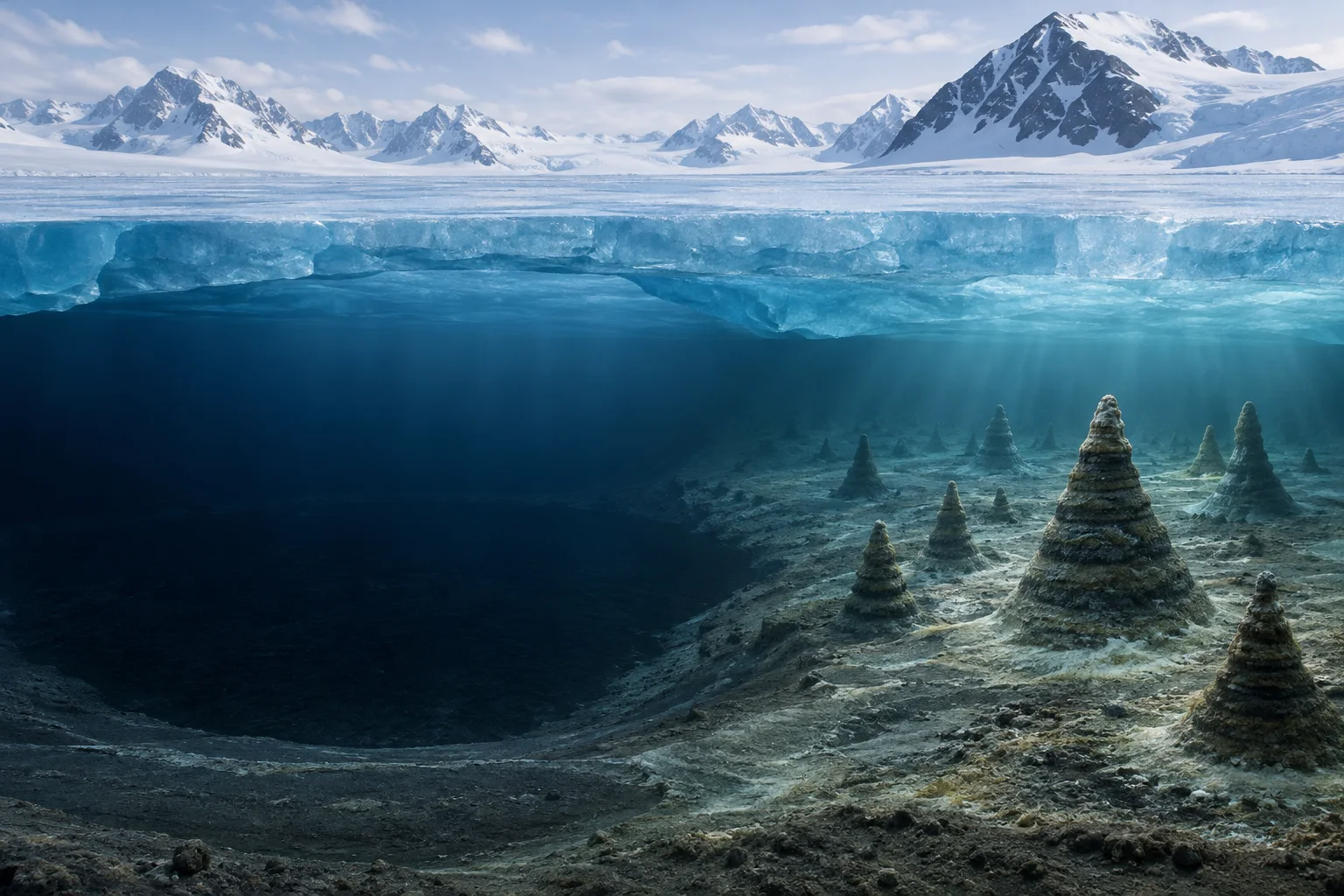
On the lake floor, photosynthetic microbial mats build layered structures that rise into large cones. NASA Astrobiology reported that researchers identified distinct microbial communities in the mats and that the conical forms resemble structures familiar from Earth’s ancient rock record.
The Natural History Museum’s StromatoLife project describes the cones as modern organo-sedimentary structures built from alternating layers of sediment and microbially derived organic material. Its researchers are examining the communities and processes that shape them, including the roles of cyanobacteria and other microorganisms.
One lake, several worlds
Lake Untersee contains sharply different habitats within a single basin. NASA’s research materials describe a clear, oxygen-rich water column alongside a deeper anoxic area where methane accumulates. The contrast helps scientists ask focused questions about how chemistry, light and microbial life interact in isolated water bodies.
That combination also gives the lake value beyond Antarctica. NASA and the Natural History Museum both discuss Lake Untersee as an analogue for ancient ice-covered lakes and icy environments elsewhere in the solar system. The comparison guides research questions about the conditions that can support microbial communities.
A slow-growing record of a strange place
The microbial cones provide a vivid answer to a familiar question: what can life build when it has time, light and a remarkably stable place to grow? At Lake Untersee, the answer rises from the lake floor in layers, beneath blue ice and a long Antarctic winter.
Leave a Reply