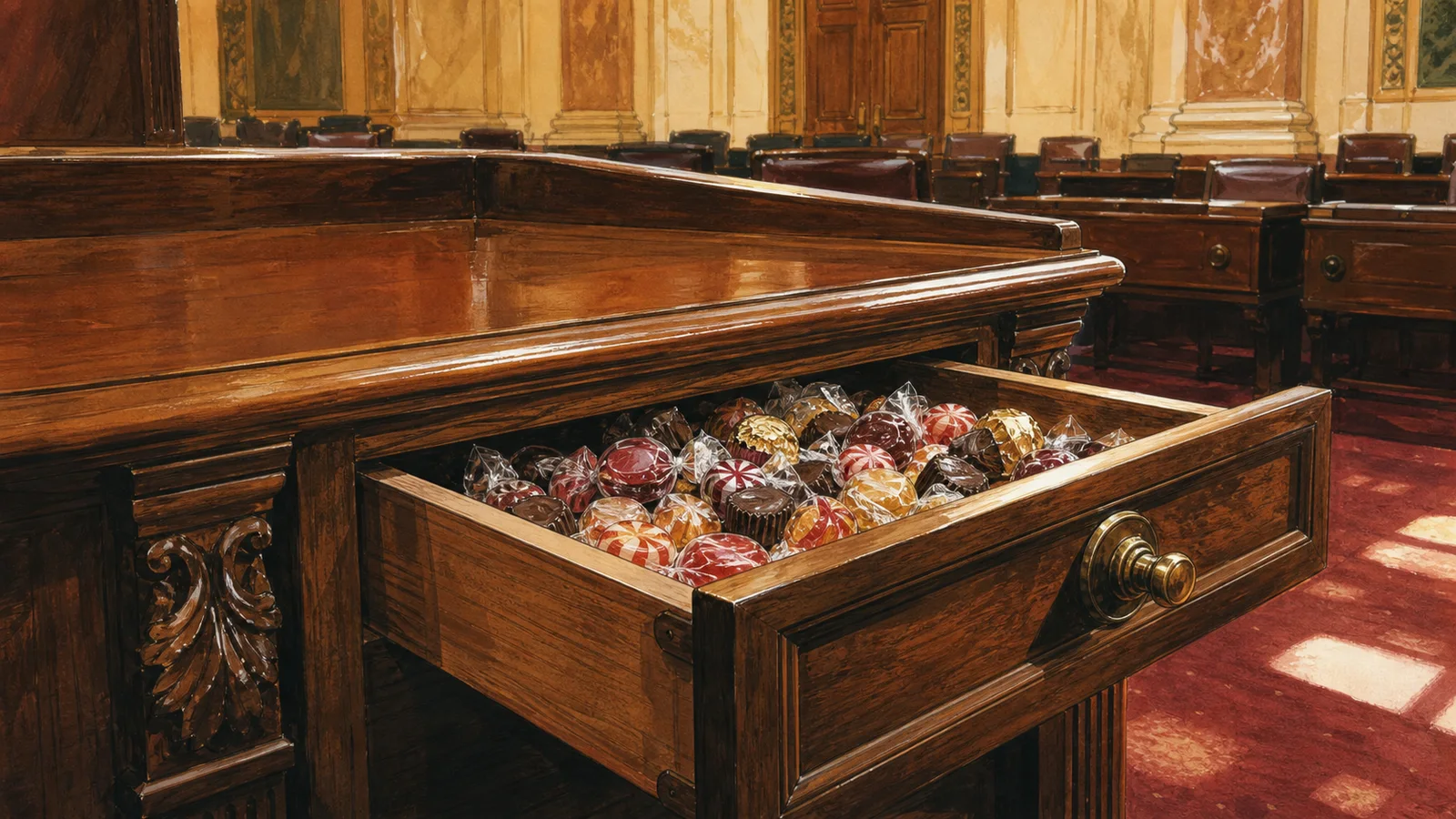
Some traditions begin with a grand ceremony. The U.S. Senate’s candy desk began with something much more portable: a drawer of sweets and a senator willing to share.
The tradition is delightfully specific. At the start of each Congress, one desk in the Senate Chamber takes on the unofficial job of being the candy desk. Its keeper stocks it with treats for colleagues passing through one of the room’s busy entrances. The official history is less a tale of a permanent piece of furniture than of a location, a habit, and a succession of people who agree that a little sugar belongs in the workday.
It started with George Murphy
The Senate’s curator dates the custom to 1965, when California senator George Murphy kept hard-candy lozenges in his desk drawer. The curator notes that the lozenges were likely useful after vocal-cord surgery. Murphy was also a former stage and film performer, a detail that makes the origin story feel unusually well cast.
In 1968, Murphy moved to a rear aisle desk near a frequently used entrance and invited colleagues to help themselves. That bit of placement mattered. The candy could be shared without turning the chamber into a candy store: people simply passed the desk, opened the drawer, and carried on.
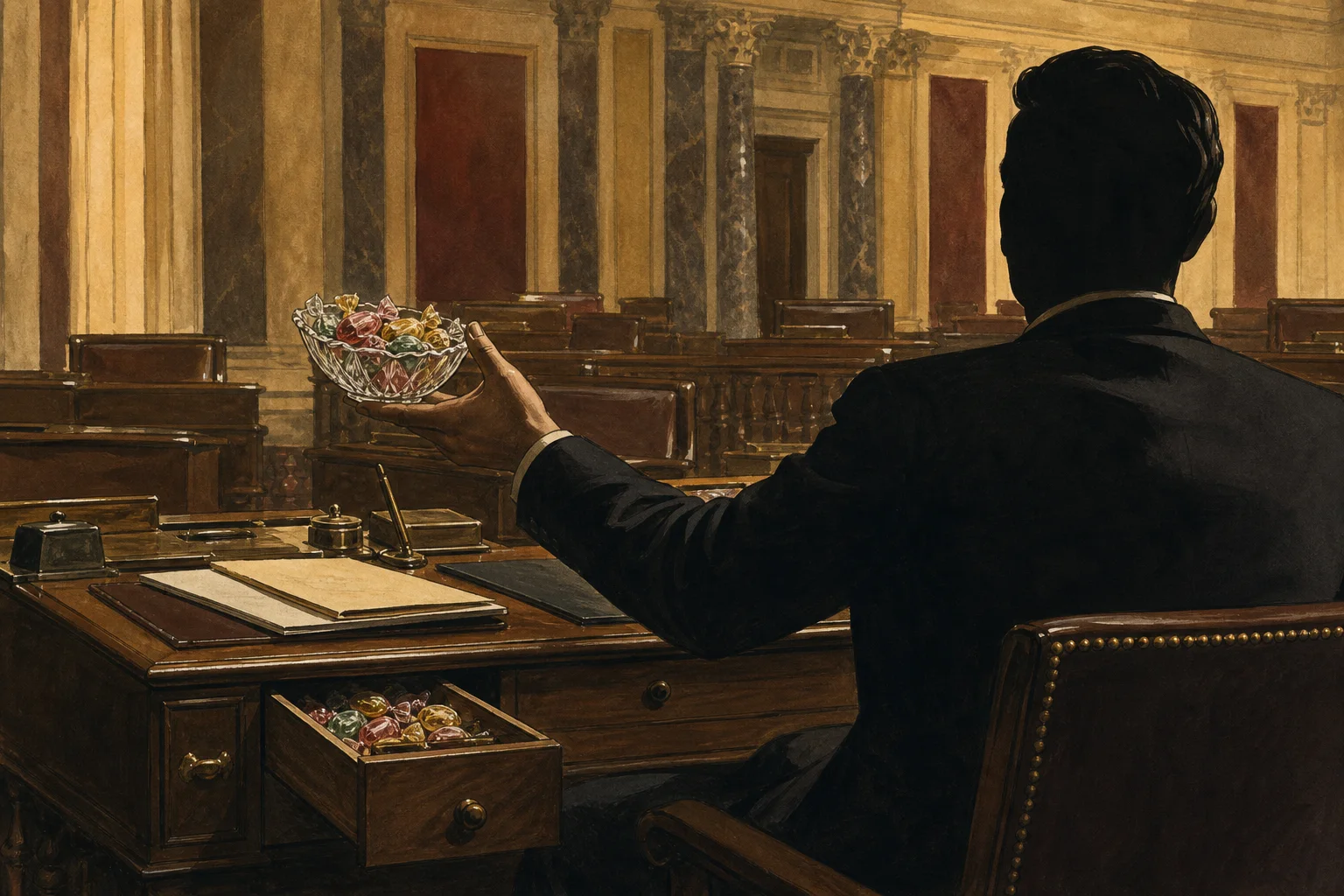
The desk is a job, not a relic
After Murphy left the Senate in 1971, the senators who occupied the same general location continued the practice. A 1979 floor speech publicly acknowledged the early run of candy-desk keepers, according to the Senate curator. Since 1985, the curator’s office has tracked the occupants.
That history explains a charming wrinkle: the candy desk is not permanently bolted to one numbered desk. The Senate’s guide says any desk can become the candy desk in a new Congress, but the designated one must be on the Republican side, in the last row, on the aisle, next to the chamber’s busiest entrance. In other words, the tradition follows a useful spot as much as it follows a drawer.
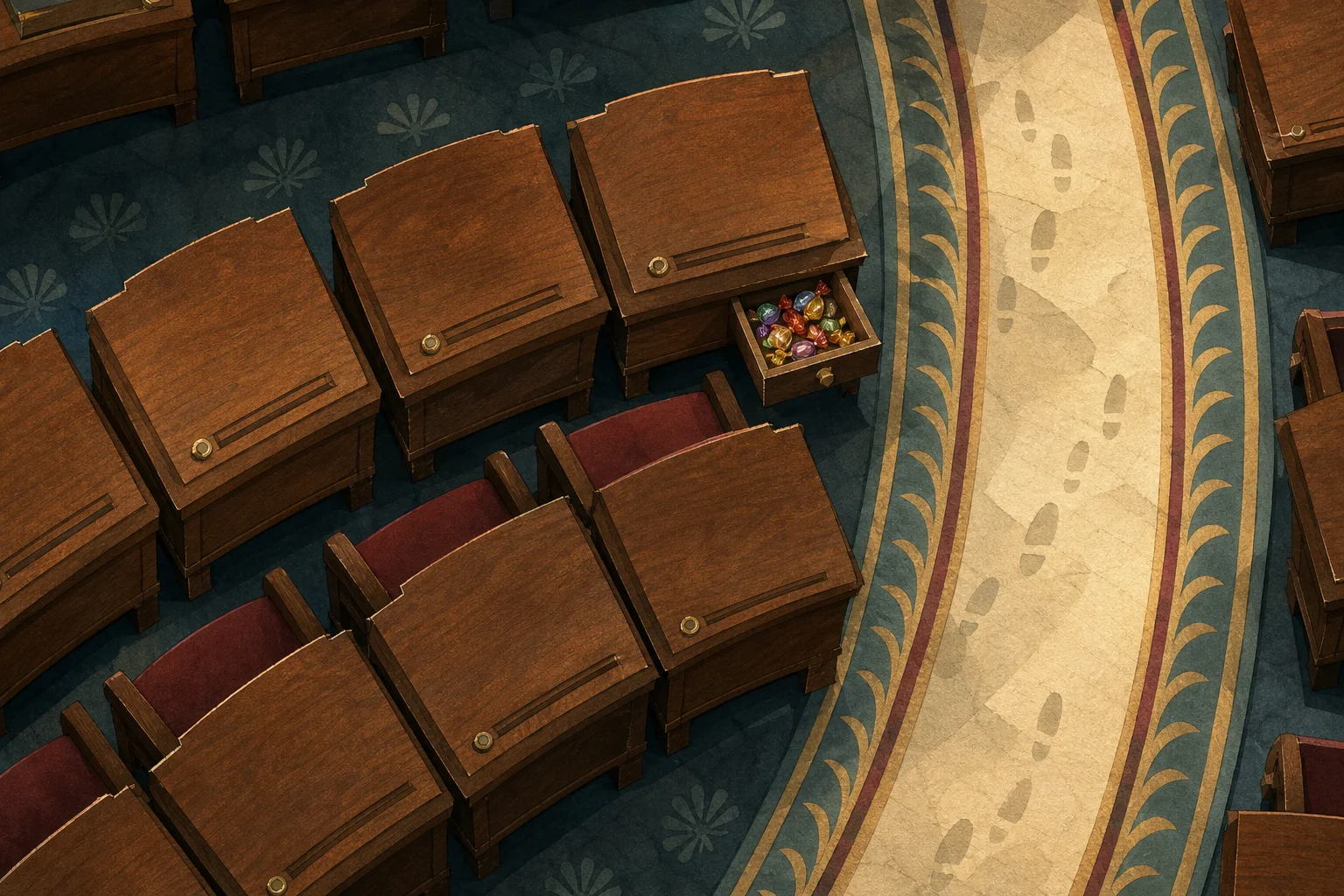
What is in the drawer?
The earliest supplies were usually hard candy. Later keepers broadened the selection to bite-size, individually wrapped sweets, often from their home states. The treats change with the person holding the seat; the quiet invitation to take one is the part that persists.
It is an odd little example of how institutions accumulate personality. Rules and procedures organize a chamber, but a shared drawer can create a tiny recurring pause in the day: a greeting, a piece of candy, and the reminder that even formal places make room for human habits.
Leave a Reply