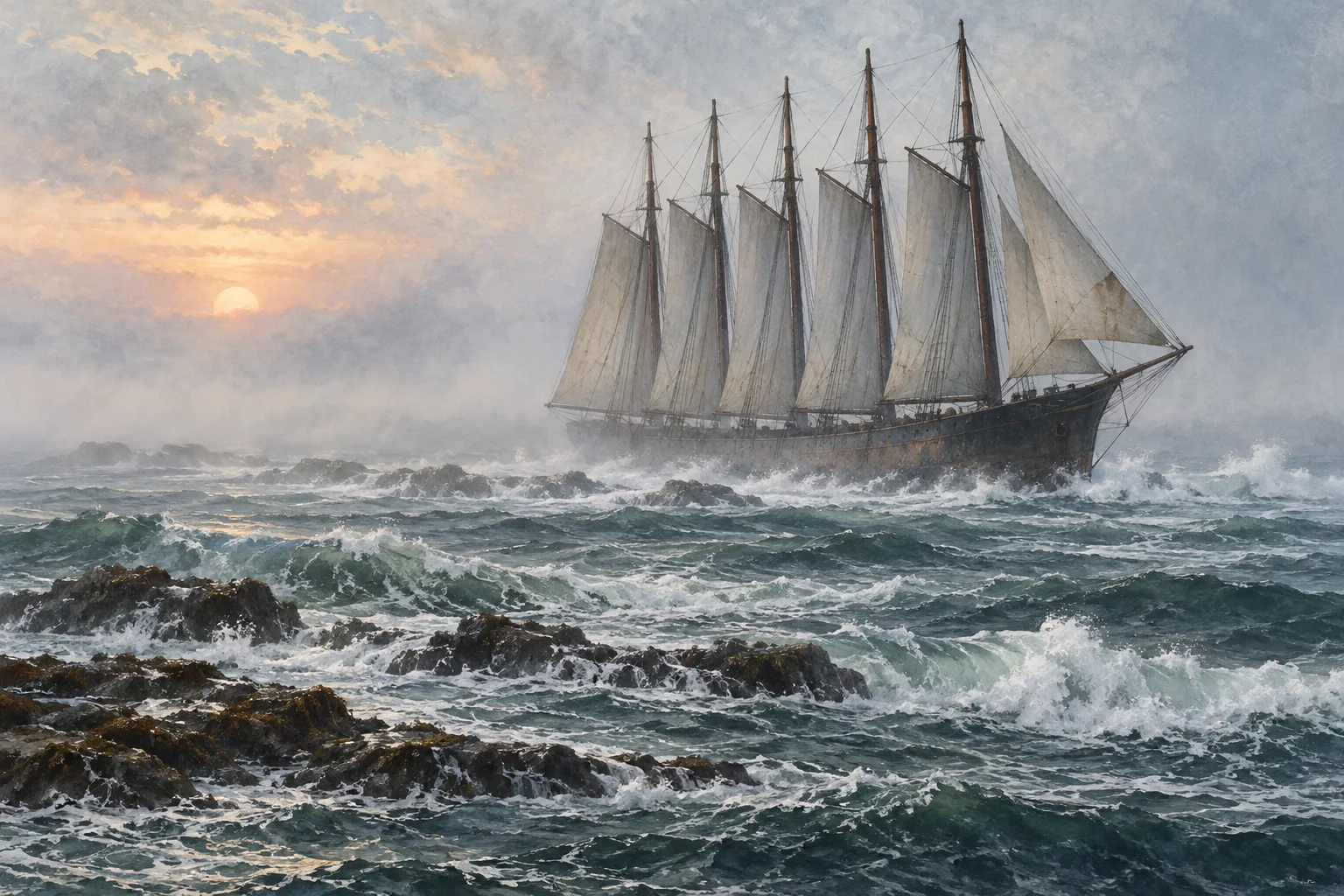
At dawn on January 31, 1921, a five-masted schooner appeared stranded on the Diamond Shoals off North Carolina. Her sails were set, the sea was breaking over her decks, and her deck appeared empty to the Coast Guard surfmen watching from shore. The ship was the Carroll A. Deering, and the scene opened one of the Outer Banks’ most enduring maritime mysteries.
The Deering had been built in Bath, Maine, in 1919. She was returning north from Barbados toward Hampton Roads when she passed the Cape Lookout Lightship on January 29. The lightship keeper later recalled a crewman calling out that the schooner’s anchors were missing. The next day, another vessel saw her moving along the coast. By the morning of January 31, she had grounded on the outer shoals.
Heavy surf kept rescuers at a distance. When the wrecking tug Rescue and Coast Guard cutter Manning reached the schooner on February 4, Captain James Carlson boarded and confirmed her name. The galley offered one of the story’s most memorable details: food had been laid out for a meal, and the crew’s boats were missing. Three cats were the only living occupants aboard, according to the Herbert Hoover Presidential Library’s account.
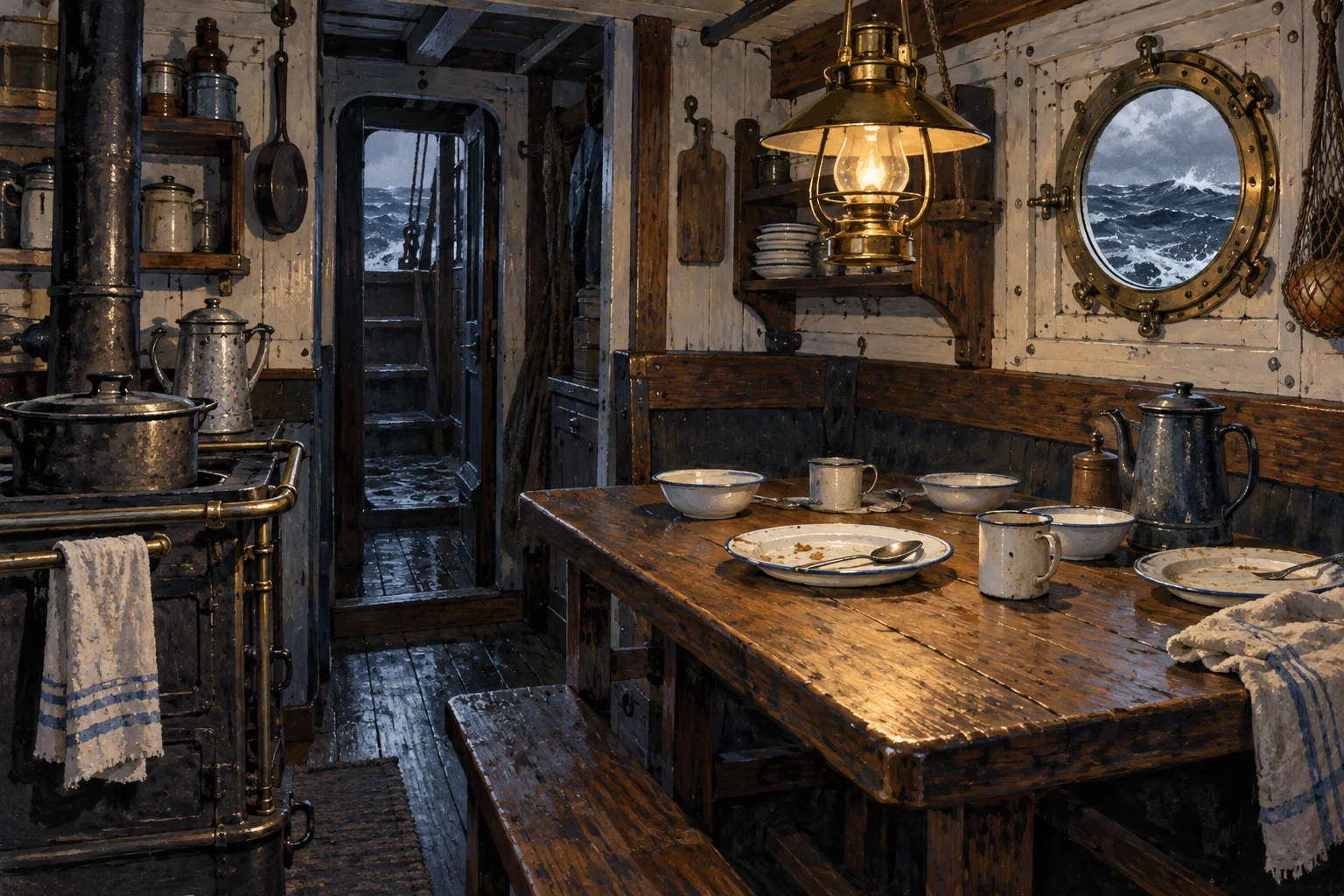
Investigators found the ship’s log, navigational instruments and some personal belongings missing. The quiet arrangement of the galley suggested an ordinary pause in the day, while the empty deck and rough water pointed to a sudden crisis. The surviving evidence preserved those details, while the crew’s fate remained unknown.
A bottle brought a new clue—and a confession
Several weeks later, a North Carolina resident named Christopher Columbus Gray reported finding a bottle with a note describing a pirate attack. The note drew wide attention and helped prompt a federal investigation. Government experts eventually established that Gray had written it himself. The bottle story became part of the Deering’s history as a documented hoax, while the crew’s fate remained an open question.
Newspapers and investigators considered piracy, mutiny and other explanations. The theories remained unresolved as the wreck’s story circulated. The Library of Congress’s review of contemporary newspapers shows how quickly each new theory entered public discussion. The Herbert Hoover Presidential Library reports that five federal departments examined the case, and the investigation left the crew’s disappearance unexplained.
Why the schooner’s story endures
The Carroll A. Deering combined a striking discovery with a small set of concrete clues: a ship grounded under sail, absent boats and instruments, a prepared meal, and an empty crew list. Each detail invited a different reconstruction. Together, they also show the limits historians face when a vessel’s records are lost and witnesses have only a few moments of observation.
The wreck broke apart on the shoals and was later removed as a navigation hazard. Today, the National Park Service preserves the account as part of Cape Hatteras’s maritime history. The Deering’s mystery rests in that careful distinction between what rescuers saw, what later investigators established, and the questions that remain about the crew’s fate.