A volcanic pattern with a giant-sized legend
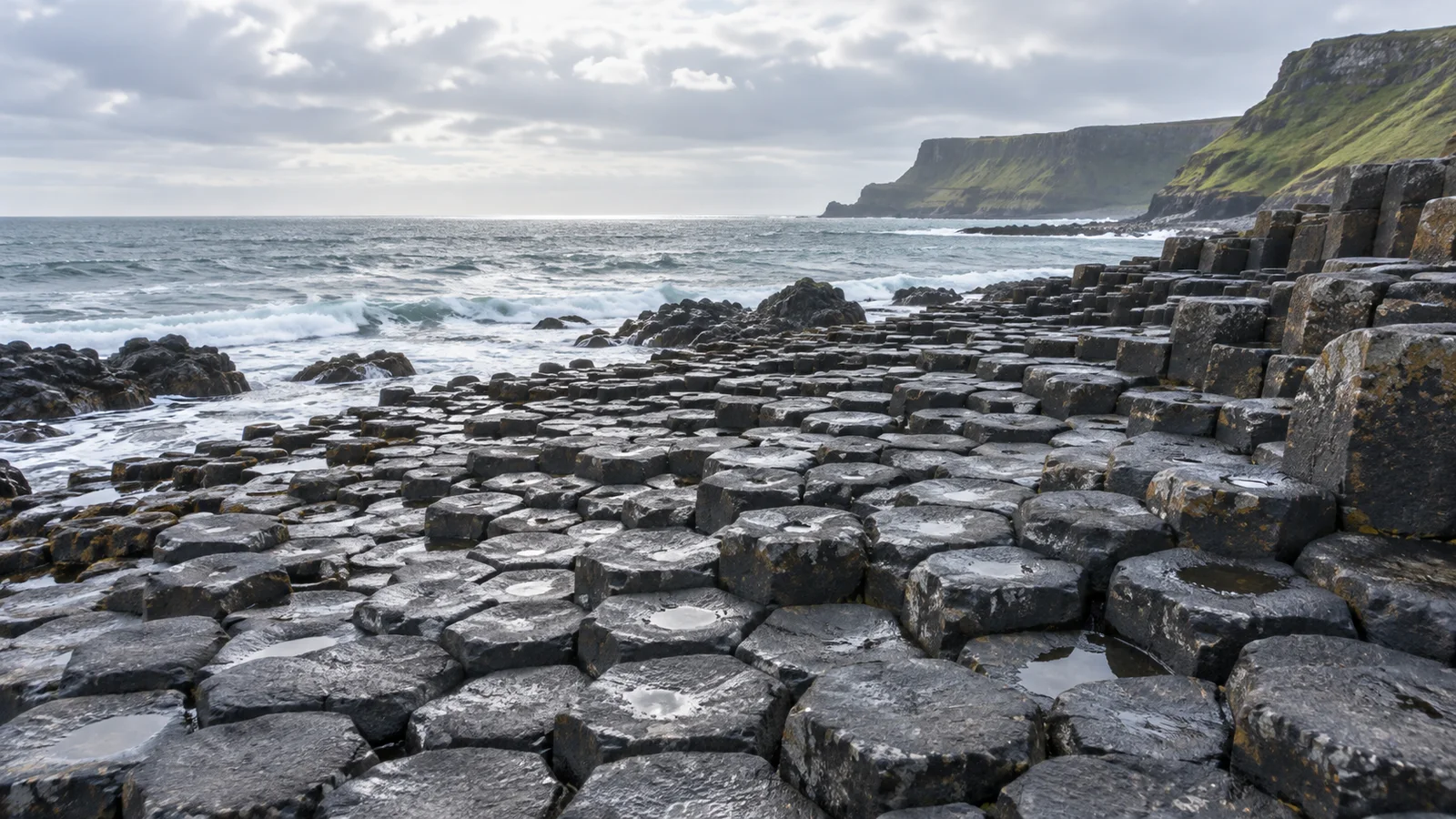
On Northern Ireland’s exposed Atlantic coast, thousands of dark stone columns fit together like an immense natural pavement. Their regular geometry is striking enough to have inspired a giant’s legend. The documented story behind the Giant’s Causeway is just as remarkable: lava, cooling, fracture, erosion and time produced one of the world’s clearest displays of columnar basalt.
A pavement made by cooling rock
The British Geological Survey describes the Causeway as an exceptional display of columnar basalt lava. The site contains around 40,000 large, regularly shaped columns, creating the familiar stepped formations along the coast.
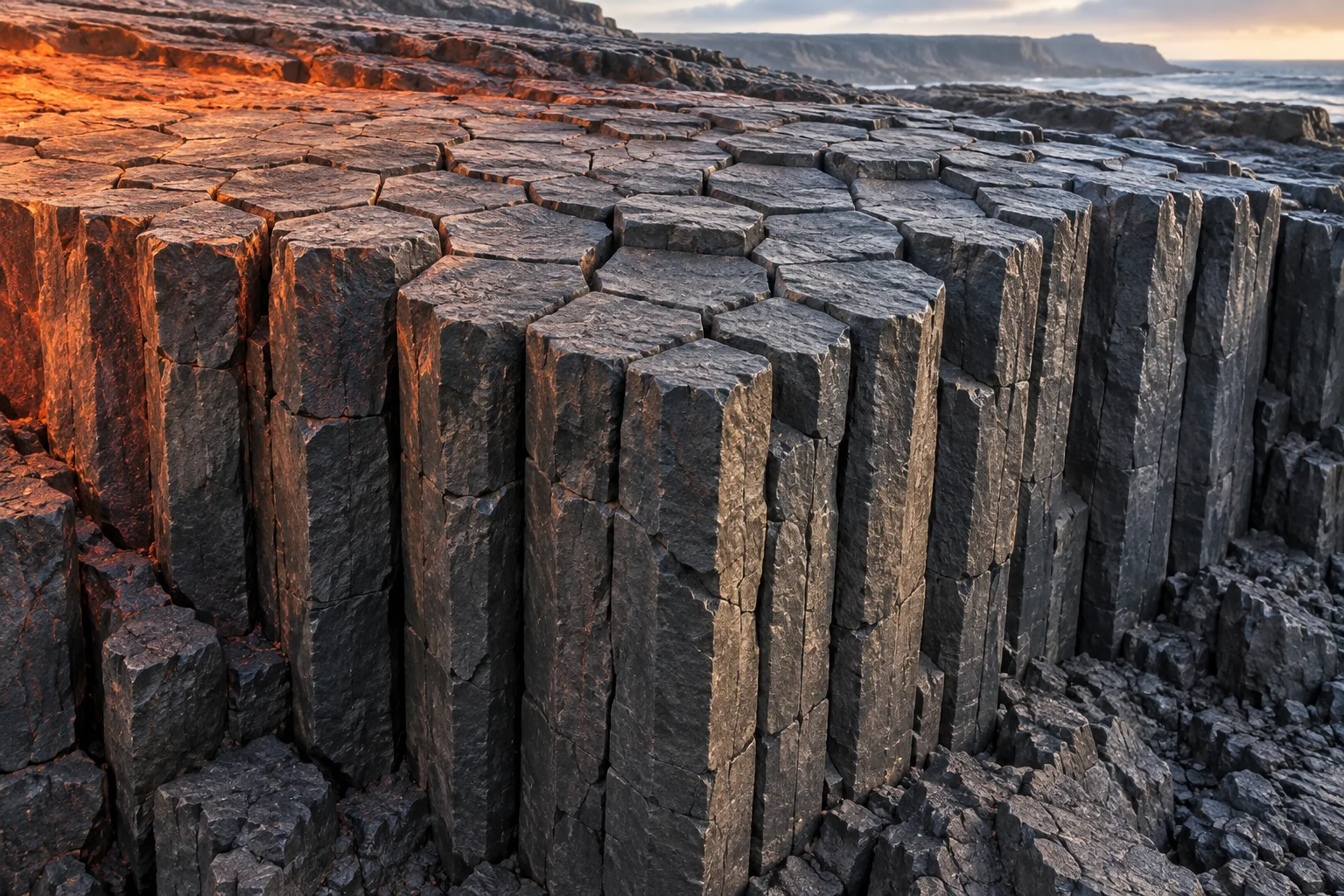
The columns formed during volcanic activity roughly 50 to 60 million years ago. As lower layers of lava cooled, the rock contracted and cracked. Those fractures organized into the repeating polygonal pattern that gives the landscape its deliberate-looking geometry. Many columns have six sides, though natural cooling creates a family of related shapes rather than a machine-perfect grid.
How the pattern reached the sea
The National Trust’s geological history traces a longer sequence. Volcanic eruptions spread basalt across an older landscape. Erosion later cut valleys through the rock, and further lava filled some of those valleys. Glaciers and coastal waves then removed and exposed layers, revealing the close-packed columns visitors see today.
That combination of internal structure and coastal erosion makes the Causeway visually unusual. It reads as a built surface at human scale, while its construction happened deep within cooling lava over a geologic timescale.
Folklore keeps the shape alive
For centuries, the formation has also carried the story of the Irish giant Finn McCool, whose legendary causeway reaches toward Scotland. The folklore gives the landscape an imaginative companion, while the geological account explains its physical origin. Both begin with the same memorable sight: an enormous field of interlocking stone steps at the edge of the sea.
The Giant’s Causeway has mattered to earth science as well as storytelling. Geological studies of the coastline’s exposed layers have helped explain the sequence of volcanic and erosional events in the region. It remains a rare place where a single, walkable pattern makes deep-time processes easy to see.
Leave a Reply