Benjamin Franklin is usually introduced through electricity, printing and public life. One of the inventions that gave him the most personal pleasure was built for a quieter kind of experiment: a musical instrument made from a procession of spinning glass bowls.
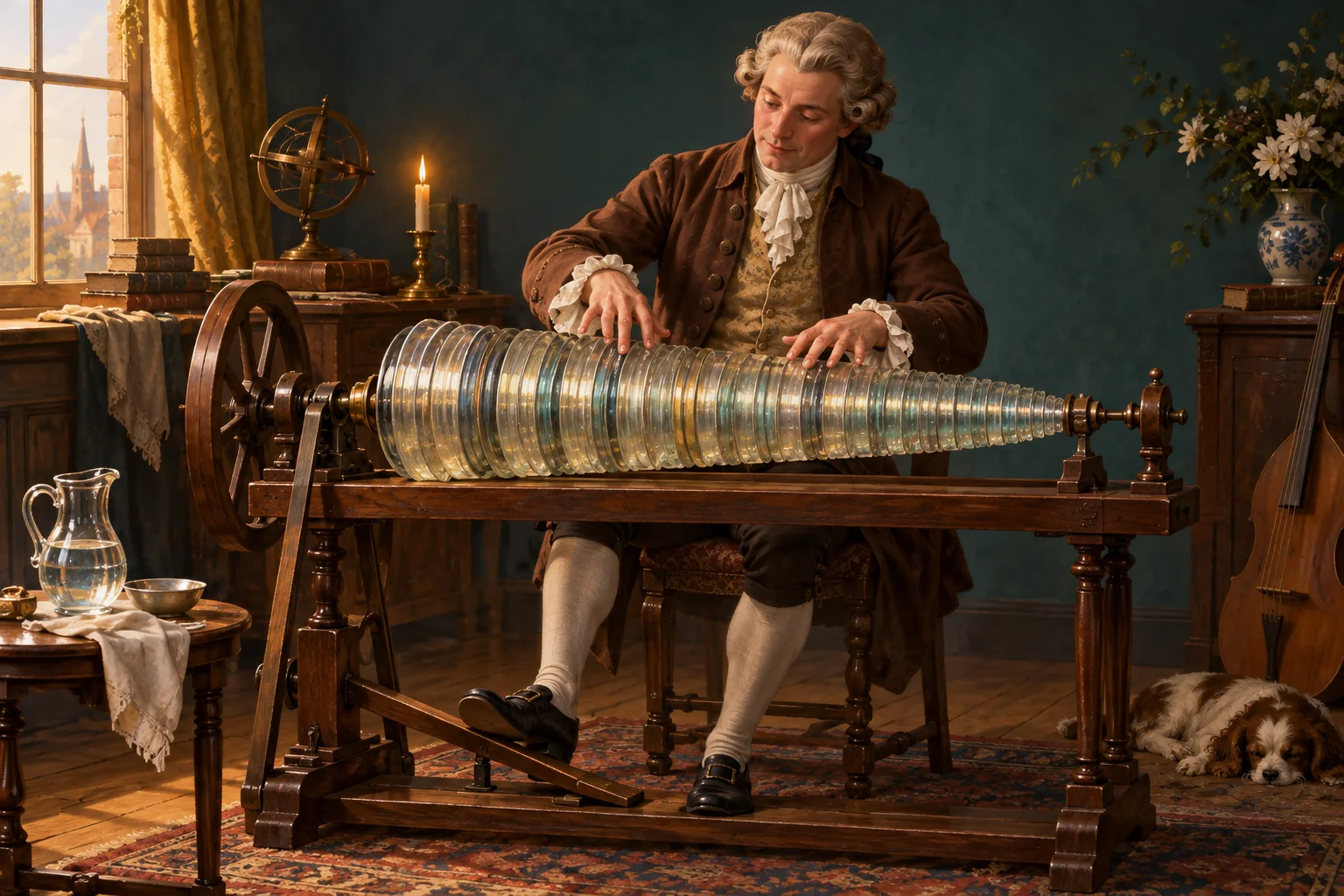
The instrument is the glass armonica, often called a glass harmonica. It turned the familiar sound of a damp fingertip circling a drinking glass into an instrument a player could perform with both hands. The effect was graceful, practical and a little uncanny: instead of setting out separate glasses, the player sat at a treadle and drew notes from a moving row of glass.
A row of bowls, a pedal and wet fingertips
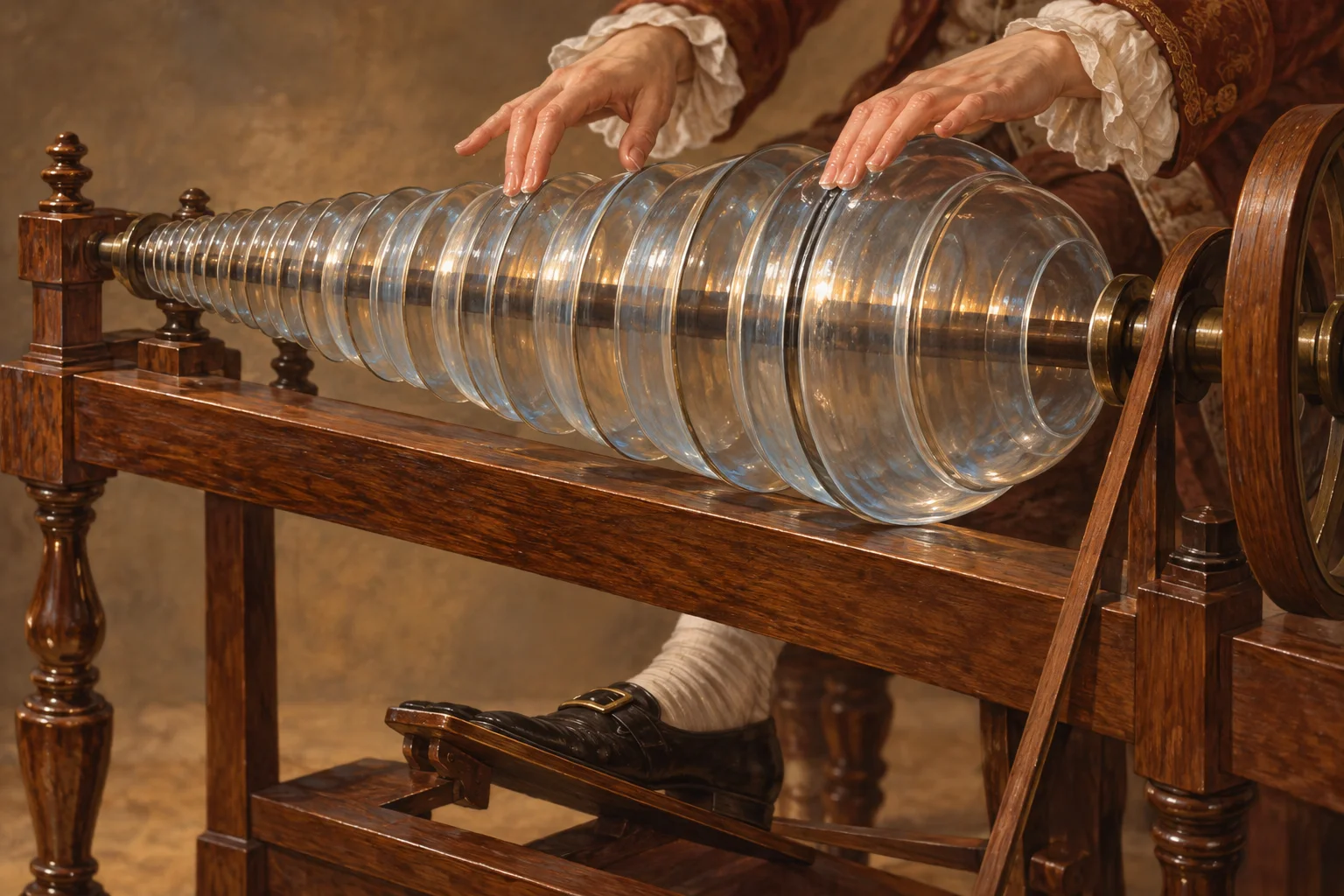
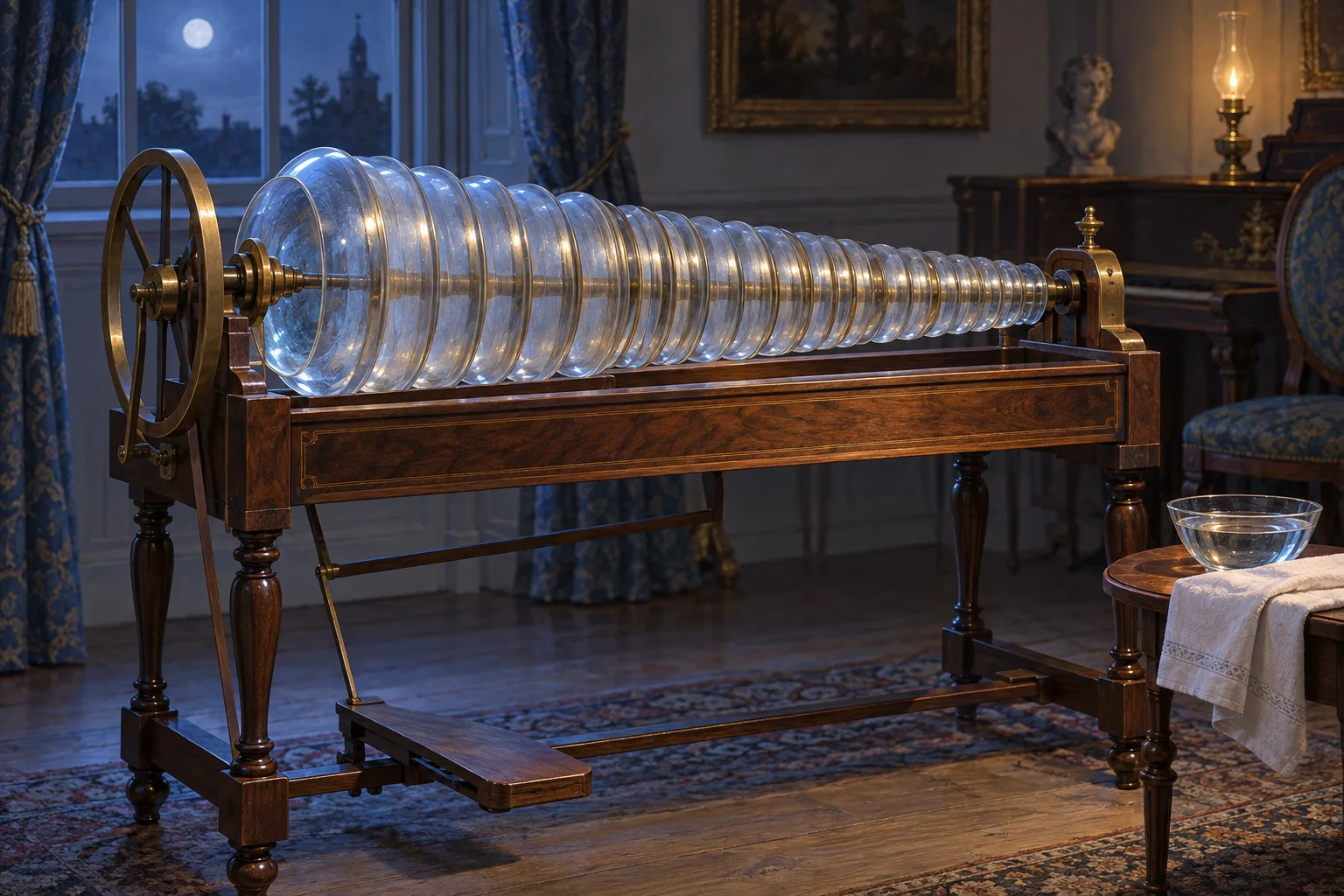
The Library of Congress describes Franklin’s design as a series of graduated glass discs fitted to a horizontal spindle. A foot treadle turned the spindle while the player touched the revolving glass with wet fingers. The varying sizes supplied different pitches, so the nested bowls could produce more than one note at a time.
That arrangement refined an earlier tradition of musical glasses. Franklin described his improvement to the Italian philosopher Giambatista Beccaria before leaving London in 1762, according to the Library of Congress. The bowls sat one inside another on a single rod, leaving the player’s hands free to choose notes while the pedal kept the instrument moving.
Why the design mattered
Musical glasses could already make ringing tones, yet Franklin’s layout gathered their pitches into a compact instrument. A seated player could work across the row of bowls much as a keyboard player works across keys. The instrument’s compact geometry is part of its enduring appeal: a set of fragile-looking circles becomes a machine for sustained sound.
The glass armonica gained an audience in Europe. The Library of Congress notes that Mozart and Beethoven composed for it, an extraordinary afterlife for an instrument built around water, friction and rotation. A 1765 letter from Franklin to composer Francis Hopkinson, preserved by the Library, also records Franklin asking about a performance on the newly invented armonica.
A strange idea with a clear logic
The armonica feels unusual because its music begins with touch rather than a string, reed or hammer. Its logic is wonderfully direct: glass creates the tone, a pedal provides motion, and the player selects notes by touching the rims. The design shows how a familiar household sound can become a carefully engineered performance tool.
Franklin’s glass armonica remains a small marvel of musical history—part instrument, part workshop experiment, and a reminder that inventive ideas can begin with an attentive ear.
Leave a Reply