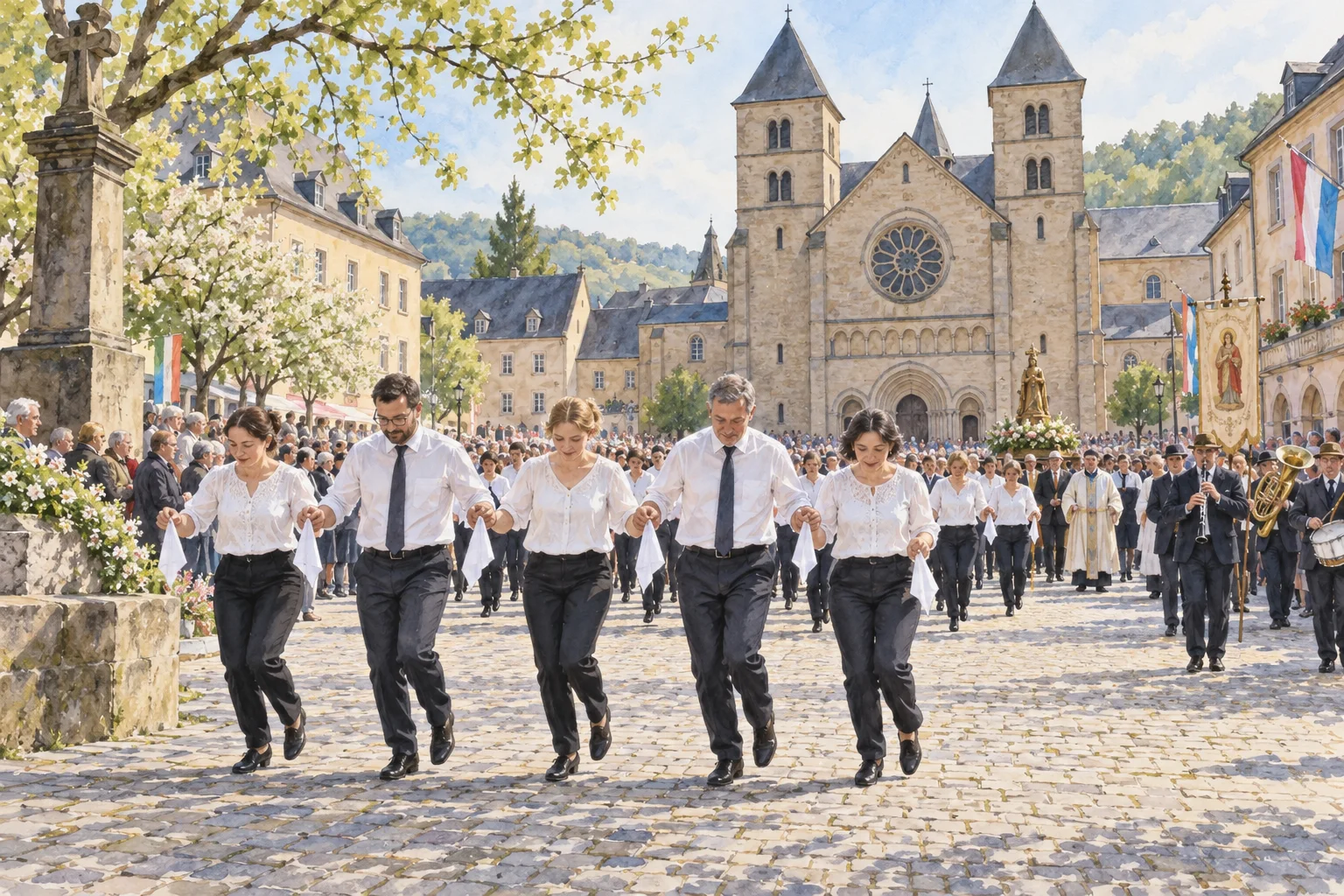
Each Whit Tuesday, rows of pilgrims move through the Luxembourg town of Echternach in a rhythm that seems to turn a walk into music. They hold white handkerchiefs, follow brass bands and make small side-to-side hops toward the basilica that shelters the tomb of Saint Willibrord. The annual Sprangpressessioun, or hopping procession, is a living religious tradition whose unusual movement is part of its prayer.
A pilgrimage with a carefully documented history
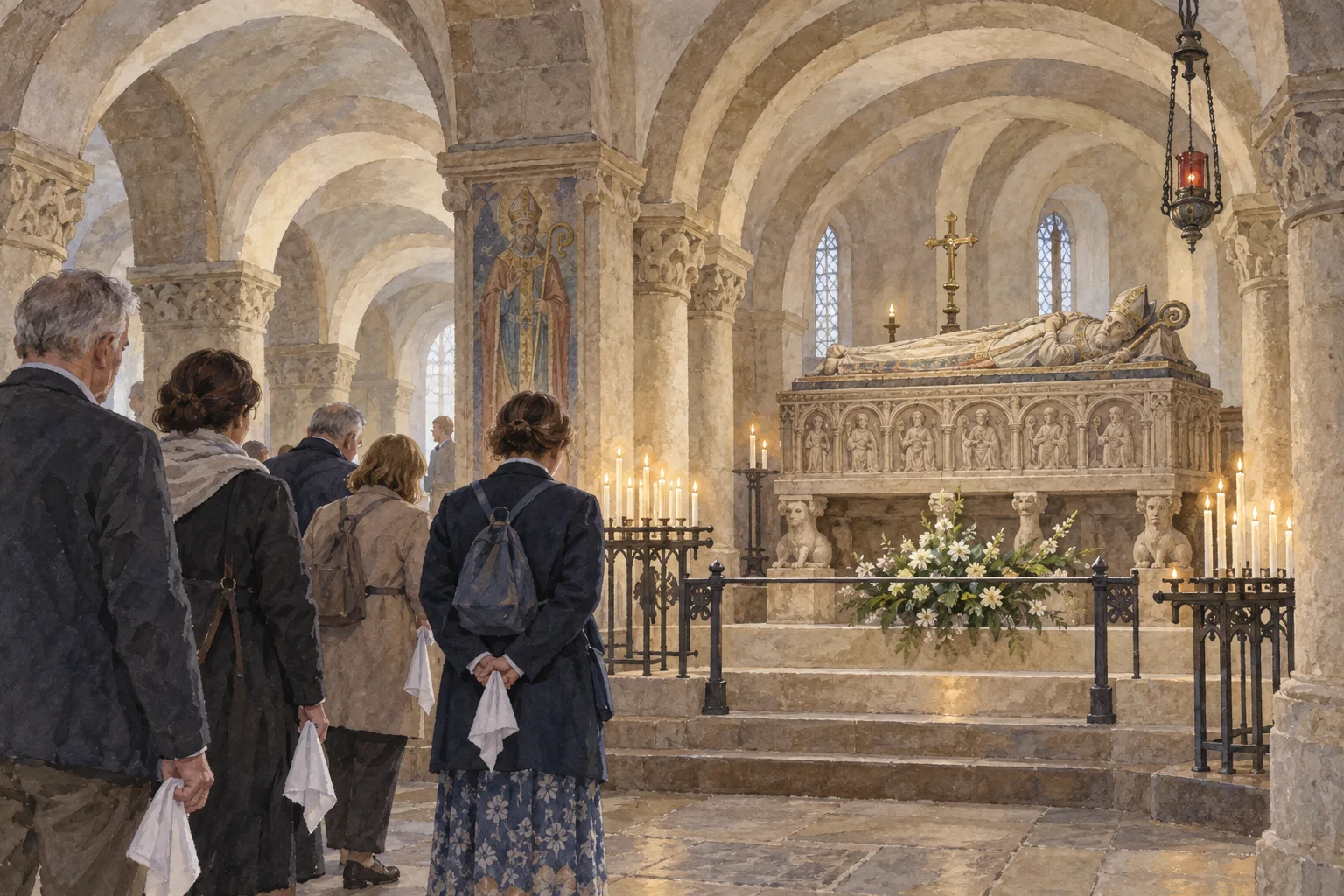
The procession honors Willibrord, an Anglo-Saxon missionary who founded Echternach Abbey in 698 and was buried there in 739. Pilgrims came to his tomb during the early Middle Ages. Luxembourg’s national heritage office notes that an account by Abbot Thiofrid around 1100 describes a large Pentecost gathering, while the earliest mention of the dance itself comes from the end of the 15th century. That distinction matters: the pilgrimage is older in the record than the hopping choreography.
Researchers at the University of Luxembourg also explain that historians hold different views about when the procession became a dance. Several origin stories circulate, including links to earlier penitential processions and to healing practices. The available evidence leaves those explanations uncertain, so the secure story is the one the records support: devotion to Willibrord drew pilgrims to Echternach, and a distinctive dance later became part of the annual observance.
Small steps, shared rhythm
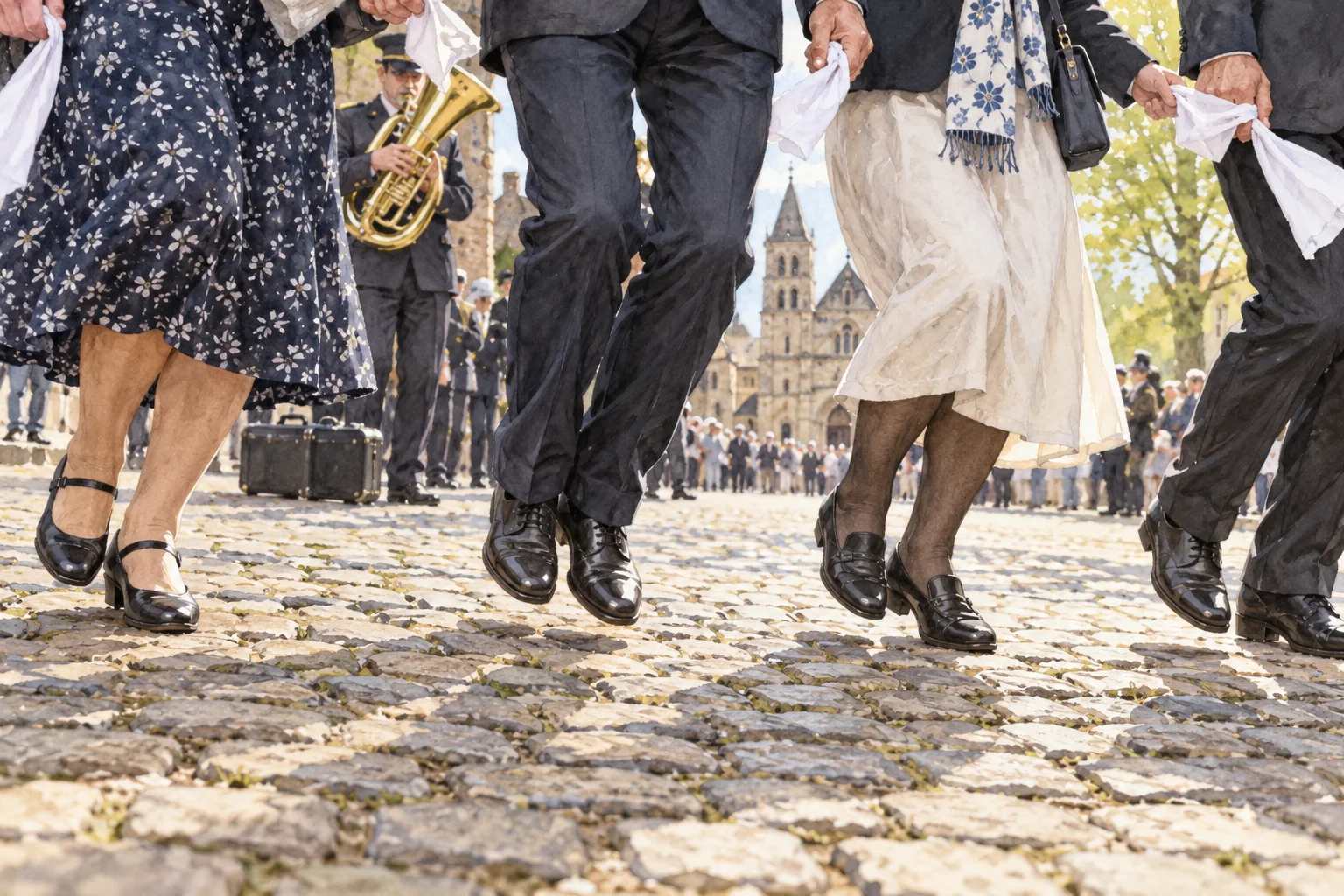
Today, the procession sets out after a morning service. Participants form rows, traditionally holding the corners of white handkerchiefs, and move to a melody played by brass bands. The Luxembourg government’s cultural guide describes the basic motion as one small step to the left and one to the right. The linked rows progress through the old town toward the basilica, where pilgrims pass Willibrord’s tomb and a thanksgiving service concludes the gathering.
The familiar phrase “three steps forward and two back” has helped make the procession famous as a metaphor for slow progress. The current movement tells a more precise story: repeated side-to-side hops carry the rows forward together. The handkerchiefs give the formation a visible connection, while the shared melody keeps each group in rhythm.
A tradition carried by a town and its visitors
Echternach’s procession brings together local residents, school groups, church communities and visitors from nearby countries. Its customs pass between generations through participation: children learn the steps, musicians repeat the melody and organizers guide each year’s route. The University of Luxembourg has documented the tradition’s changes over time, including the role of Portuguese expatriate communities in its continuation.
UNESCO added the hopping procession to its Representative List of the Intangible Cultural Heritage of Humanity in 2010. The inscription recognizes a practice sustained through knowledge, music, movement and community participation. Echternach’s annual gathering keeps those elements in view: a medieval town square fills with people, a familiar tune begins, and the pilgrims make their way together toward the saint’s tomb.
Learn more from Luxembourg’s National Commission for UNESCO, the Government of Luxembourg’s cultural guide, the University of Luxembourg’s history feature and the Echternach Basilica’s procession and pilgrimage history.
Leave a Reply