This article contains original editorial illustrations. They are not archival images or documentary evidence of the ritual.
On the Oga Peninsula in northern Japan, the most emphatic New Year’s visitors do not arrive with a card. They arrive in straw raincoats and carved-looking masks, calling into homes as part of the local Namahage tradition.
The masks can look alarming to an outsider, which is part of why the custom travels so well in photographs and headlines. But “terrifying monsters invade a village” is the wrong frame. In Oga, Namahage is a community ritual: local participants take on the role of visiting deities, households receive them, and the encounter carries reminders about work, conduct and the year ahead.
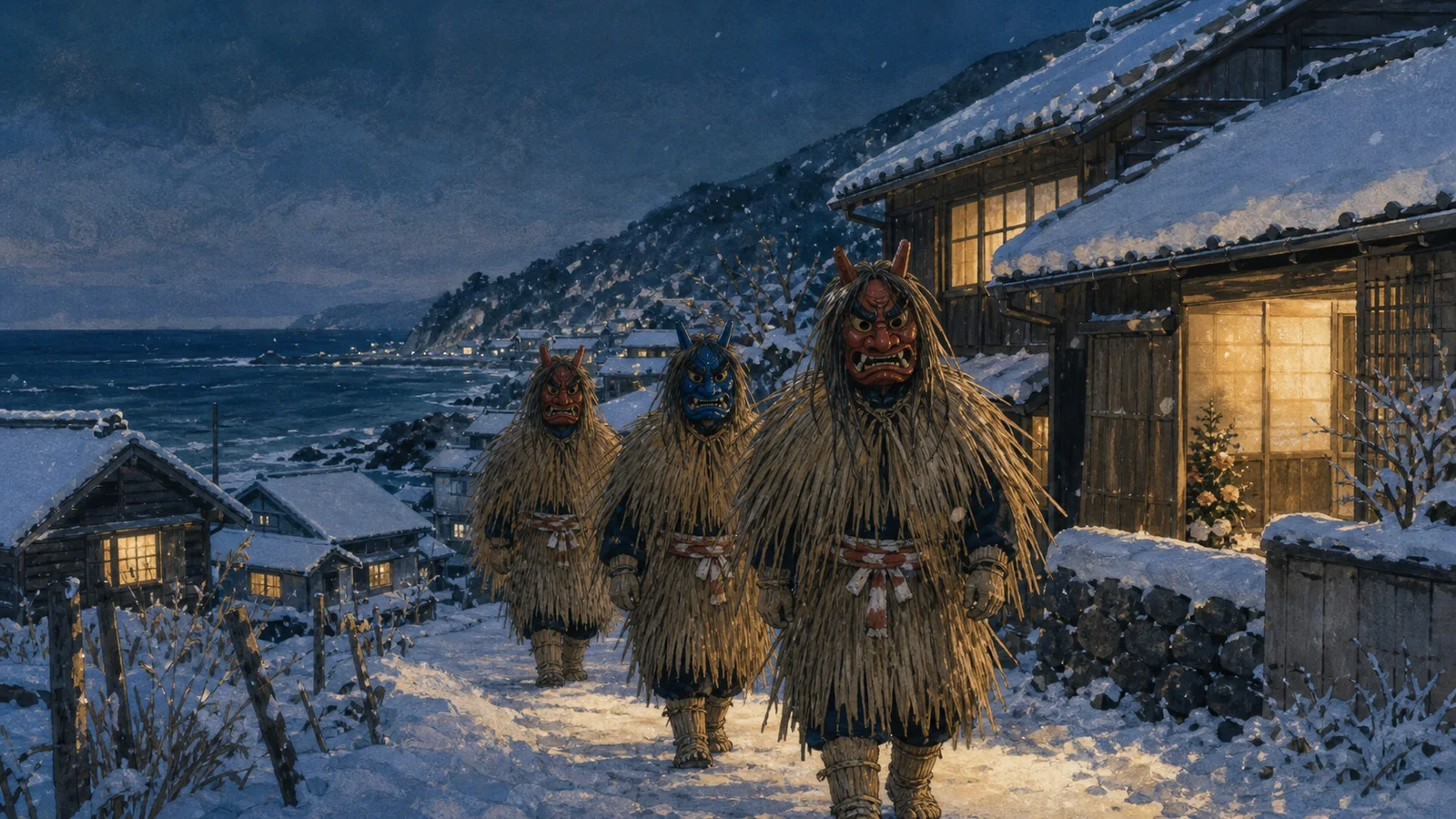
The point is a visit, not a scare
UNESCO describes Namahage as one expression within Japan’s wider Raiho-shin traditions: ritual visits by masked and costumed deities around a new year or seasonal turning point. The organization says these practices grow from folk beliefs that visitors from beyond the community bring good fortune. Locals performing the roles move through homes, admonish idleness and encourage children to behave well; hosts offer a special meal before the visitors continue on.
Oga’s Namahage is most closely associated with New Year’s Eve. The Namahage Museum calls it a union of the local folk custom and a Shinto festival. Its description is practical rather than spooky: young men in masks and straw garments call at village homes, including those of new wives and children, and urge them to study, work hard and follow their families’ guidance. Other household members answer on their behalf.
That structure matters. The frightening face is a role, and the exchange is social. UNESCO’s record of Oga’s nomination describes a meal and conversation with the householder before the visitors offer wishes for the new year. The ritual’s force comes from everyone knowing the script—and from a community deciding that the year should begin with a very theatrical check-in.
One name, many local versions
“Namahage” is not a single standardized costume. Oga’s official cultural site notes that masks differ from village to village. The Namahage Museum says masks actually used across Oga appear in more than 150 locations. Their faces, materials and accompanying details can reflect place and local industry, according to the Oga–Ogata Geopark.
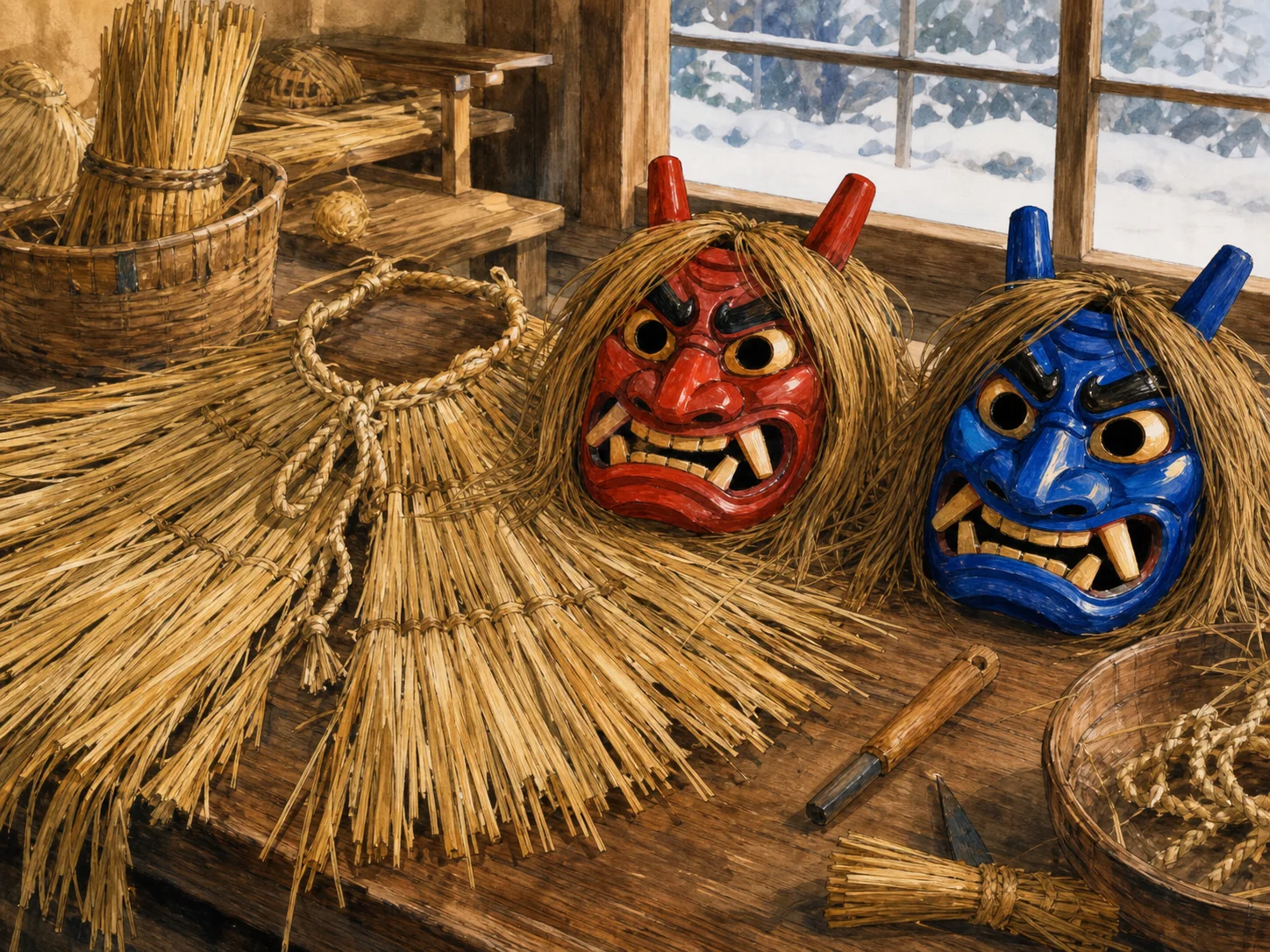
This variety is a useful guardrail against treating the tradition as a costume category. A red mask and a blue mask may be familiar shorthand, but individual communities preserve their own practices. Oga’s Namahage was designated an Important Intangible Folk Cultural Property of Japan in 1978, and the broader Raiho-shin element was inscribed on UNESCO’s Representative List of the Intangible Cultural Heritage of Humanity in 2018.
Folklore is part of the story
Accounts of Namahage’s origins are not settled history. The museum explicitly says that much remains unknown about how the Oga custom began. The Oga–Ogata Geopark, for example, presents a local legend about ogres building the stone steps at Goshado; it labels that account as legend. That distinction is worth keeping: the ongoing ritual is documented, while explanations for its deeper beginnings belong to folklore and local interpretation.
What is documented is the work of keeping the custom alive. UNESCO notes workshops on conduct and costume-making, and museums in Oga maintain displays and lectures. These are not minor logistics. In a living tradition, learning how to wear the straw, speak at the doorway and be welcomed inside is the knowledge being passed on.
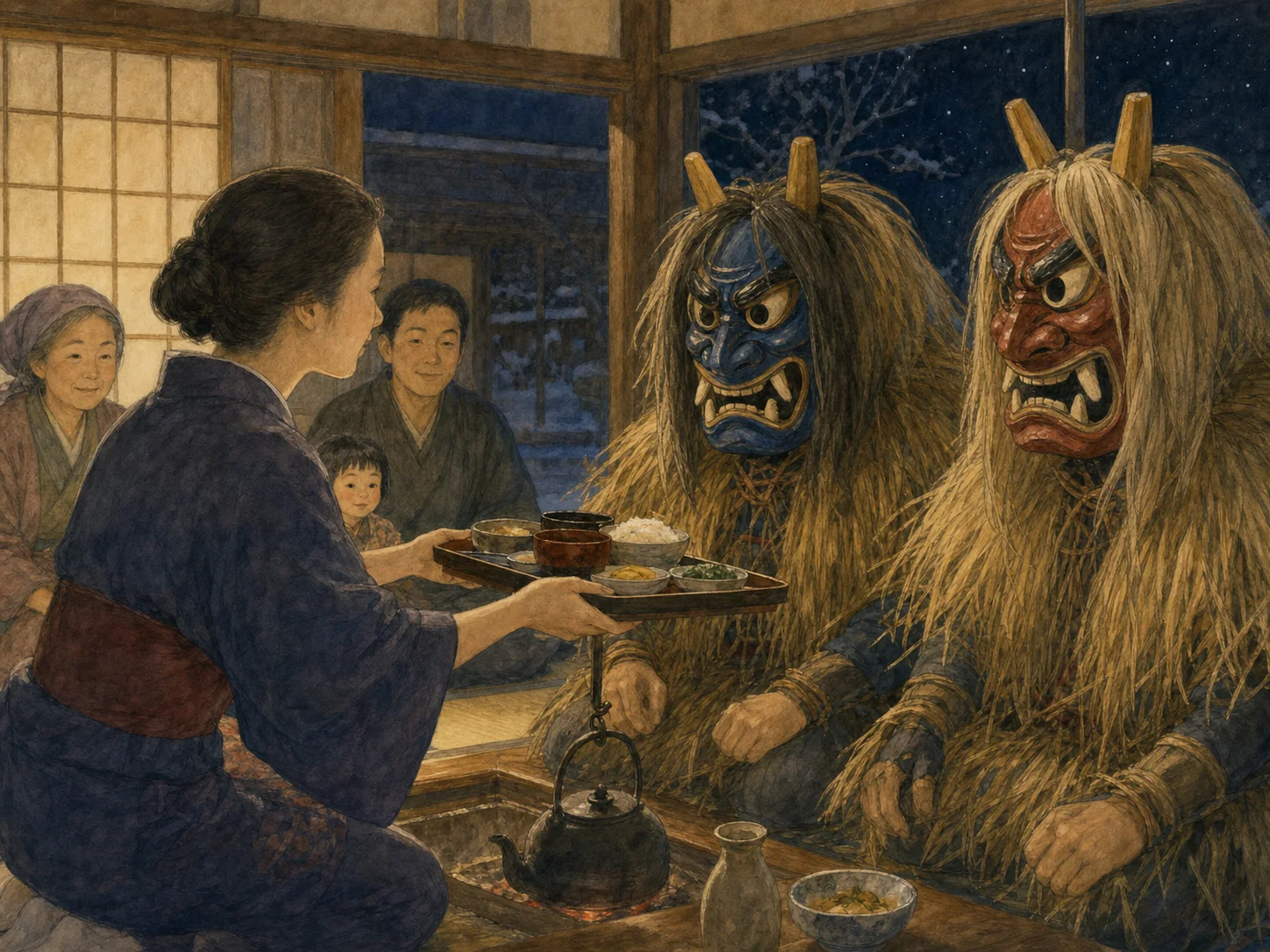
A strange tradition with a very human job
Namahage has all the visual ingredients of a ghost story: winter darkness, huge masks, straw and a booming entrance. Its actual purpose is more intimate. It gives a community a way to gather moral advice, hospitality, family transitions and hopes for a good year into one memorable visit.
That is the odd genius of it. The most unusual person at the door is not an intruder at all. He is a neighbor carrying a role the village has agreed to preserve.
Leave a Reply