Zzyzx: The Desert Oasis Named to Have the Last Word
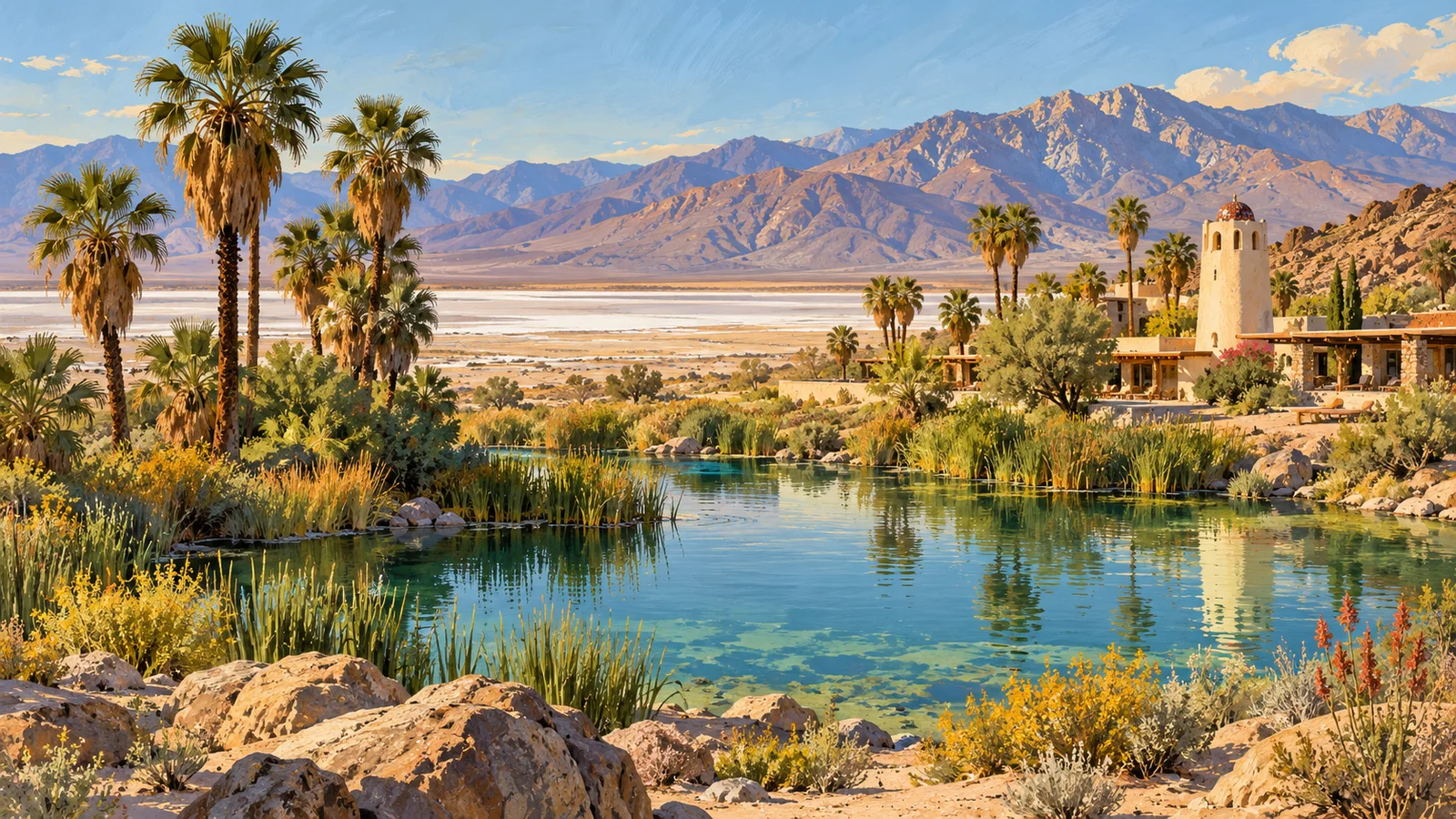
Drivers crossing California’s Mojave Desert can spot an exit for a place called Zzyzx. The name looks like a keyboard tumble, but it belongs to a real spring-fed oasis with a story that moves from Indigenous use, to a radio preacher’s health resort, to a university field station.
The springs, known as Soda Springs, sit in a landscape shaped by the much larger ancient Lake Mojave. As the region grew warmer and drier, the lake receded, leaving the salt flats of Soda and Silver lakes. Water remained at the springs, which the Mohave and Chemehuevi people used for generations. Explorers and the U.S. Army also stopped there in the 19th century, according to the National Park Service’s history of Zzyzx.
A name made for the end of the alphabet
In 1944, Curtis Howe Springer arrived at Soda Springs and developed a health resort on a mining claim. San Bernardino County’s history of the site says Springer chose “Zzyzx” as a promotional flourish: he wanted a name that would sound like “the last word” in health. The county gives the pronunciation as a rhyme with “Why-sik.”
Springer built a miniature resort world in the desert. The National Park Service describes a two-story castle, dining hall, library, lecture room, pool house, goat farm and rooms for rabbits. Springer called himself “Doctor” and hosted a radio program that the Park Service says aired on more than 300 stations. His business mailed millions of packages of products with names such as Antediluvian Herb Tea and Hollywood Pep Cocktail; the nearby town of Baker added a post office to handle the volume.
The resort’s story also has a clear cautionary chapter. Federal agencies challenged Springer’s land claims and product advertising, and he eventually left the site. The unusual place name endured, while the resort buildings found a new purpose.
From radio resort to desert classroom
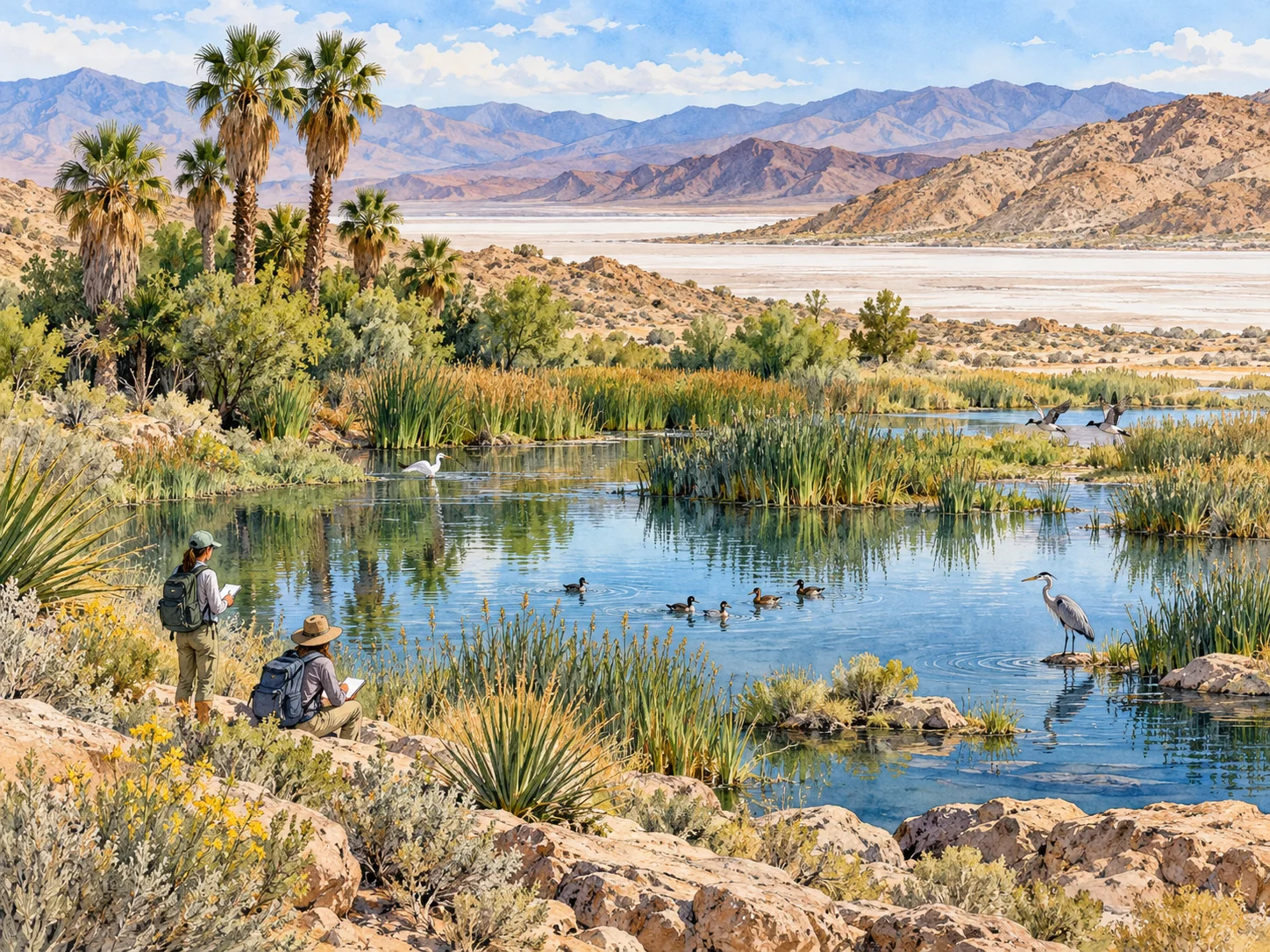
Since 1976, the California State University Desert Studies Center has used Zzyzx as a field station for teaching and research. Its CSU Fullerton site describes a 1,280-acre station with classrooms, a laboratory, a small library, lodging and outdoor study spaces. The center works across desert ecology, geology and cultural history.
The spring-fed water still makes this patch of desert a special stop for wildlife and people. The National Park Service says the public can visit Lake Tuendae and its picnic area; the occupied research buildings across the road are university property. A walk around the lake offers a glimpse of the oasis and a chance to imagine the odd resort that once filled its shores.
Zzyzx is a reminder that a place can keep changing while its name stays wonderfully difficult to forget: ancestral spring, ambitious desert resort, and now a working outdoor classroom beneath one very distinctive exit sign.
Leave a Reply