Strange Places
Deep inside Mammoth Cave in Kentucky, a passage called Gothic Avenue holds an unusually personal record of early American tourism. Its high limestone surfaces bear historic signatures, alongside artifacts and monuments left by visitors who came underground in the 1800s.
A name borrowed from the rock
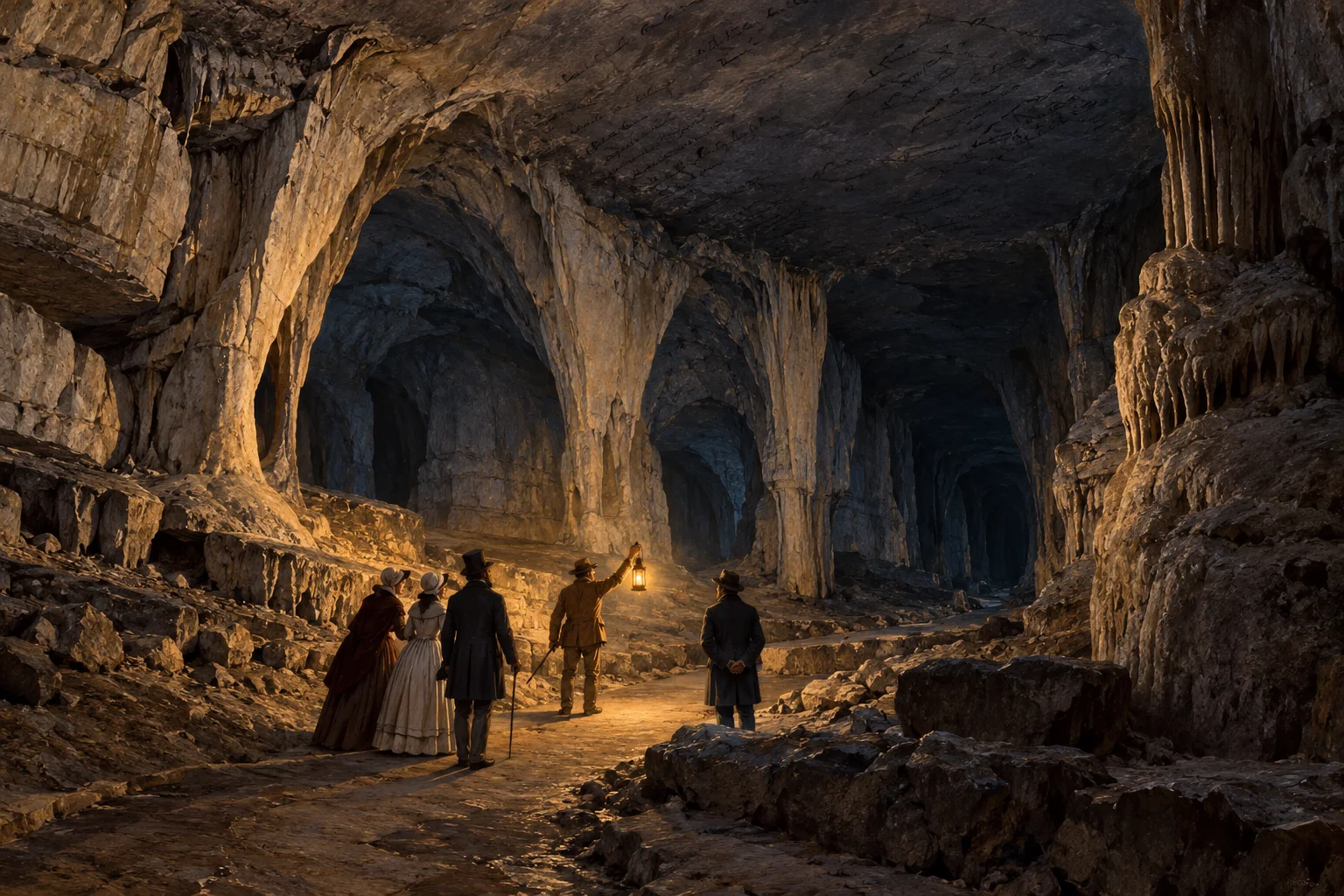
The National Park Service says Gothic Avenue received its name from formations that resembled Gothic architecture. The same passage became a destination during some of Mammoth Cave’s earliest nineteenth-century tourism. Today’s Gothic Avenue tour follows that history for about 1.7 miles, with guides discussing the people who visited, worked in, and shaped the cave’s public story.
That combination makes the space feel like an underground guest book with very large margins. The historic record combines names, artifacts, and monuments from early visitors, while the broader cave landscape preserves evidence of tourism and other work across roughly two centuries.
The guides were part of the landmark
Many of the people whose names remain in Mammoth Cave were connected to the tours themselves. The park’s history of women at Mammoth Cave notes that George Slaughter Gatewood’s name appears more than a dozen times in Gothic Avenue, reflecting his repeated trips there as a guide. It also records that Charlotte Bishop’s signatures appear alongside those of her husband, Stephen Bishop, including in passages far from the entrance.
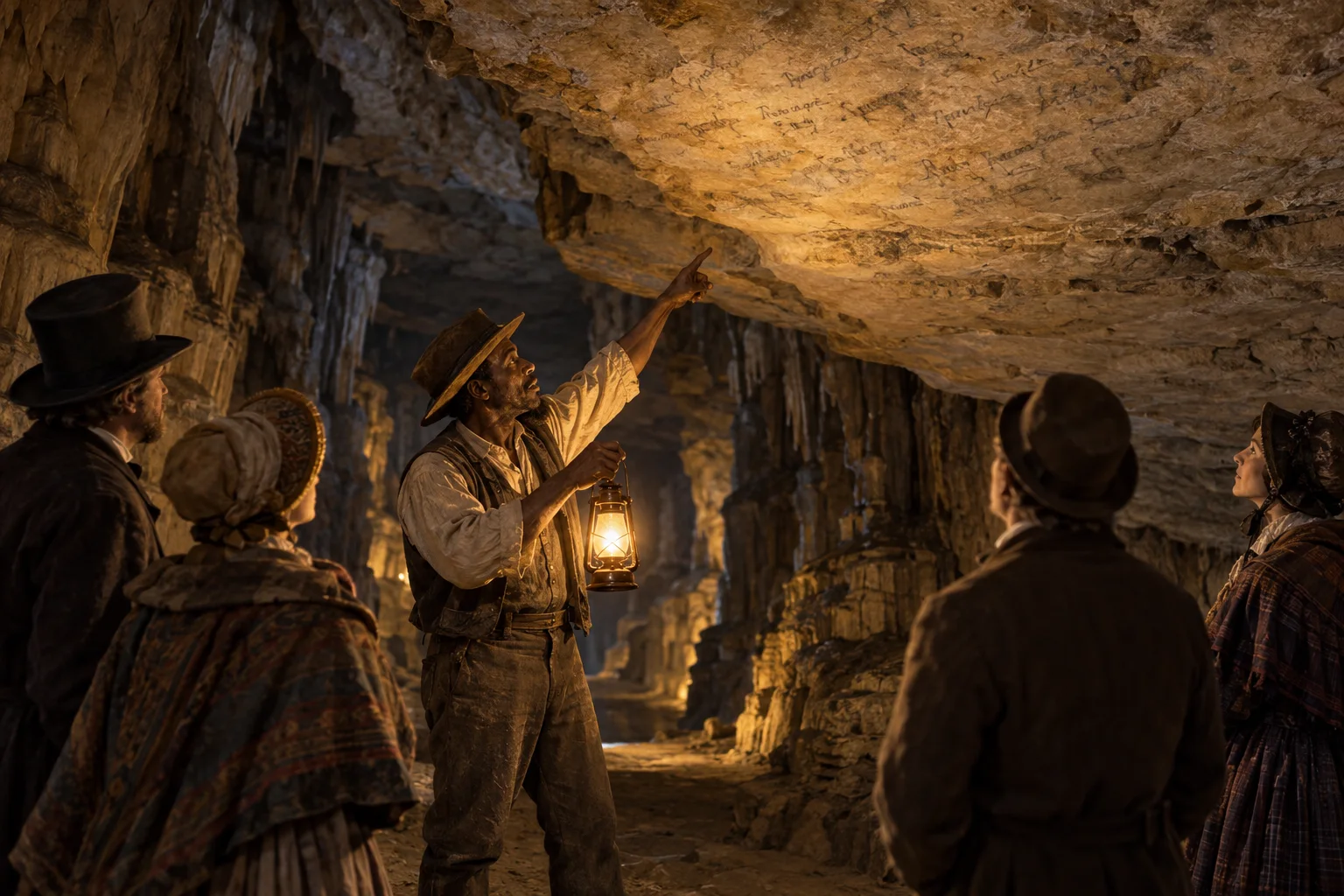
Those surviving marks offer a narrow but vivid trace of the people who moved through the cave. They also invite care. A historic inscription can be an artifact, while a new one can damage the same surface; the modern park experience centers on guided access and preservation.
A wedding story, carefully framed
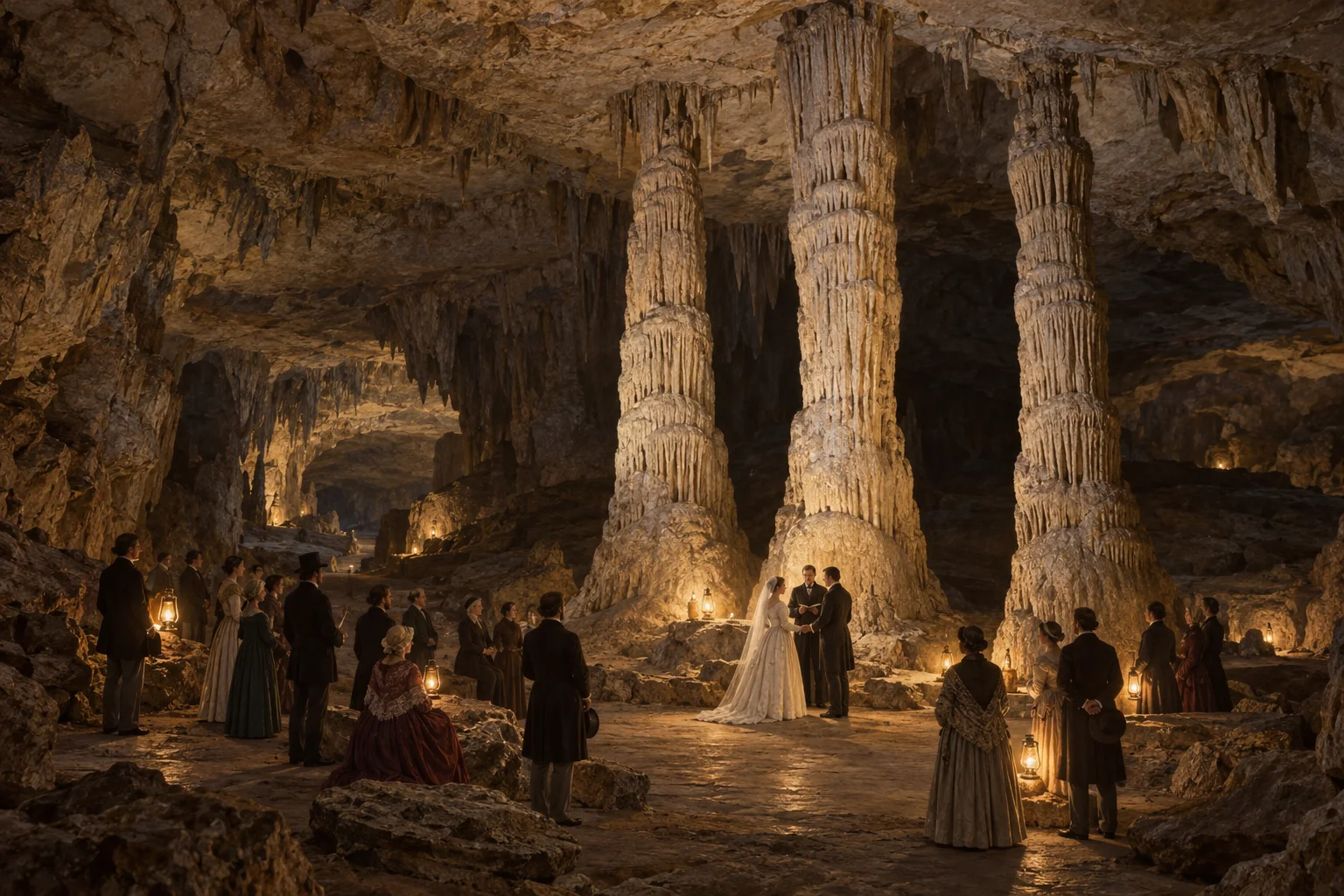
Gothic Avenue also contains the dripstone columns known as the Bridal Altar. The National Park Service reports that several couples married there during the nineteenth and twentieth centuries. The park also shares an 1800s tale about a bride who promised her mother she would never marry any man “on the face of the earth” and then married below ground. The account belongs to the cave’s storybook layer, preserved as a period tale.
An archive that stays underground
Mammoth Cave is widely known for its extraordinary length, yet Gothic Avenue offers a different kind of scale: a human one. Its formations supplied the architecture; tour guides supplied the route; visitors supplied the names and stories. The result is a peculiar historical room where geology, tourism, labor, and memory all occupy the same ceiling.
Anyone planning a visit should check the park’s current cave-tour schedule and follow ranger guidance. The cave’s historic signatures and formations are part of a protected cultural landscape, best appreciated in place and left for the next visitor to discover.