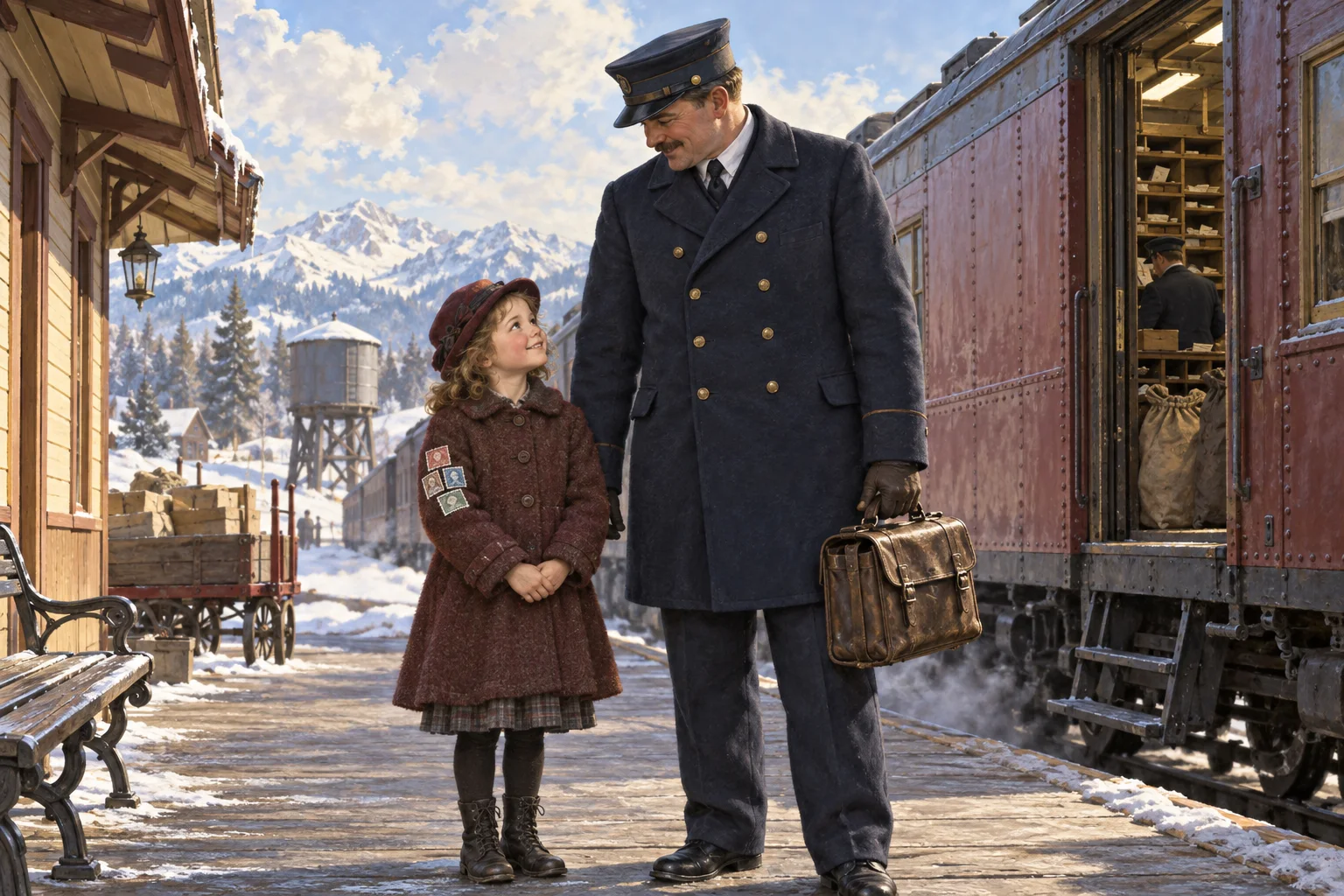
In 1914, a nearly six-year-old Idaho girl named May Pierstorff traveled about 73 miles from Grangeville to Lewiston to visit her grandparents. The story is remembered because 53 cents in parcel-post stamps were attached to her coat.
That fact is strange enough. It does not mean the Post Office Department had a normal service for shipping children, or that May was put in a sack with the letters. Smithsonian Libraries’ parcel-post history and the U.S. Postal Service record these trips as unusual attempts to stretch a new service beyond its purpose. Postal officials ultimately made their position plain: children were not mail.
A new service, a very bad loophole
Parcel Post began on January 1, 1913. It mattered especially to rural Americans, who could suddenly send and receive larger packages at standardized rates instead of relying entirely on private express companies. Smithsonian Libraries records that more than four million packages moved through 1,594 post offices in the service’s first five days.
New services invite imaginative customers. The U.S. Postal Service records that in 1913 the parents of an eight-month-old Ohio baby sent him a few miles to his grandmother. He was safely delivered, and regulations were quickly established to prevent additional attempts to send children through the mail. That makes the episode a revealing snapshot of an unfamiliar system, not an example to imitate.
The surviving accounts describe a handful of unusual trips, not a routine postal passenger service. Their specificity helped the stories endure, while the rule change made the Postal Service’s intended boundary clear.

May Pierstorff’s famous trip
May’s case became the best-known one. Smithsonian Libraries records that in 1914 the five-year-old traveled from Grangeville, Idaho, to her grandparents elsewhere in the state for 53 cents, then the rate used for chickens. The shared point is the important one: she traveled with adults, not as freight.
The stamps on her sleeve have made the story durable. They turned a family journey into a perfect newspaper oddity: an ordinary trip given a postage receipt. But the postal rules did not create a hidden passenger class. Smithsonian Libraries says word of May’s excursion quickly prompted the Post Office Department to forbid sending any human being by mail.
Why the legend needs a little care
“Children in the mail” is a memorable shorthand, but it can hide the human part of the history. These were families making questionable use of a new service, and workers who took responsibility for a child on a particular route. The surviving postal histories show why officials moved quickly to shut down the practice.
The story is still delightfully weird, just more precise when told straight. Parcel Post changed rural life by moving eggs, tools, food, catalog goods and thousands of other things. For a brief period, a few families tried to stretch its promise too far. The postal service’s answer was uncomplicated: a child was a traveler, not a parcel.
Fact check
- Documented: Parcel Post began in 1913, and postal-history sources document a small number of cases in which children traveled through the mail system.
- Documented: May Pierstorff traveled from Grangeville to her grandparents elsewhere in Idaho in 1914 with 53 cents in postage attached to her clothing.
- Important context: These episodes were not a standard passenger service. Officials quickly established regulations preventing children from being sent through the mail.
Leave a Reply