In Santa Fe, New Mexico, a 20-foot wooden staircase curls upward inside Loretto Chapel toward its choir loft. Its open center and graceful spiral made it a local landmark—and gave rise to a story of an unnamed carpenter who arrived, built the stairs, and left as mysteriously as he came.
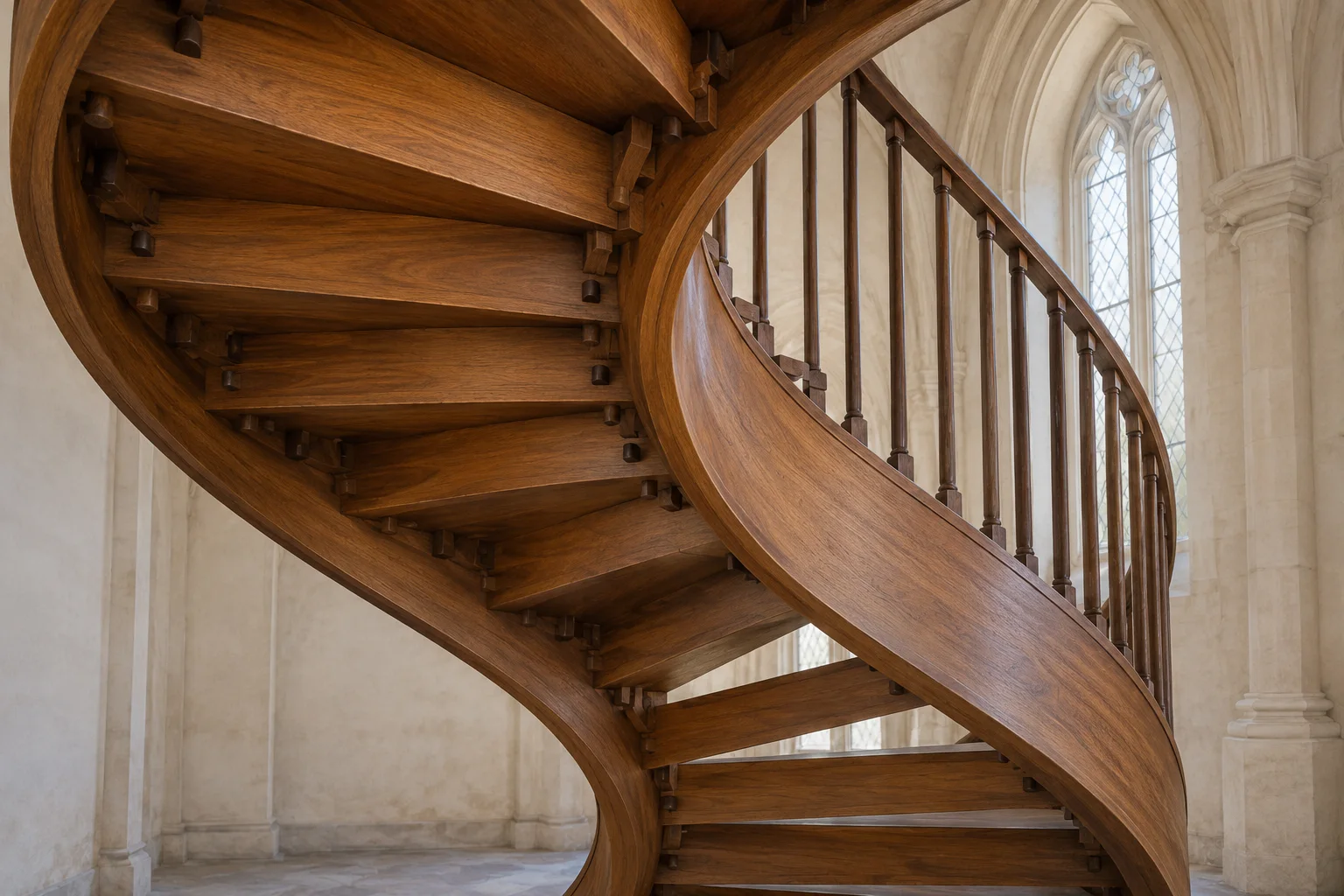
The staircase is real, and the legend is part of its history. The National Park Service describes the anonymous-carpenter account as a tradition and notes that the staircase uses wooden pegs and a curved stringer. Later historical research has suggested possible builders, giving the tale a more human-scale chapter while leaving room for uncertainty.
A small chapel, an elevated choir loft
The Sisters of Loretto came to Santa Fe to establish a school for girls. Their academy opened in 1853, and construction of the chapel began in 1873. The Gothic Revival building was completed in 1878, with a choir loft above the entrance. A compact spiral stair offered access while preserving floor space in the chapel.
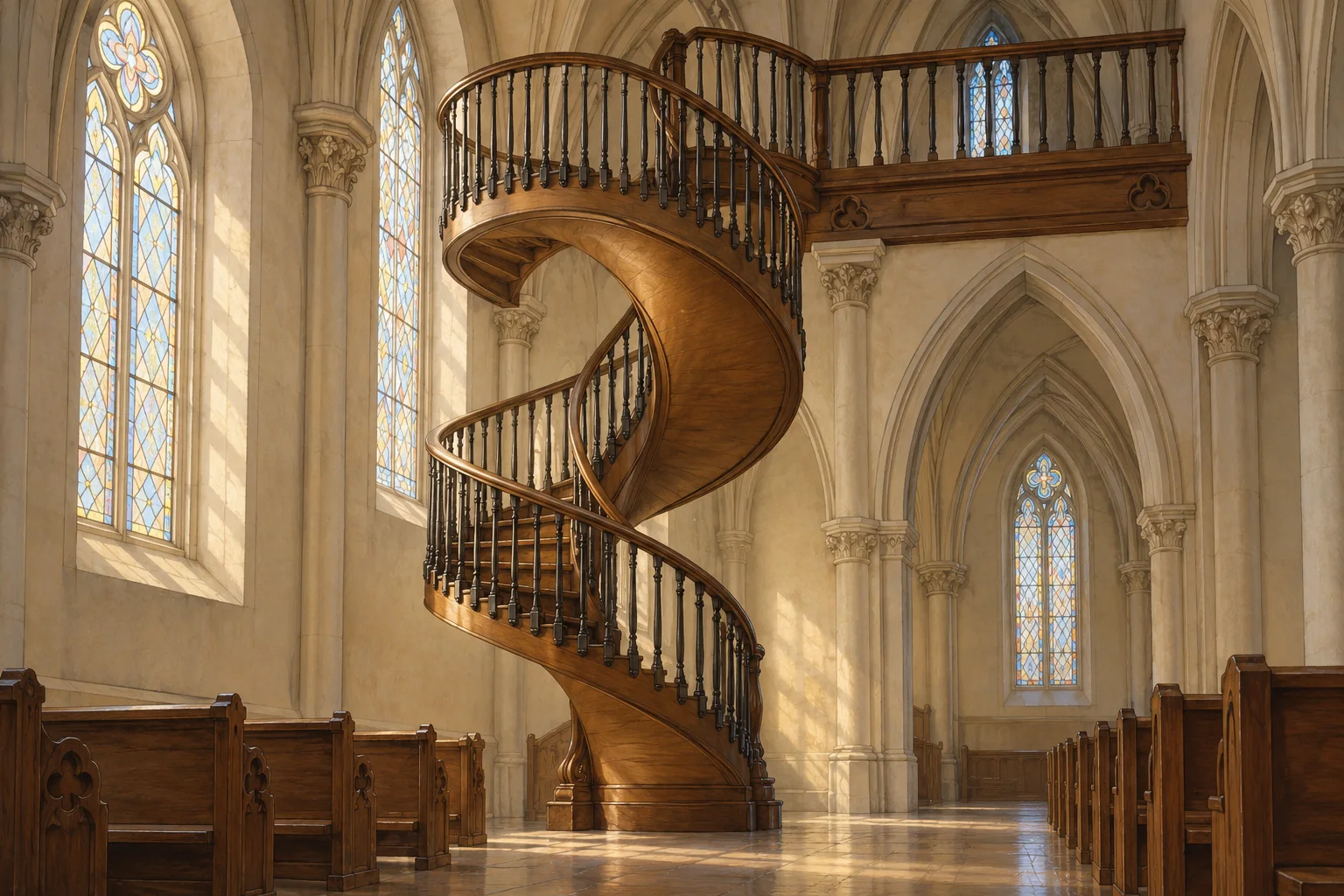
Accounts differ on the staircase’s exact timeline and its maker. The National Park Service places it around the chapel’s completion in 1878. A Historic Santa Fe Foundation history describes an unknown carpenter volunteering around 1881. Both preserve the striking image of an individual craftsperson solving a practical architectural problem.
Tradition and the historical record
The chapel’s popular story links the carpenter to St. Joseph, the patron saint of workers. In the tradition recorded by the National Park Service, the sisters sought help and an unfamiliar carpenter appeared, completed the staircase, then departed without payment. That account belongs to the chapel’s folklore; surviving evidence offers possible human names rather than a confirmed identification.
One candidate highlighted by the Park Service is François-Jean Rochas, a French carpenter. Architectural historians have also discussed other European journeyman carpenters who worked in the region. These leads help locate the staircase within the skilled building trades of nineteenth-century Santa Fe, while the precise maker remains uncertain in the sources consulted here.
A remarkable piece of local history
The staircase’s appeal comes from more than a single legend. It connects the sisters’ school, Santa Fe’s architectural history and the work of carpenters whose names were often left out of building records. Its carefully curved timber structure continues to draw visitors into a story that welcomes both tradition and historical inquiry.
Today the chapel is preserved as a historic site and museum. Visitors can see the staircase as an object of craft and as a landmark shaped by generations of local memory. The evidence supports a clear account of its purpose and design, while the builder story remains a thoughtful blend of documented history and folklore.
Sources: National Park Service history of Loretto Chapel; Historic Santa Fe Foundation’s Loretto Chapel history; and Loretto Chapel’s own history.
Leave a Reply