On one September Monday each year, the village of Abbots Bromley in Staffordshire makes room for an extraordinary procession. Six dancers carry tall reindeer antlers on wooden poles, accompanied by a Fool, a Hobby Horse, a Bowman, Maid Marian and a musician. The Horn Dance begins with the antlers at St Nicholas Church, travels through the parish, and returns them to the church in the evening.
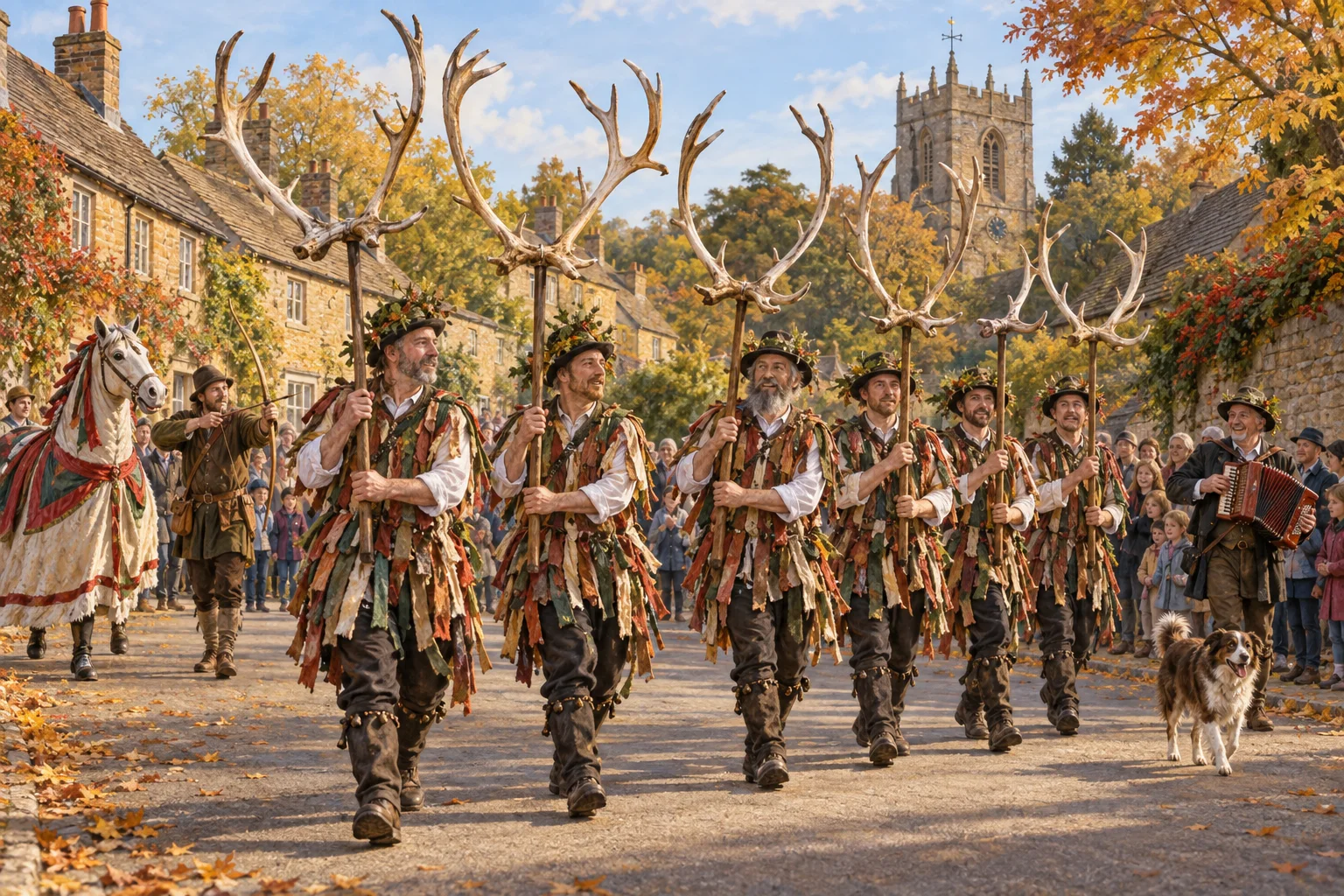
The sight feels wonderfully out of scale with an ordinary village day: antlers rise above the walkers, their branching silhouettes appearing around cottages and hedgerows. Yet the event belongs to a carefully maintained local rhythm. The village’s Parish Council describes the annual route through Abbots Bromley, with the Deer-men, Fool, Hobby Horse, Bowman, Maid Marian and musician appearing at locations around the parish.
Antlers with an 11th-century date
The remarkable age belongs to the antlers themselves. The English Folk Dance and Song Society says carbon analysis dated the antlers used in the dance to the 11th century. They are reindeer antlers fitted to wooden heads and poles, turning a natural material into an object that can be carried, stored and passed through a living tradition.
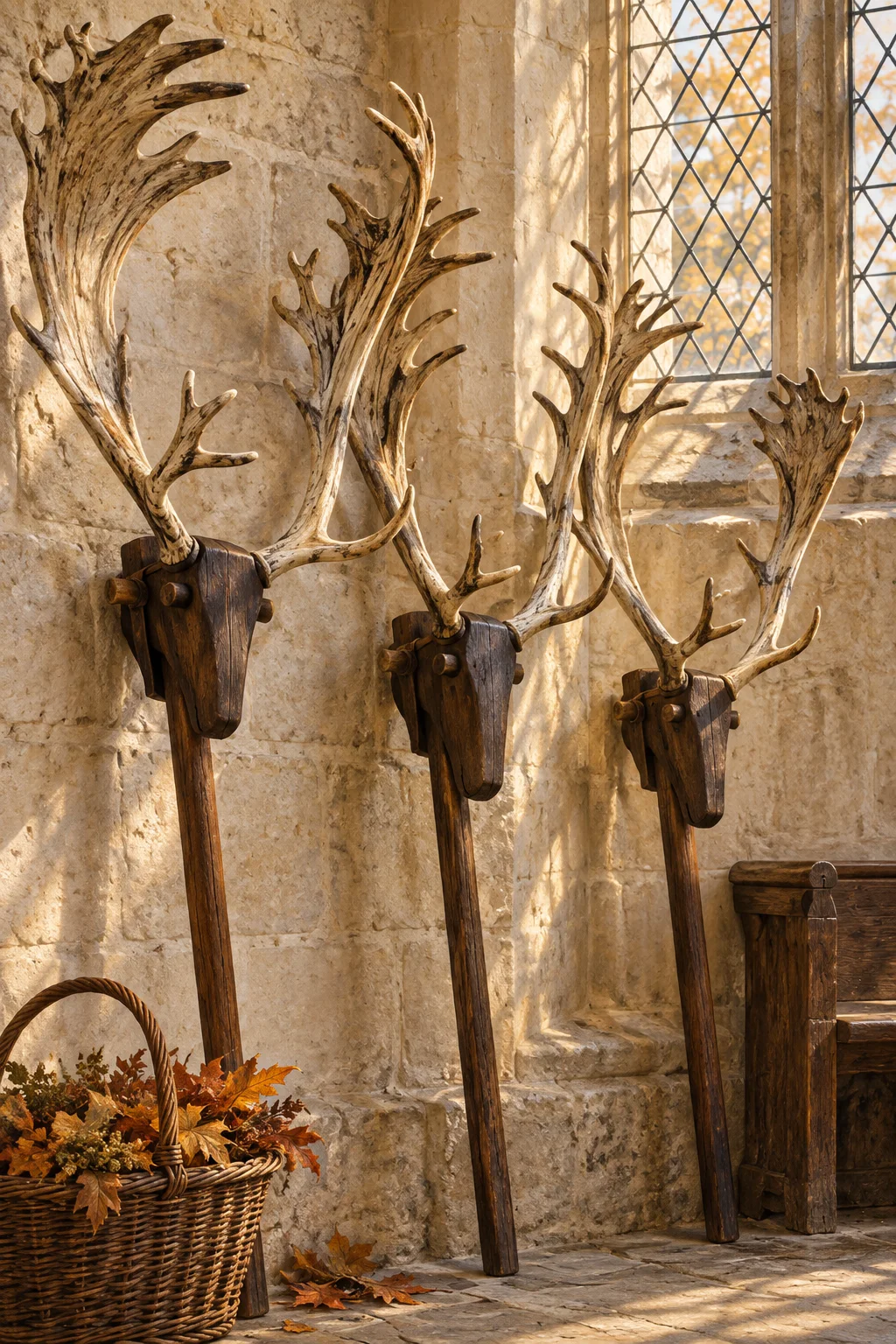
A medieval date for the antlers gives the dance an extraordinary physical link to the past. The local parish account places the Horn Dance within a tradition associated with the 1226 Barthelmy Fair, while the antlers’ material dating and the annual procession are documented by the folk-dance society and the Parish Council.
A procession built for a parish
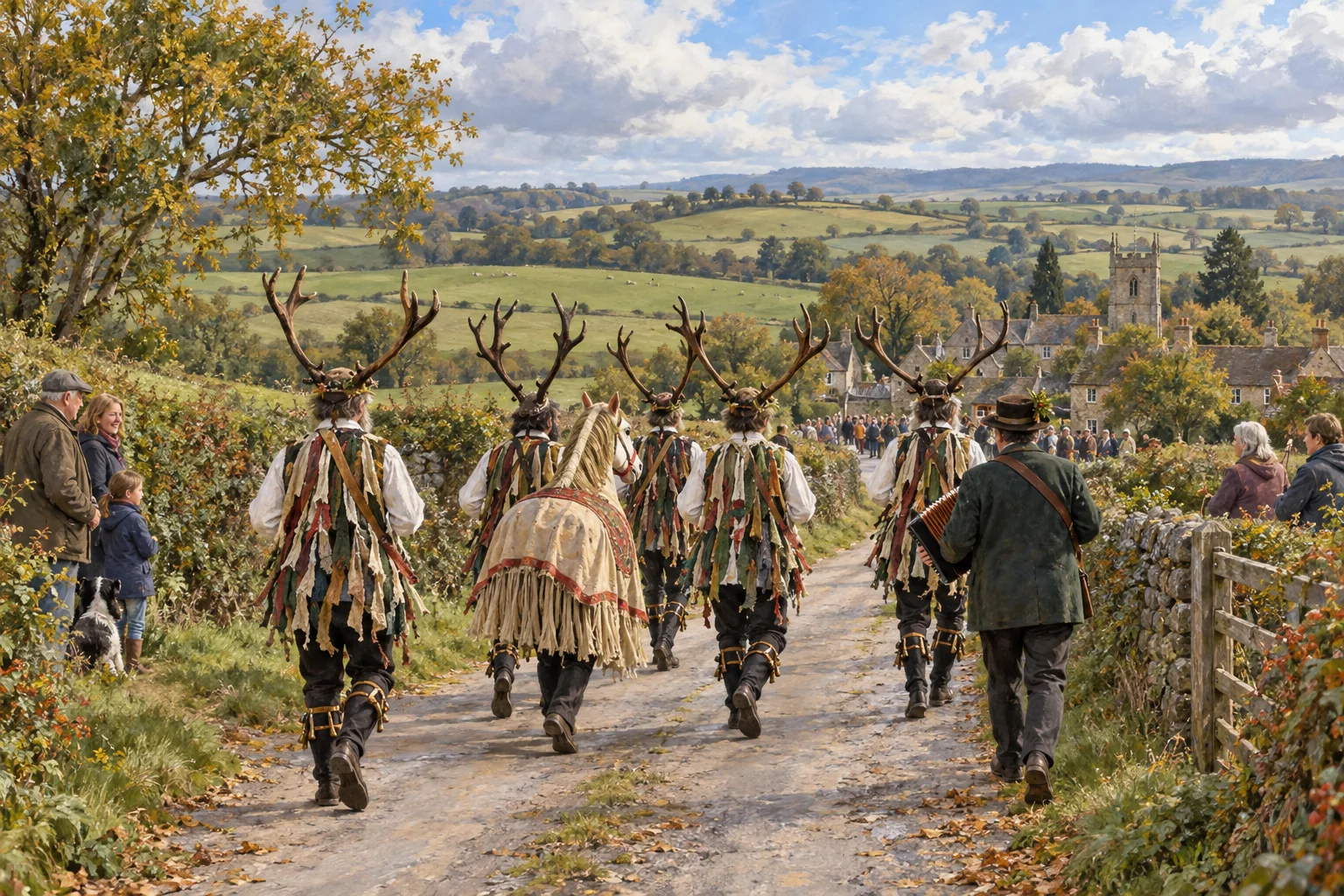
The Horn Dance unfolds across a full day in the village and surrounding area. The Parish Council describes the dancers collecting the horns from the church at eight in the morning and covering roughly ten miles. Its route gives different parts of the parish a turn in the day: a church, a market space, lanes, farms, homes and gathering places all become part of the occasion.
The characters bring their own visual language. The Deer-men make the antlers seem to move as a group. The Hobby Horse adds a playful animal presence. The Fool and Maid Marian connect the outing to the wider world of English folk performance, while music establishes the pace. The Parish Council and the English Folk Dance and Song Society both describe this combination of roles as part of the tradition.
Why the mystery is part of the appeal
Many old customs arrive with neat origin stories. Abbots Bromley offers something more interesting: an object with a deep material history, a well-observed annual practice, and a community account that continues to give the day meaning. The open questions invite care rather than speculation. Visitors can enjoy the spectacle while recognizing the work of the people who carry it forward.
That blend is the Horn Dance’s enduring oddity. The antlers are ancient; the footsteps, music and welcome belong to the present. For one day each September, a Staffordshire village turns those two timescales into a moving piece of local culture.
Leave a Reply