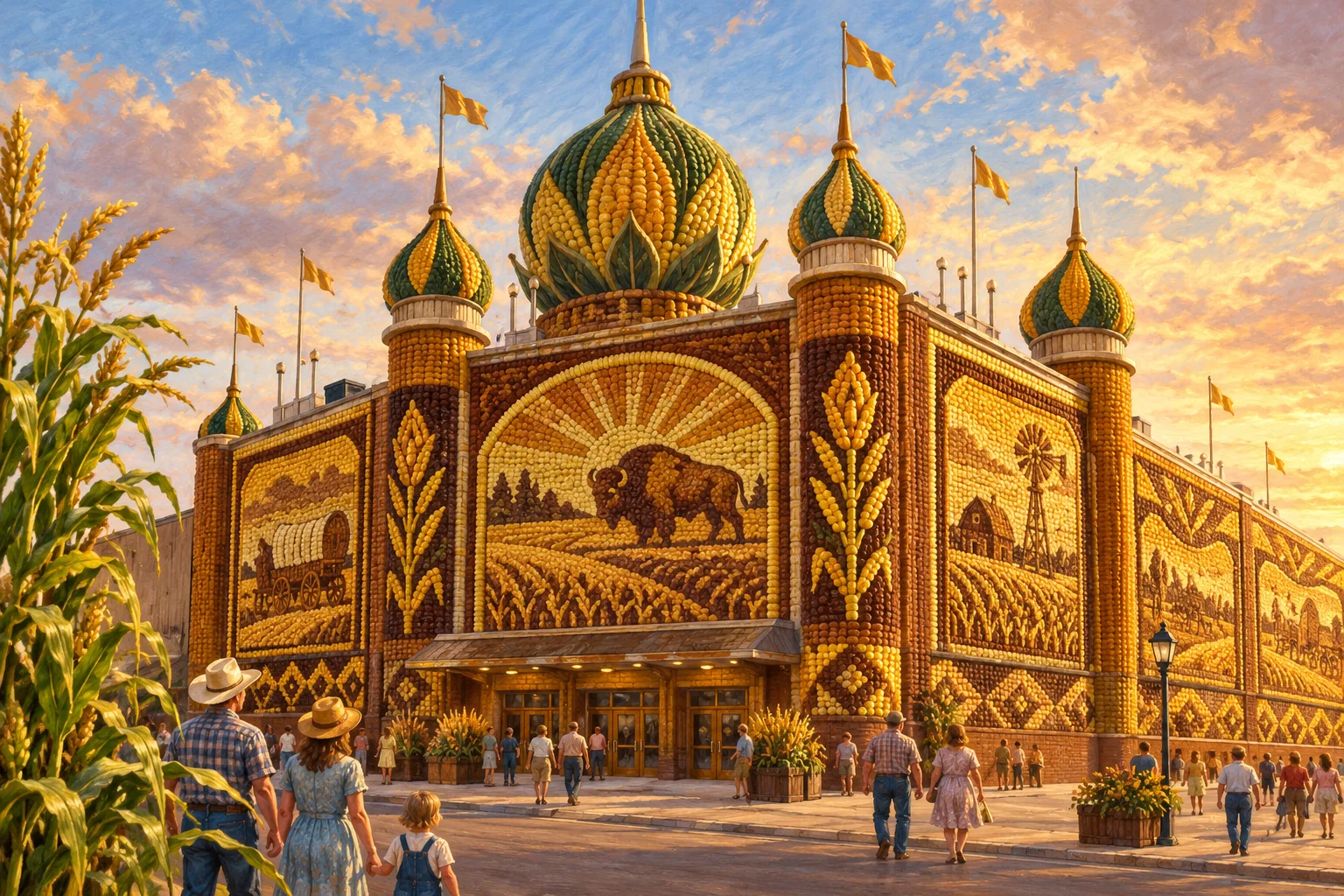
In Mitchell, South Dakota, a harvest celebration grew into a building dressed for the occasion. The Corn Palace began in 1892 as a way to show visitors the region’s agricultural promise. More than a century later, its walls still turn local crops into large-scale pictures, refreshed each year by designers and a crew of workers.
The idea paired civic hospitality with a practical display: bring city residents and their rural neighbors together at harvest time, then let the region’s produce decorate the gathering place. The first palace stood on Main Street. Its successor arrived in 1905, and Mitchell committed to a permanent structure in 1919. The present building opened in 1921, carrying the festival forward while also serving the community as an arena and event hall.
A mural assembled one kernel at a time
Each year brings a new mural theme and a fresh arrangement of naturally colored corn, grains, and native grasses. The Corn Palace describes using a dozen colors or shades of corn. The kernels are attached ear by ear, while other plants frame and enrich the pictures.
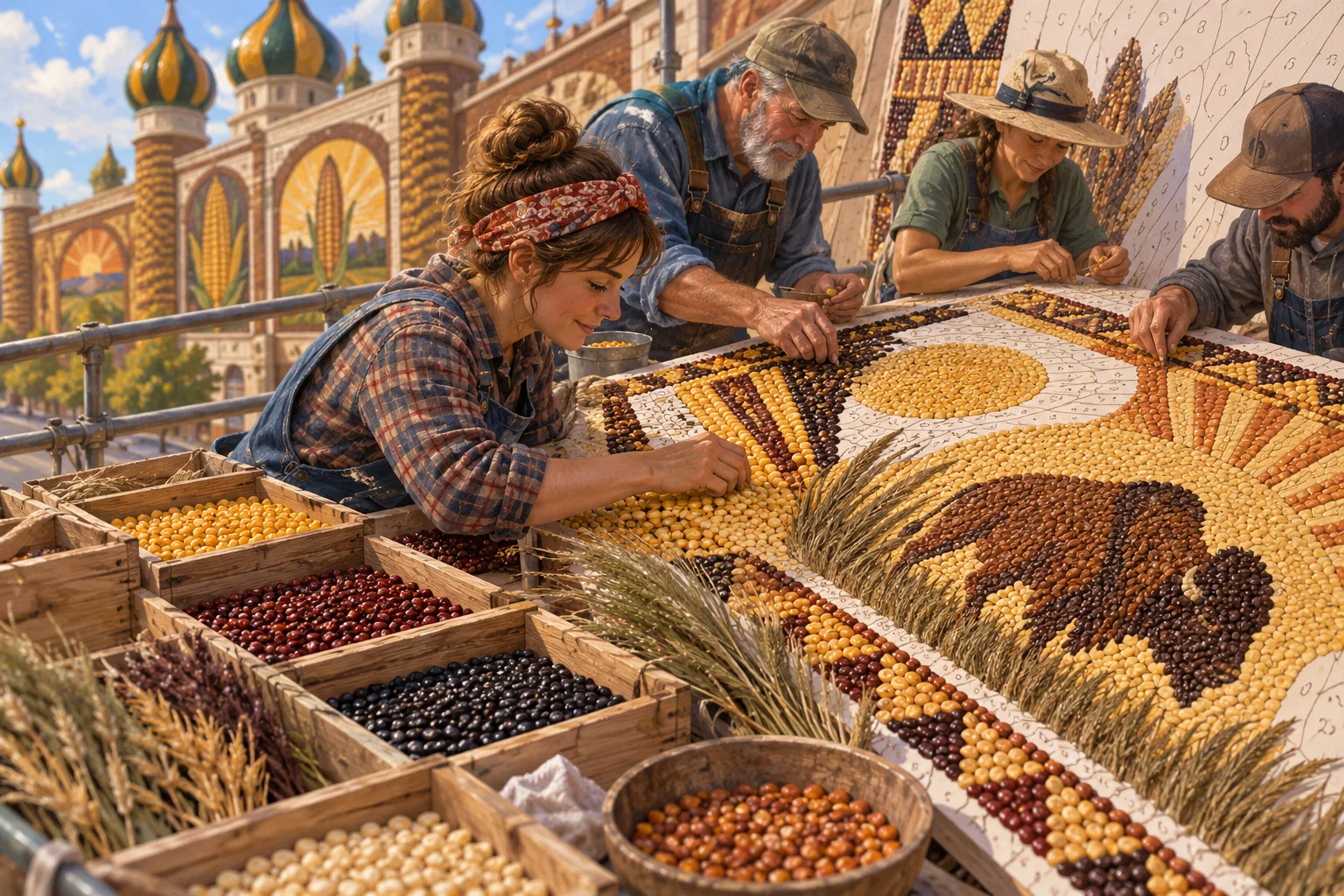
The design work starts well before the harvest material is ready. A local committee selects a theme, and Dakota Wesleyan University students in digital media and design courses create the mural concepts with faculty guidance. A local farmer grows the corn, and a team of roughly 20 workers installs the new panels as crops become available in late summer.
The work follows the agricultural calendar. Crews begin preparing the building in late spring; new corn murals are typically completed between late August and early October. Growing conditions shape the schedule, so the changing facade reflects both an artistic plan and the year’s crop.
A civic hall with a crop-art exterior
The Corn Palace’s unusual combination is the point: its seasonal decoration turns an agricultural exhibit into public art, while the building remains useful year-round. The venue hosts gatherings, performances, school events, and basketball. The permanent palace was completed in time for the 1921 festivities, and Mitchell hosted its first boys’ state basketball tournament there that winter.
That blend of harvest display and community space explains why the tradition endured. The palace gives local artists a large canvas, gives area crops a starring role, and gives the city a shared landmark whose details change with each new mural season.
Leave a Reply