Deep inside Virginia’s Luray Caverns, a keyboard can make a cave sing. The instrument is real, but its origin story has more than one version.
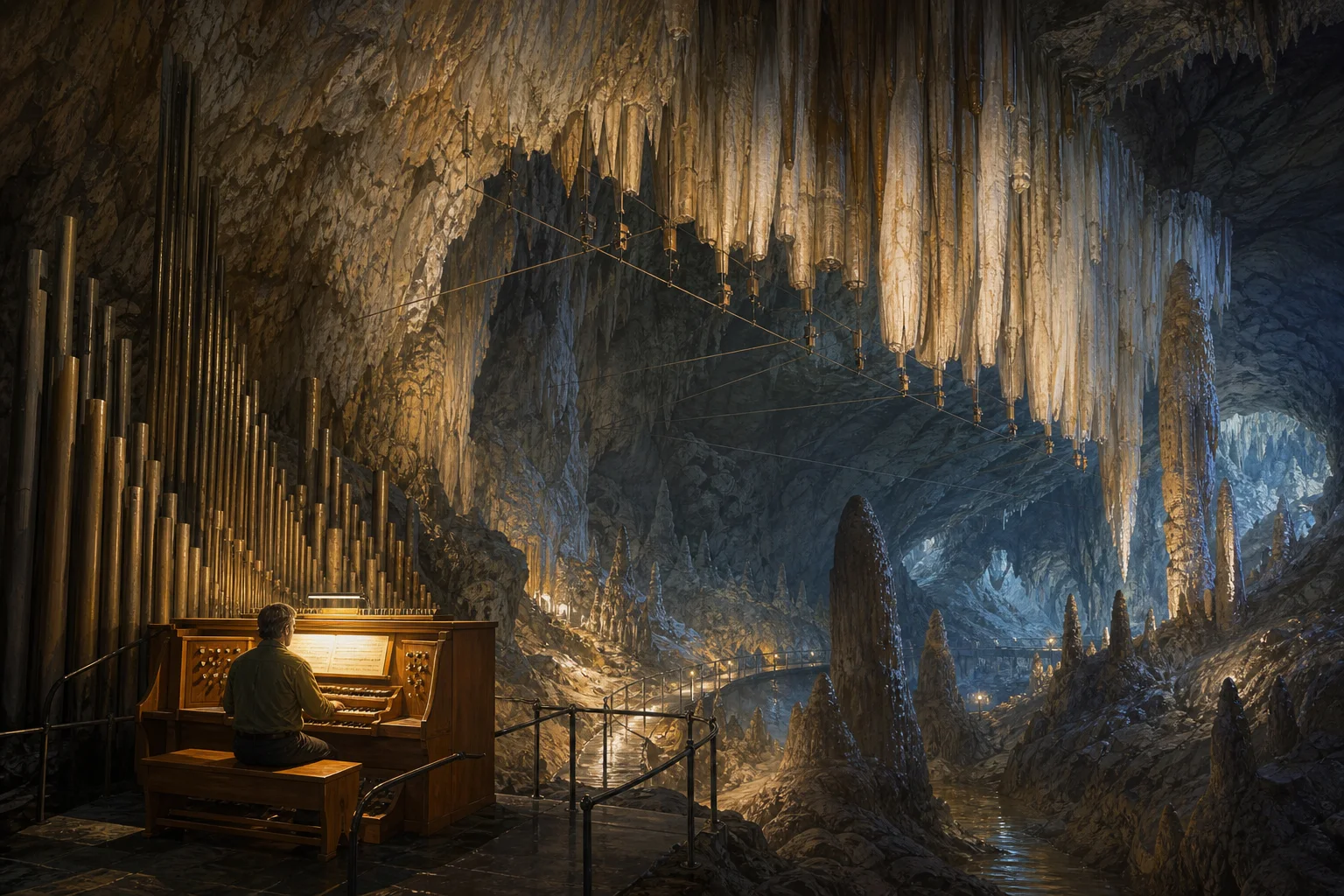
Most keyboards send electricity to speakers. The Great Stalacpipe Organ sends it to rubber-tipped mallets hidden around a cavern, where they tap selected stalactites. The result is a musical instrument whose “pipes” are mineral formations and whose concert hall is the cave itself.
A strange idea, tested patiently
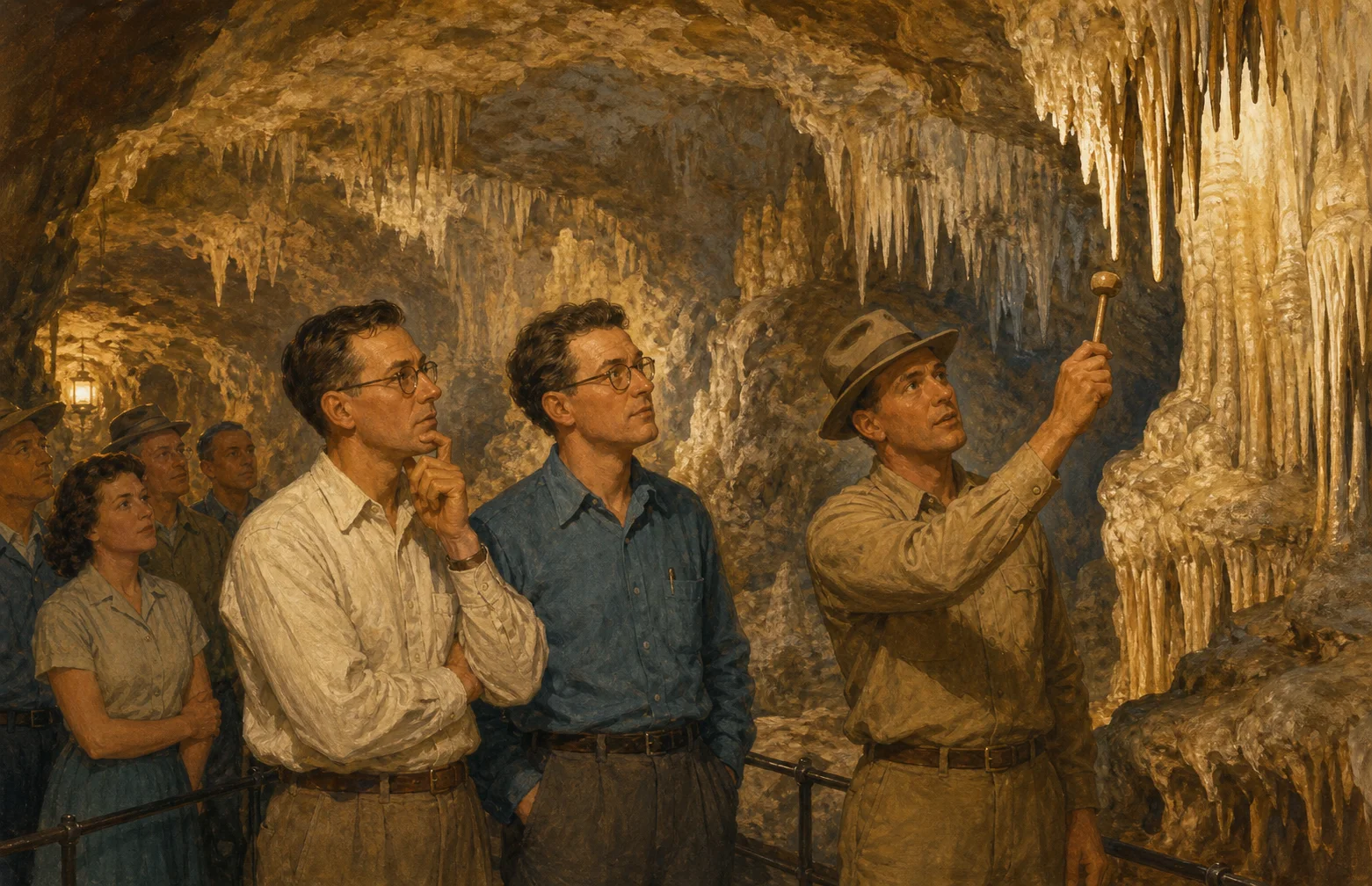
The documented version of the story begins in 1954. Leland W. Sprinkle, a mathematician and electronics scientist who worked at the Pentagon, visited Luray Caverns in Virginia with his son. Guides then demonstrated the formations by tapping them with a small mallet; different shapes produced different tones. Luray Caverns’ own history says that demonstration gave Sprinkle the idea for a much larger instrument.
Sprinkle spent the next three years testing formations across more than 3.5 acres of the cave. The cavern’s account says he used 13 English tuning forks while searching for tones, then carefully altered selected stalactites to bring them to pitch. Electrical mallets and wiring connected those formations to a large, four-manual console.
It is not quite a pipe organ
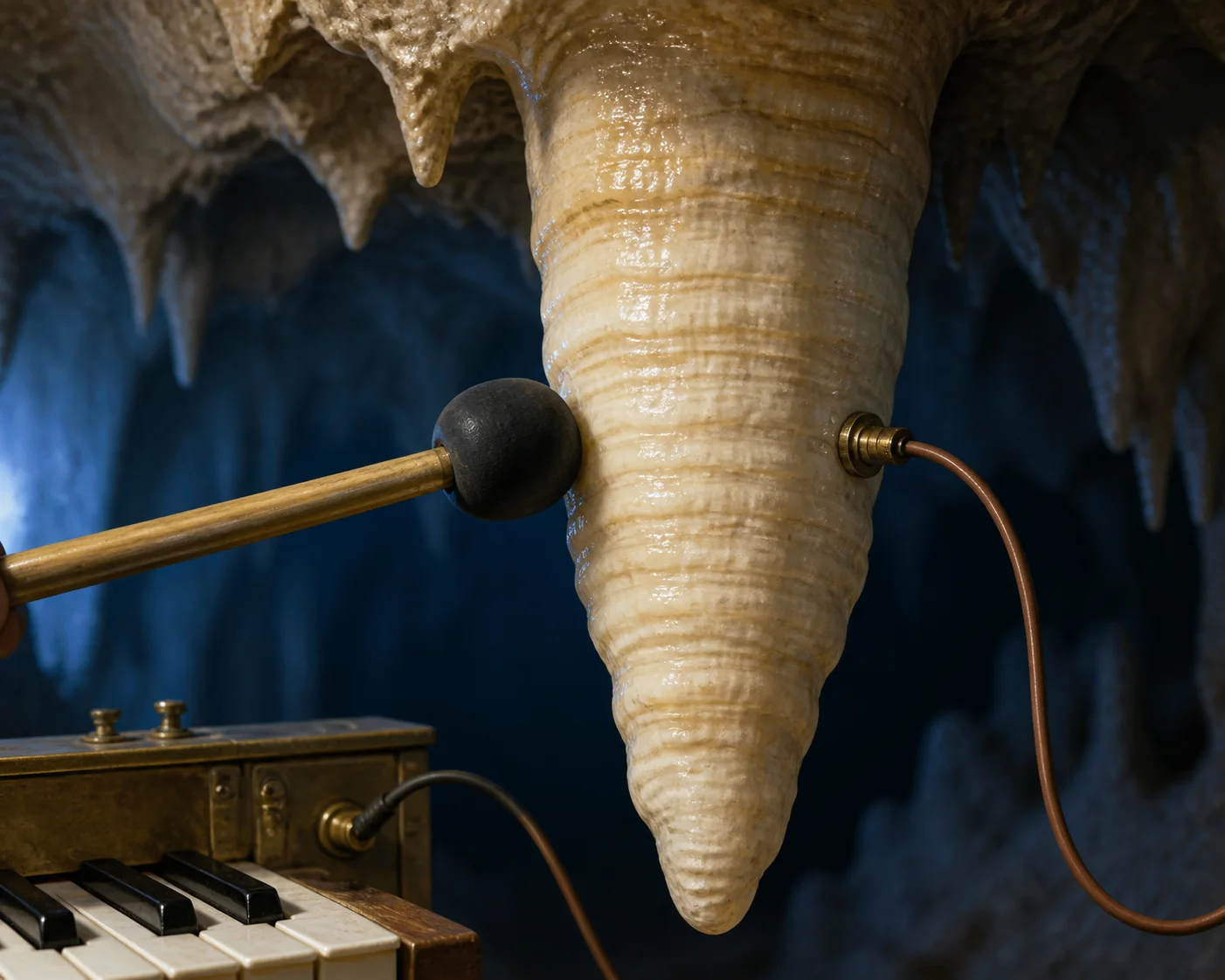
The name is a playful mash-up of “stalactite” and “pipe organ.” In engineering terms, the Stalacpipe is closer to a giant, electrically actuated lithophone: a keyboard triggers mechanical strikers, and the stone itself vibrates. PBS NewsHour described the working instrument as a 37-note percussion instrument. Luray says the mallets are rubber-tipped plungers, so the formations can sound without a performer taking a hammer to the cave by hand.
The cavern adds the instrument’s unusual scale. Guinness World Records lists the Great Stalacpipe Organ as the largest natural underground musical instrument, with stalactites covering 1.4 hectares, or about 3.5 acres. That is a measurement of the instrument’s reach through the cave—not a claim that the organ is the world’s largest conventional pipe organ. Guinness maintains separate records for conventional organs, an important distinction when a superlative is doing a lot of work in a headline.
What is fact, and what is folklore?
Confirmed by the strongest available accounts: Sprinkle visited Luray in 1954; he was inspired by the sound of tapped formations; he developed the instrument over three years; electronic mallets connect selected stalactites to an organ-style console; and Guinness records the instrument’s 3.5-acre underground span. Luray also says the organ can still be played manually, although an automated system now plays many public melodies in a player-piano-like fashion.
Folklore or disputed retelling: later accounts sometimes say Sprinkle’s son struck his head on a low stalactite, and that the accidental note sparked the invention. It is a memorable detail, but it is not the origin story given in Luray’s own account or in the PBS description of the 1954 visit. The careful version is therefore the less cinematic one: a guide demonstrated the cave’s tones, and an observant engineer decided to build a system around them.
Why the stone can sing
Stalactites are not hollow pipes waiting for air. They are cave formations built when water dissolves limestone, carries calcium carbonate into an air-filled chamber, and deposits the mineral as the water loses carbon dioxide or evaporates. The National Park Service explains that stalactites hang from cave ceilings and can take thousands of years to form.
When one of these formations is struck, it can vibrate. Its dimensions and density determine the tone, much as the length and material of a xylophone bar affect its pitch. Sprinkle’s achievement was not making nature obey a mythic musical rule; it was identifying usable tones, shaping some formations with care, and building the electromechanical link that lets a person play them from a keyboard.
That is why the Great Stalacpipe Organ remains such a satisfying oddity. It is neither a geological miracle that composes by itself nor a conventional organ hidden underground. It is a patient human invention wrapped around very old stone—and a reminder that sometimes the weirdest instrument begins with somebody listening closely to a tour guide.
Leave a Reply