Editorial illustration.
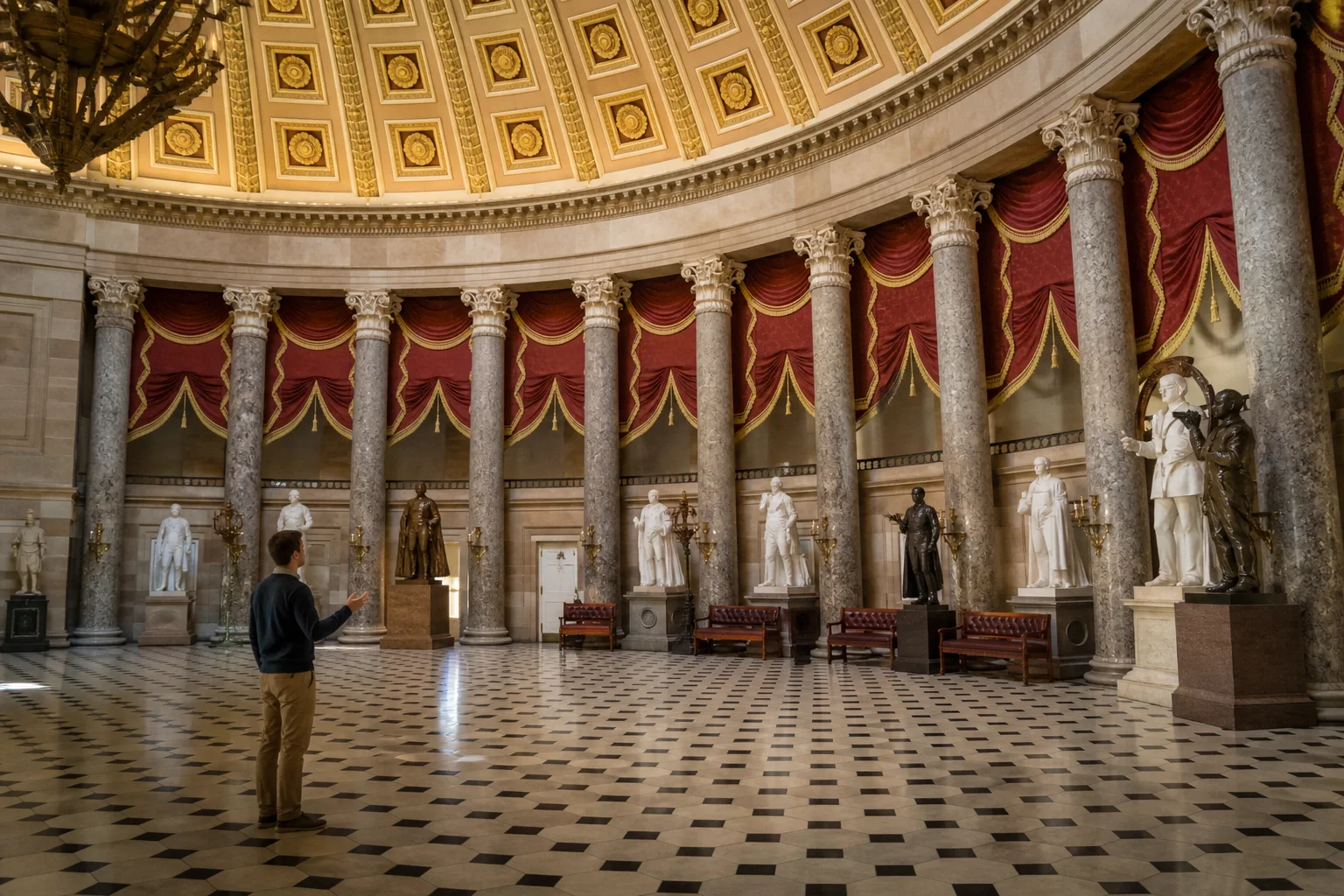
In one room of the U.S. Capitol, the most useful seat for hearing a person may not be the nearest one. National Statuary Hall has a half-dome that can carry a voice along its curved surface, creating the unusual effect known as a whispering gallery. In the right spots, the Architect of the Capitol says, a speaker many yards away may be clearer than someone closer at hand.
The feature is an accident of architecture rather than a secret passage or an electronic trick. The room was built as the House of Representatives’ chamber, and its smooth curved ceiling created so much echo that ordinary debate was difficult. The House eventually moved to a new chamber; the former room became National Statuary Hall, which now displays part of the collection of statues contributed by the states.
An old House chamber with a new job
The present hall was rebuilt after British troops burned the earlier House chamber in 1814. According to the Architect of the Capitol, Benjamin Henry Latrobe and Charles Bulfinch completed the room between 1815 and 1819. It has the shape of an ancient amphitheater, with a half-dome, lofty columns, and a lantern that admits daylight through the ceiling.
Its original use exposed the room’s acoustic problem. The Architect of the Capitol says that the smooth, curved ceiling promoted annoying echoes; draperies and even a reversed seating arrangement did not solve it. A separate, more functional House chamber was authorized in 1850, and representatives began meeting there in 1857.
How the whispering effect works
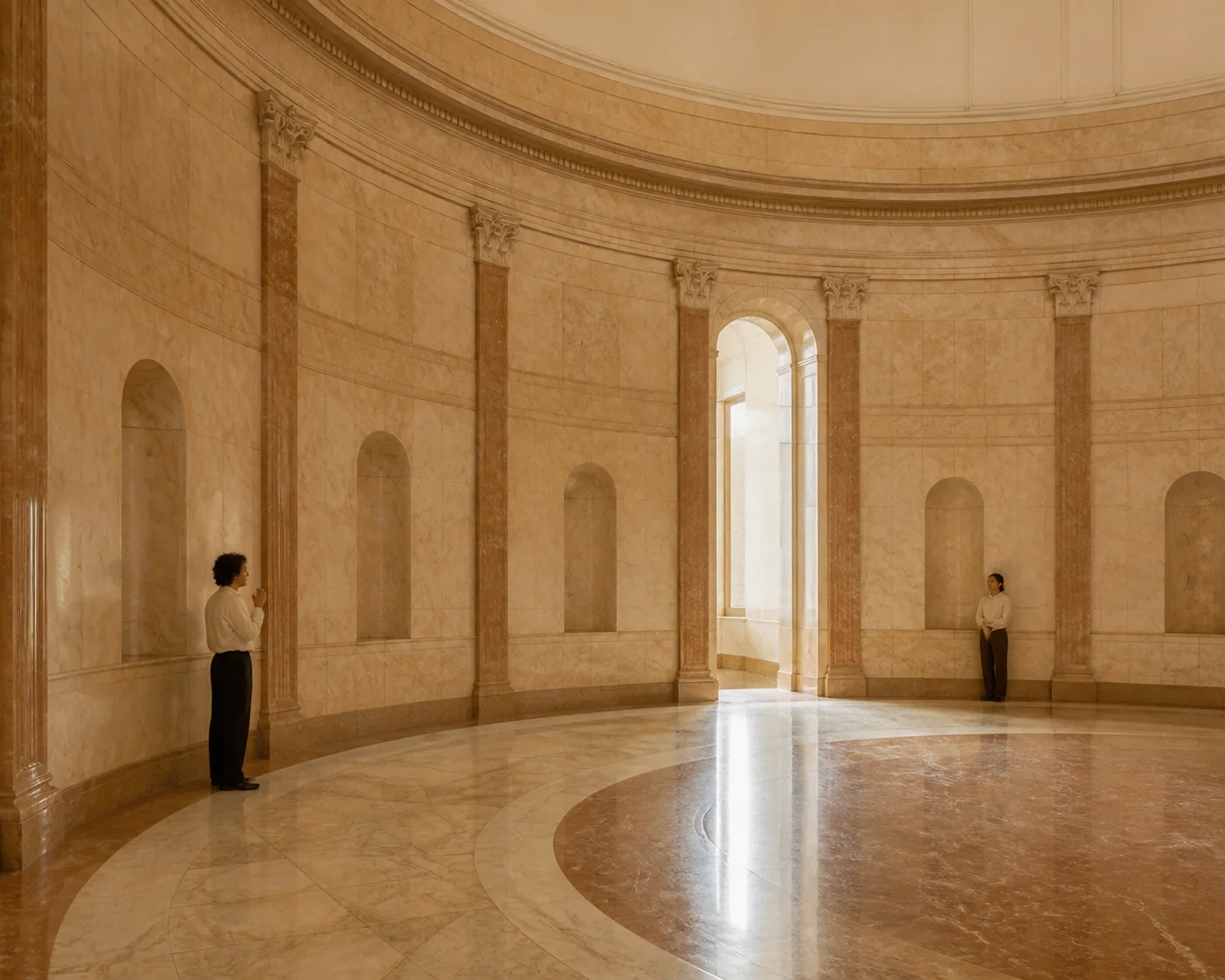
Sound normally spreads outward from its source. A smooth curved surface can redirect some of those sound waves so they travel along the curve instead of dispersing evenly through a room. In National Statuary Hall, that geometry produces the peculiar listening locations documented by the Architect of the Capitol. It is a concentration effect, not a way to make a private conversation universally audible.
The exact places that work have changed. The Architect of the Capitol notes that the modern echoes occur in different locations than they did in the 19th century because the hall’s floor and ceiling are no longer the same. That is an important limit on the legend: the effect depends on the room’s built surfaces, not on a permanent pair of magical floor tiles.
A long-lived Capitol curiosity
Historical visitors noticed the room’s strange acoustics, too. A Library of Congress digitization of an 1890 book, American Court Gossip, describes guides pointing out “whispering stones” in the marble floor and claims that a faint whisper could carry a long way. That is a period account, not a measurement, so it is best read as evidence of the room’s reputation rather than as a precise distance claim.
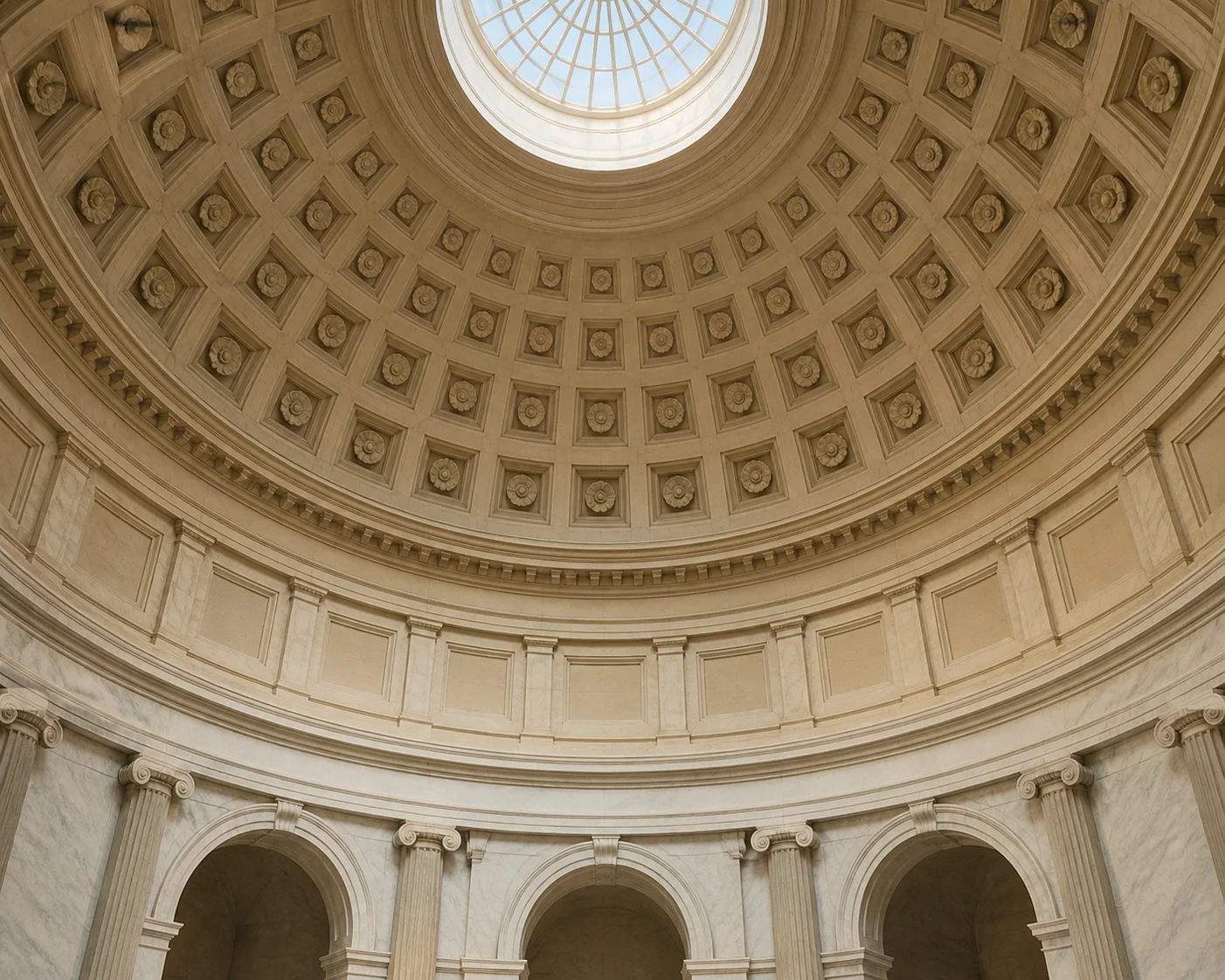
Today the room’s awkward old acoustics are part of its appeal. The same half-dome that complicated legislative debate left behind an approachable physics lesson: in a carefully shaped space, where a sound begins can matter as much as how loudly it is made.
Sources
- Architect of the Capitol, “National Statuary Hall” — room history and the documented whispering-gallery effect.
- Architect of the Capitol, “National Statuary Hall Collection” — history of the collection now displayed throughout the Capitol.
- Library of Congress, American Court Gossip — 1890 visitor-era account of the room’s “whispering stones” reputation.
Leave a Reply