Category: Peculiar Places

  • The Two-Minute Flight That Keeps Two Orkney Islands Connected

    The Two-Minute Flight That Keeps Two Orkney Islands Connected

    On a map, Westray and Papa Westray look close enough to wave across the water. In the timetable, they are joined by a scheduled flight that can be over before a kettle boils.
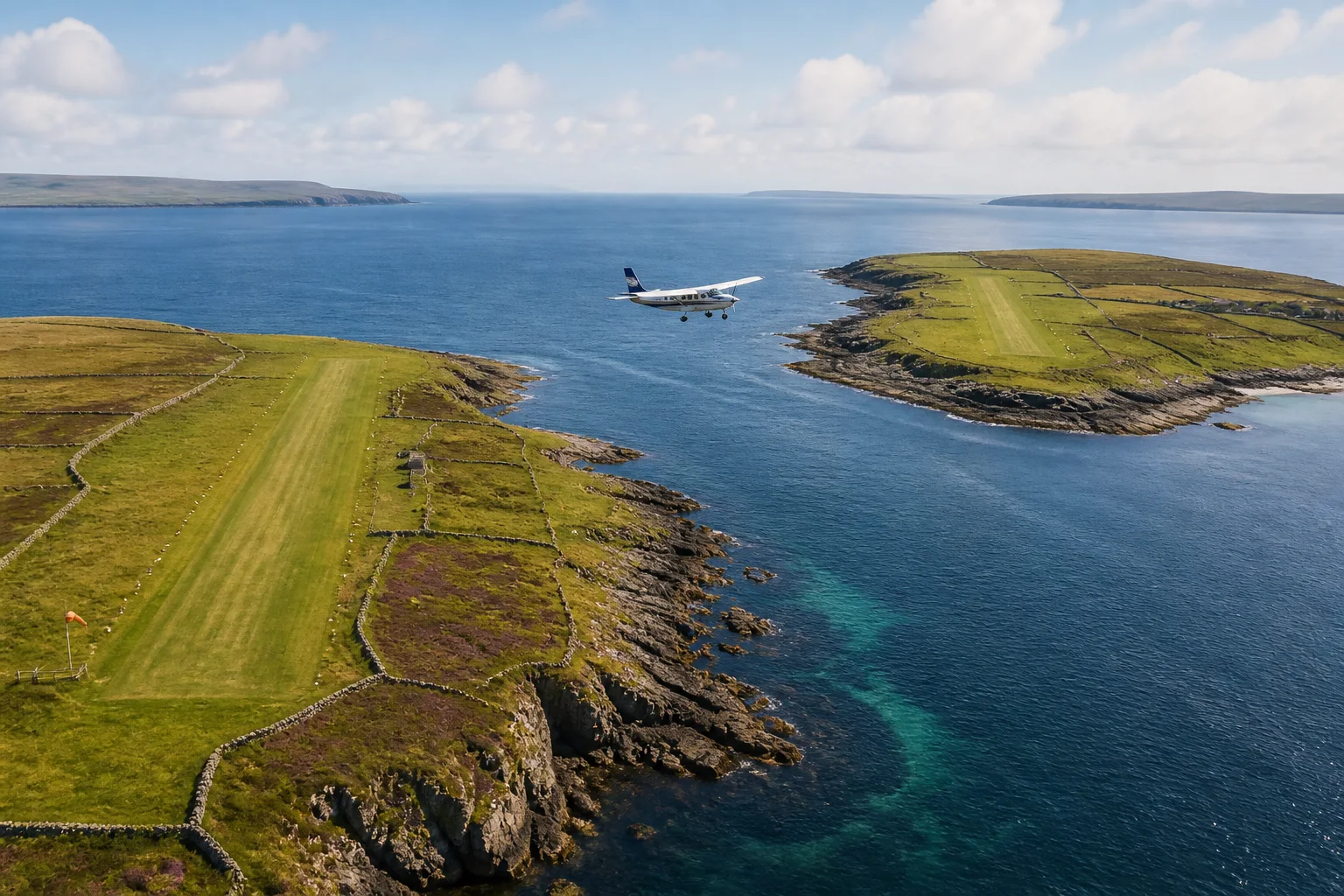
    A small island aircraft flying between two green Orkney islands and their coastal runways
    Editorial illustration: a small aircraft crosses the narrow channel between Orkney’s Westray and Papa Westray.

    The hop between the two Scottish islands is widely recognized as the world’s shortest domestic scheduled flight. Guinness World Records lists the route at 2.74 kilometers (1.7 miles), with a scheduled time of two minutes including taxiing. Loganair, the airline operating Orkney’s inter-island service, says the sector usually takes about 90 seconds.

    Those numbers make the route sound like an aviation punchline. It is also ordinary public transport for people who live there. The flight is part of Orkney’s inter-island network, a Public Service Obligation service operated under contract with Orkney Islands Council. The council describes the flights to the outer North Isles as essential links for communities that cannot be served commercially.

    A flight shorter than most airport routines

    The route is flown in a Britten-Norman Islander, a compact aircraft with room for eight people, seven of them passengers. There is no long climb into the sky. After takeoff from one island, the aircraft crosses a narrow stretch of sea and lines up with the other island’s runway.
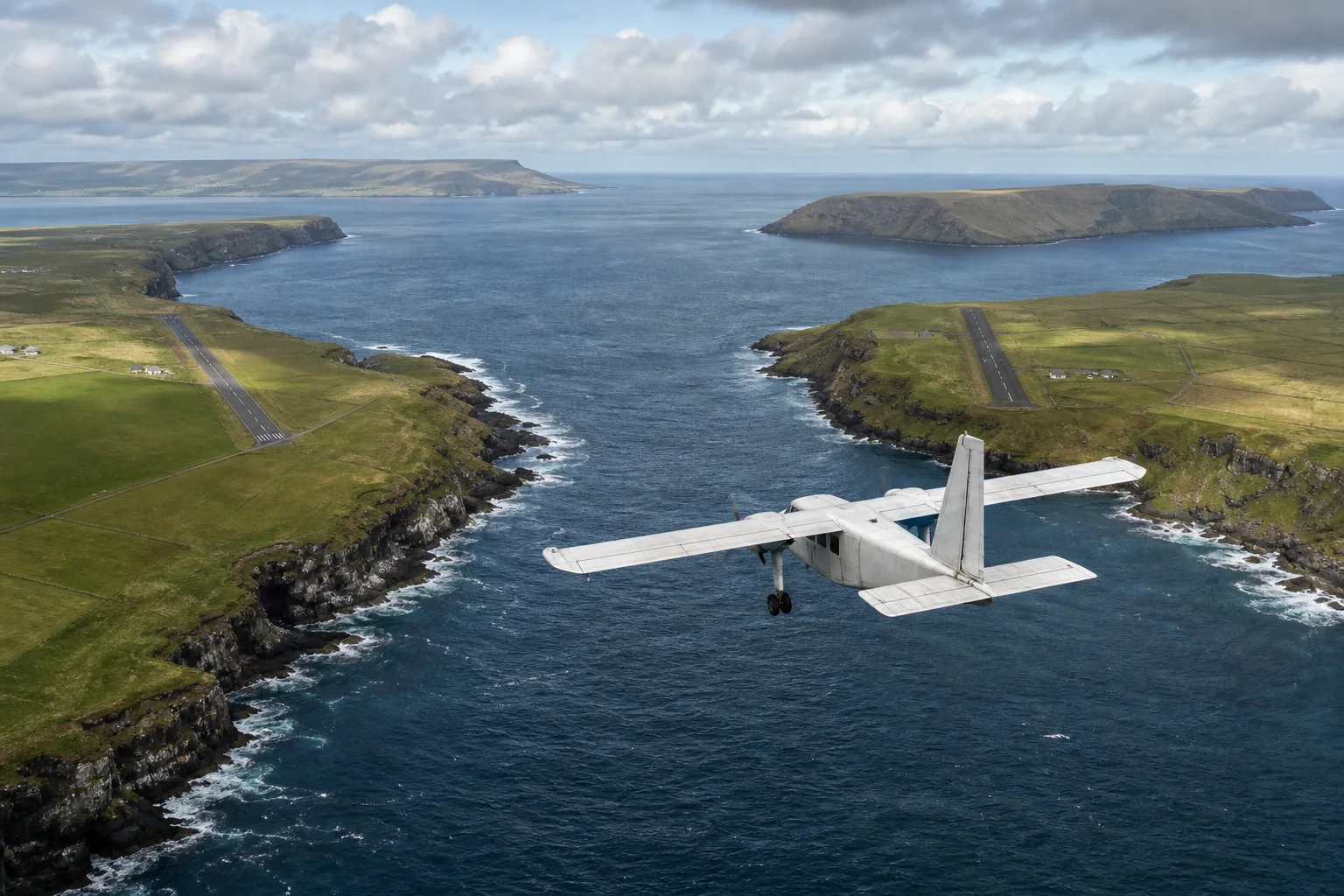
    A compact island aircraft approaching a short runway across a narrow channel in Orkney
    Editorial illustration: the two airports sit on neighboring islands separated by a short sea crossing.

    The exact time varies with wind, the aircraft’s movement on the ground and the day’s route. A timetable can call the journey two minutes even when the airborne portion is closer to a minute and a half. Guinness records an especially fast 53-second run reported by Loganair, but that is a record anecdote, not the normal promise made to passengers.

    There is another detail that makes the “flight” unusual: this is not a shuttle that endlessly loops between two airports. The Westray–Papa Westray sector operates when the scheduled inter-island service needs to call at both islands. A passenger must board on one island and leave the aircraft on the other.

    Why a tiny route matters

    Orkney’s outer islands are separated from the mainland and from one another by water, weather and limited transport options. The council’s current service description lists education, healthcare, work, shopping and other essential appointments among the everyday reasons residents use the flights. Loganair also says the inter-island service helps deliver mail and other essential services.

    A pilot greeting island residents beside a compact aircraft while a parcel is handed over
    Editorial illustration: the same aircraft that sets a record also supports practical island connections.

    That dual identity is the strange part. Visitors may book the sector for the novelty of taking the shortest scheduled flight, sometimes receiving a certificate from the local tourism association. For islanders, the aircraft is part of a transportation system shaped around real needs. The route’s record status draws attention; its continued public funding reflects geography.

    A record with a long memory

    Orkney’s inter-island air service began in 1967, and Loganair says it has maintained the links ever since. The service has changed aircraft, timetables and booking systems, but the underlying problem is familiar: small communities need reliable ways to reach one another and the mainland.

    So the world’s shortest scheduled flight is best understood in two ways at once. It is a wonderfully odd measurement of distance, and it is a working piece of infrastructure. A journey that lasts about as long as a song chorus can carry a resident to school, a visitor to another island or a parcel toward its destination. The weirdness is real—but so is the reason the flight exists.

    Sources: Orkney Islands Council: Internal Air Services; Orkney Islands Council: Loganair to continue operation of lifeline service; Loganair: Orkney Inter-Isles Flights; Guinness World Records: Shortest domestic scheduled flight; Westray & Papa Westray Tourist Association.
  • The Capitol Room Where a Whisper Can Travel the Curve

    The Capitol Room Where a Whisper Can Travel the Curve

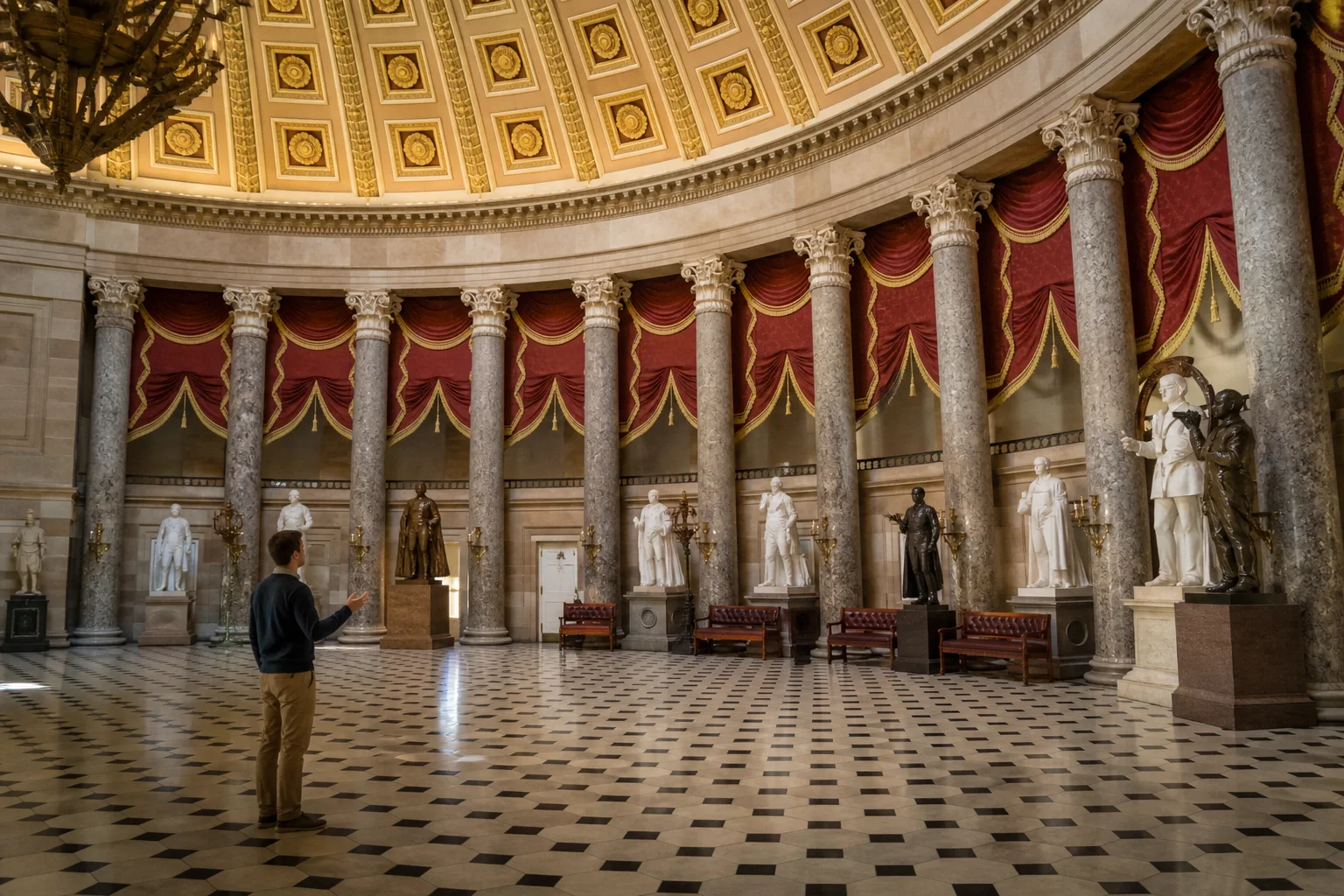
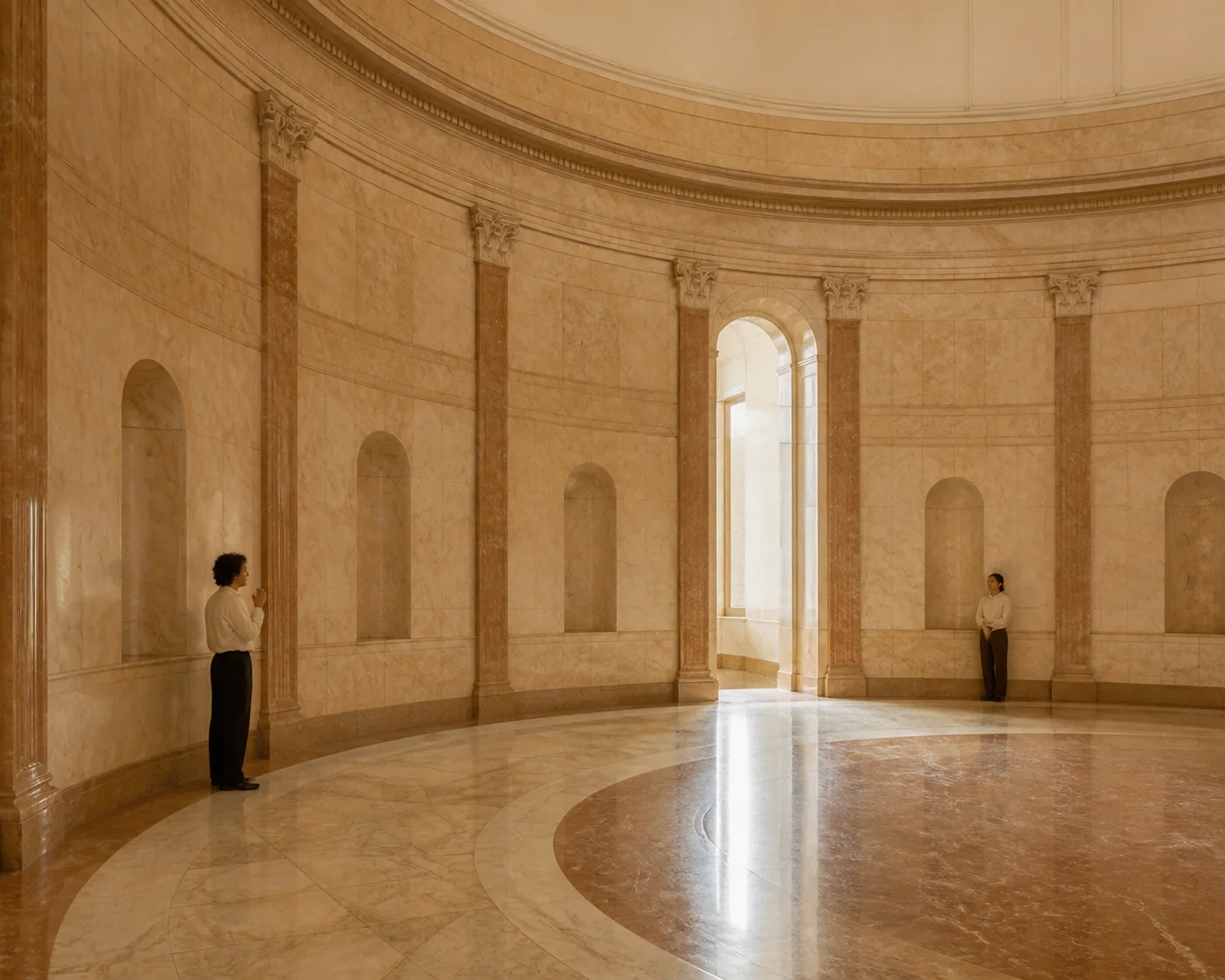
    Editorial illustration of the semicircular National Statuary Hall with a visitor speaking close to its curved wall.

    Editorial illustration.

    In one room of the U.S. Capitol, the most useful seat for hearing a person may not be the nearest one. National Statuary Hall has a half-dome that can carry a voice along its curved surface, creating the unusual effect known as a whispering gallery. In the right spots, the Architect of the Capitol says, a speaker many yards away may be clearer than someone closer at hand.

    The feature is an accident of architecture rather than a secret passage or an electronic trick. The room was built as the House of Representatives’ chamber, and its smooth curved ceiling created so much echo that ordinary debate was difficult. The House eventually moved to a new chamber; the former room became National Statuary Hall, which now displays part of the collection of statues contributed by the states.

    An old House chamber with a new job

    The present hall was rebuilt after British troops burned the earlier House chamber in 1814. According to the Architect of the Capitol, Benjamin Henry Latrobe and Charles Bulfinch completed the room between 1815 and 1819. It has the shape of an ancient amphitheater, with a half-dome, lofty columns, and a lantern that admits daylight through the ceiling.

    Its original use exposed the room’s acoustic problem. The Architect of the Capitol says that the smooth, curved ceiling promoted annoying echoes; draperies and even a reversed seating arrangement did not solve it. A separate, more functional House chamber was authorized in 1850, and representatives began meeting there in 1857.

    Editorial illustration showing two visitors at widely separated points along the curved wall of a semicircular hall.
    Editorial illustration of the curved room geometry behind the listening effect.

    How the whispering effect works

    Sound normally spreads outward from its source. A smooth curved surface can redirect some of those sound waves so they travel along the curve instead of dispersing evenly through a room. In National Statuary Hall, that geometry produces the peculiar listening locations documented by the Architect of the Capitol. It is a concentration effect, not a way to make a private conversation universally audible.

    The exact places that work have changed. The Architect of the Capitol notes that the modern echoes occur in different locations than they did in the 19th century because the hall’s floor and ceiling are no longer the same. That is an important limit on the legend: the effect depends on the room’s built surfaces, not on a permanent pair of magical floor tiles.

    A long-lived Capitol curiosity

    Historical visitors noticed the room’s strange acoustics, too. A Library of Congress digitization of an 1890 book, American Court Gossip, describes guides pointing out “whispering stones” in the marble floor and claims that a faint whisper could carry a long way. That is a period account, not a measurement, so it is best read as evidence of the room’s reputation rather than as a precise distance claim.

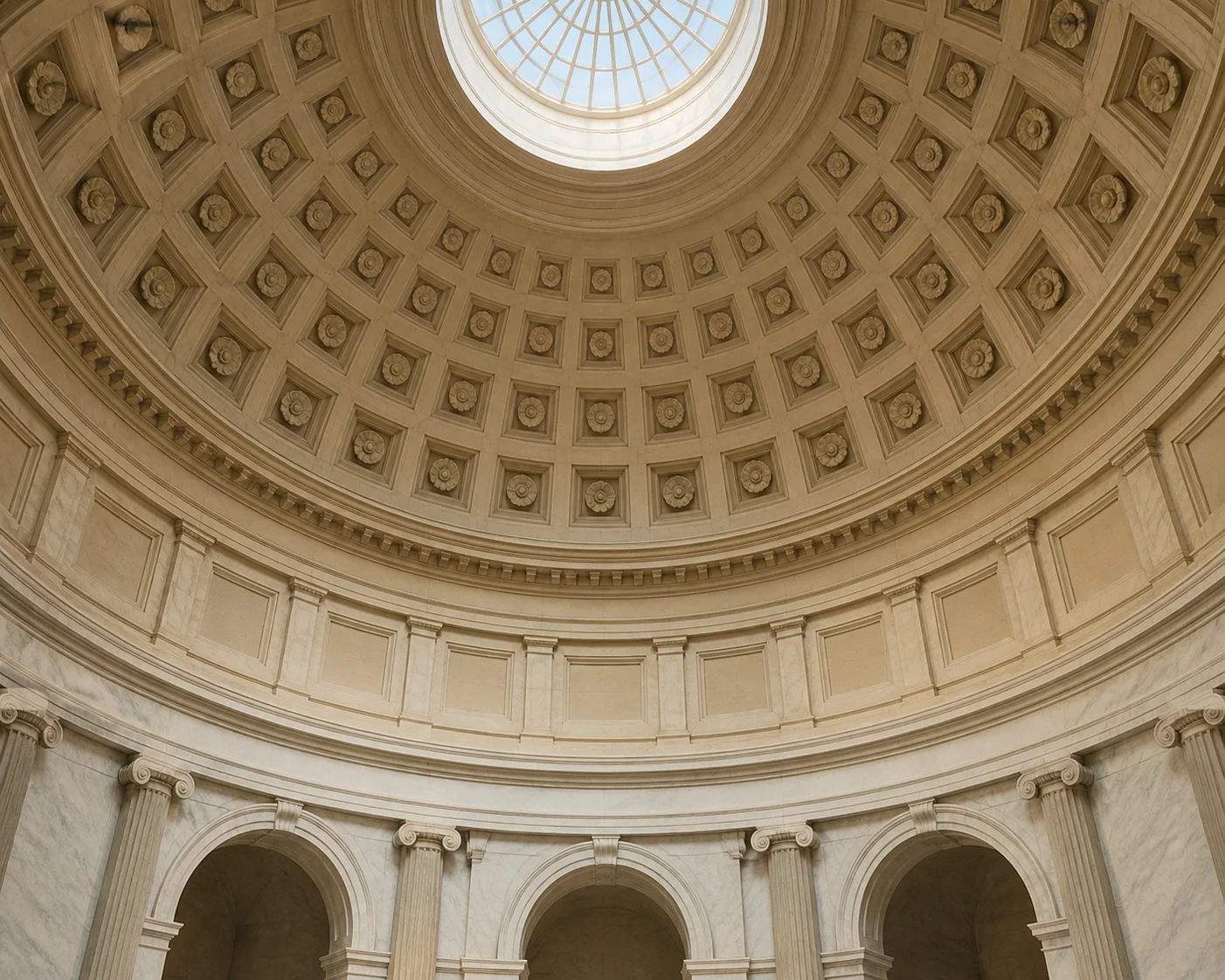
    Editorial illustration looking up at the coffered half-dome and central lantern of a historic Capitol hall.
    Editorial illustration of the hall’s half-dome and central ceiling lantern.

    Today the room’s awkward old acoustics are part of its appeal. The same half-dome that complicated legislative debate left behind an approachable physics lesson: in a carefully shaped space, where a sound begins can matter as much as how loudly it is made.

    Sources