Editorial illustrations accompany this feature.
In the late nineteenth century, a scruffy dog named Owney made a very unusual career out of following mailbags. He became such a familiar sight on railway post-office cars that clerks adopted him as their mascot, marked his travels with tags and medals, and helped turn a small Albany, New York, post-office regular into a globe-trotting piece of postal history.
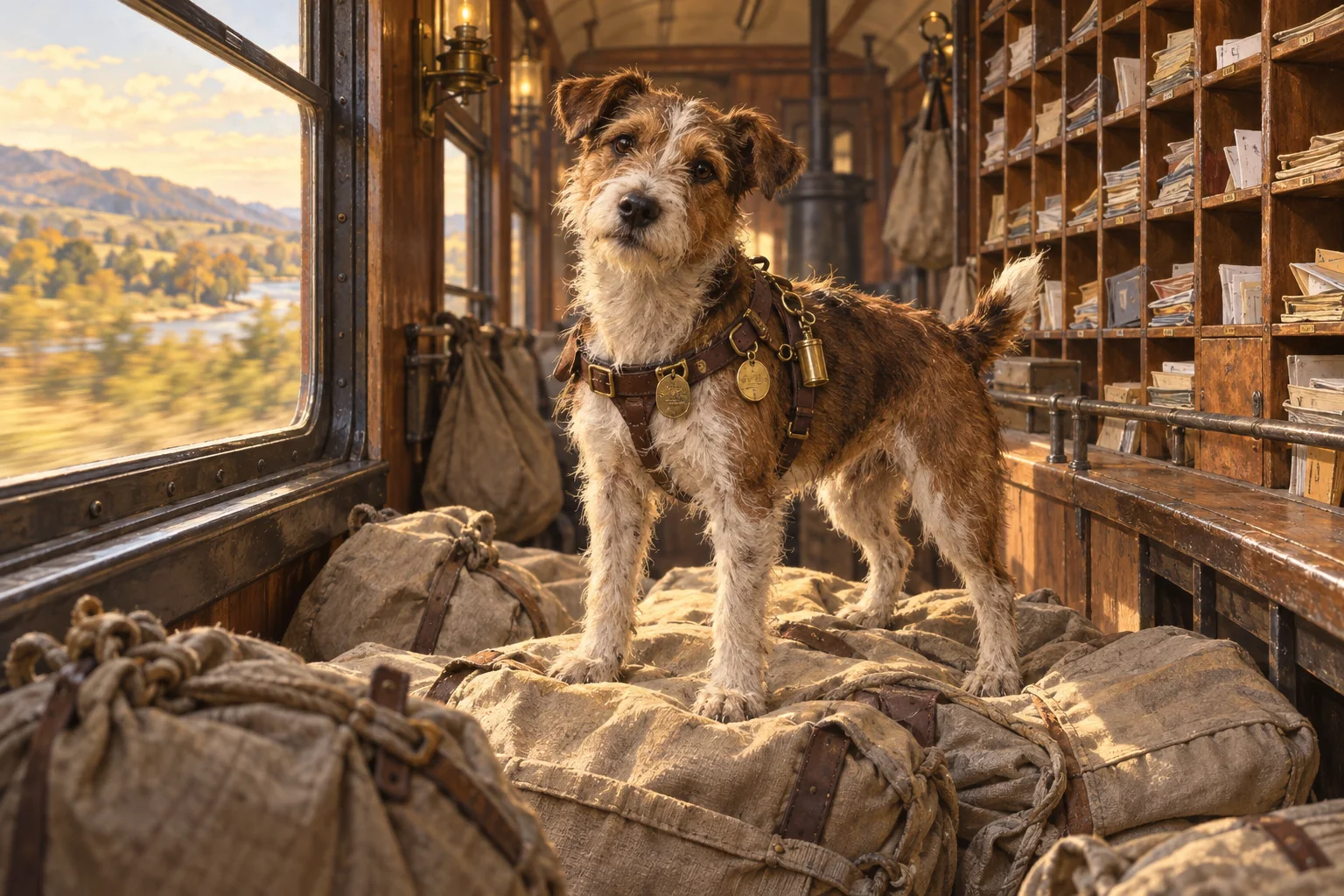
A dog who followed the mail
The U.S. Postal Service dates Owney’s Albany post-office life to 1888. Its account says the shaggy pup wandered into the post office, where postal employees welcomed him. He soon began following the mail from wagons onto railway mail cars.
Owney’s story also preserves a glimpse of working life aboard Railway Post Office cars, where clerks sorted mail while trains crossed the country. He traveled with the people and sacks that connected those routes. The National Postal Museum describes his trips expanding from New York across the United States and Canada, with some accounts also placing him in Mexico.
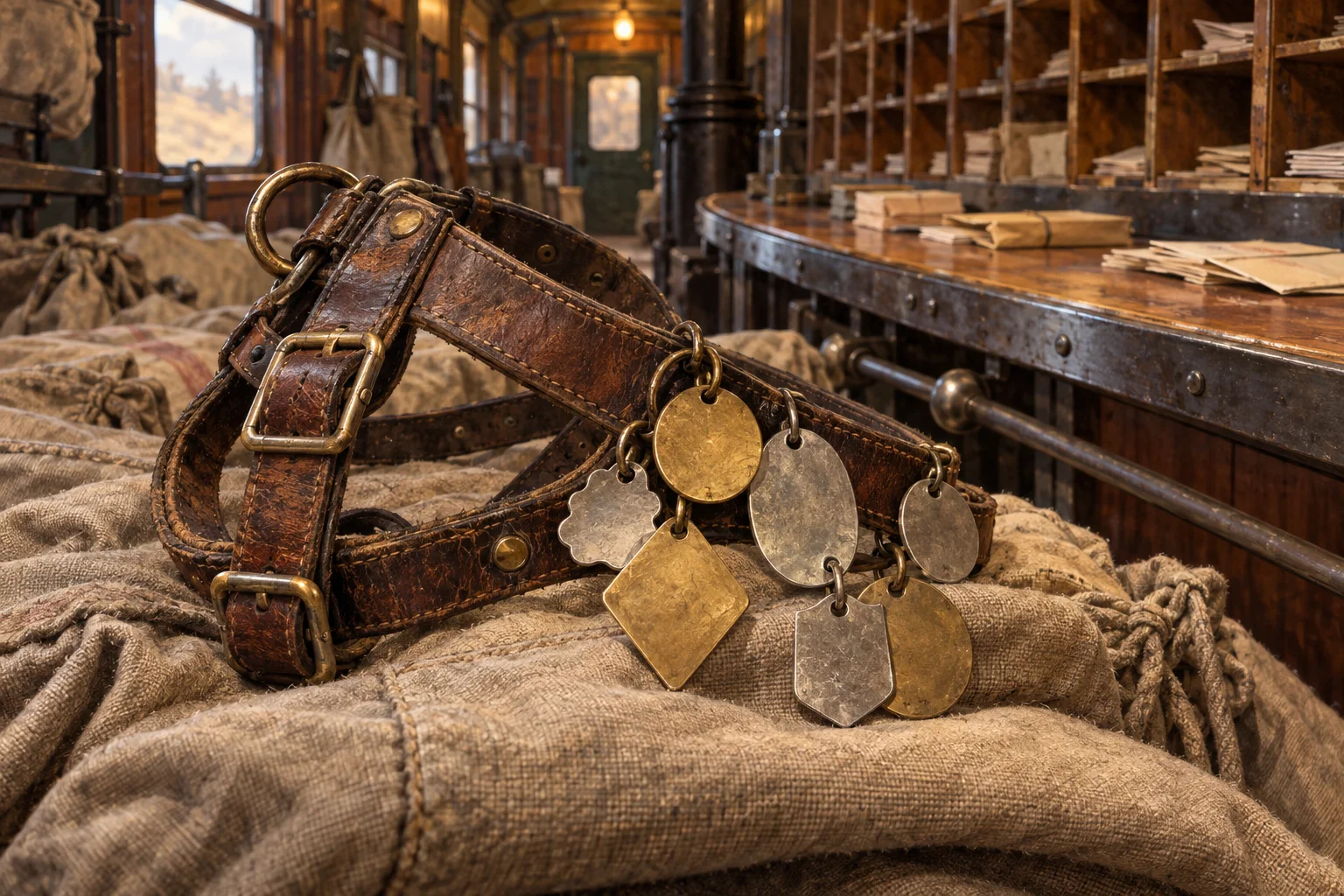
The harness became a travel record
Railway mail clerks treated Owney as a good-luck mascot and attached tokens to his collar to mark where he had been. The museum’s collection describes the assortment as including travel tags, medals, dog licenses, baggage checks, and even hotel-key tokens. As the collection grew, the weight became enough of a practical problem that Postmaster General John Wanamaker provided a harness that could distribute the souvenirs across Owney’s body.
It is a wonderfully strange precursor to a stamped passport or a luggage sticker: a traveling dog whose route could be read in small objects that jingled. The tags also tell a human story. Postal workers and people encountered along the way kept adding mementos, creating a collaborative record of an animal who had become part of the mail service’s public character.
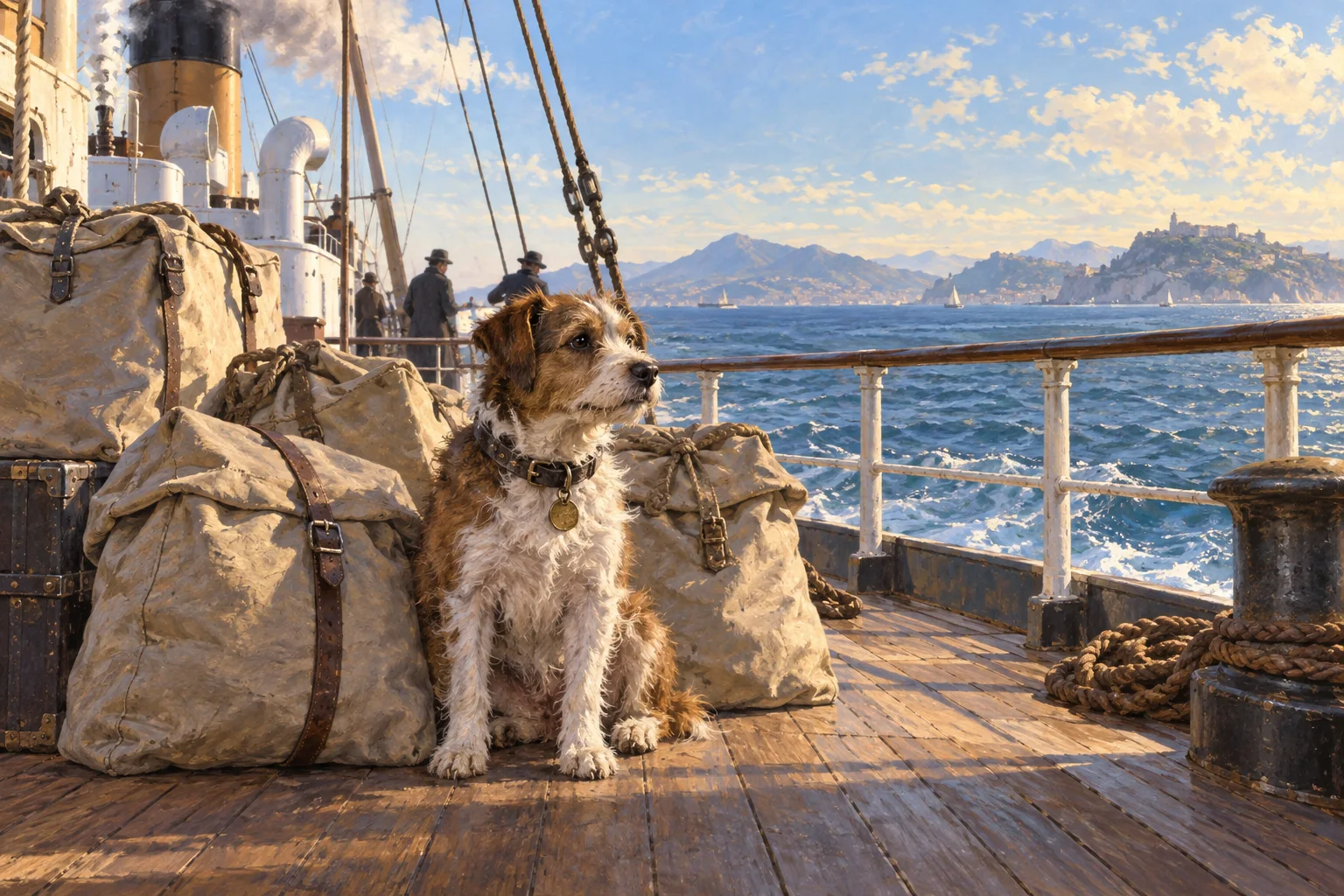
A round-the-world mail route
In 1895, Owney’s travels took on an international scale. The Library of Congress places his round-the-world journey between August 19 and December 23, with travel by steamer and rail through destinations that included Japan, China, and Singapore. The Postal Service also records visits to Suez, Algiers, and the Azores.
Owney’s famous trip belonged to a particular moment in the history of mail and transportation. He traveled in the care of the postal network and its workers, alongside mailbags that moved through rail and steamship connections. That infrastructure makes his story both odd and revealing.
Where to find Owney now
The Postal Service says Owney’s preserved body was entrusted to the Smithsonian Institution in 1911 and has been displayed at the National Postal Museum since 1993. The Library of Congress guide connects readers with digitized newspaper accounts from Owney’s own era, while the illustrations here serve as contemporary visual companions.
His appeal lasts because the evidence preserves both the improbable scale of the trip and its everyday origin. A dog liked mailbags. Clerks welcomed him. Tags accumulated. Then a railway mascot became a traveler whose story links an Albany post office, mail trains, a Tacoma promotion, and a trip around the world.
Leave a Reply