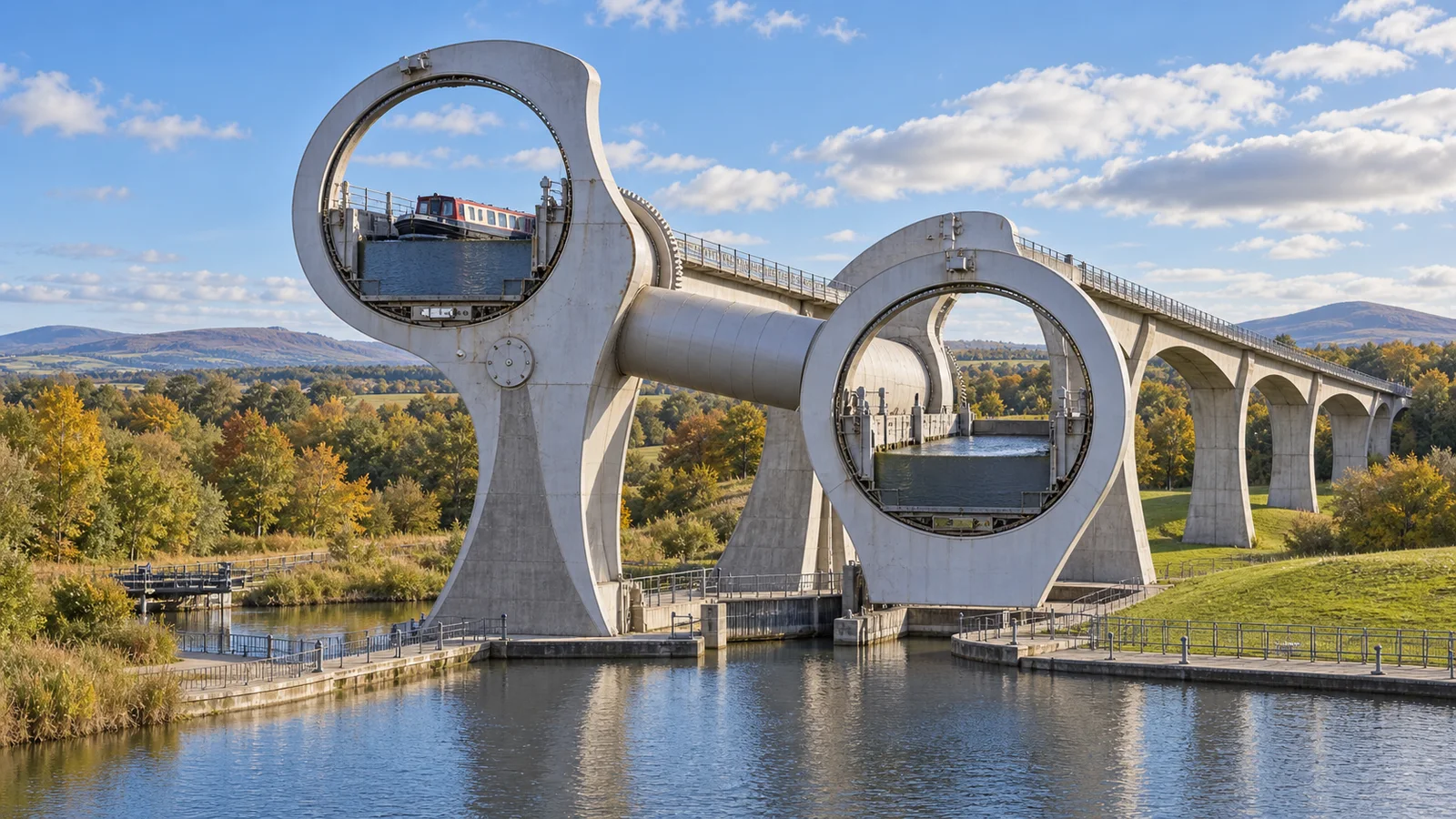
The Falkirk Wheel looks like a colossal piece of kinetic sculpture set beside a canal in central Scotland. Its job is unusually practical: it carries boats between the Forth & Clyde Canal and the Union Canal, which sits 35 metres higher. Instead of working through a long staircase of locks, a boat enters a water-filled gondola and takes a calm half-turn through the air.
A canal connection with a missing middle
The two waterways once met through a flight of 11 locks. According to the Scottish Canals account of the site, those locks were dismantled in 1933. When the Millennium Link project restored the connection, its designers faced the same change in height with a fresh piece of infrastructure.
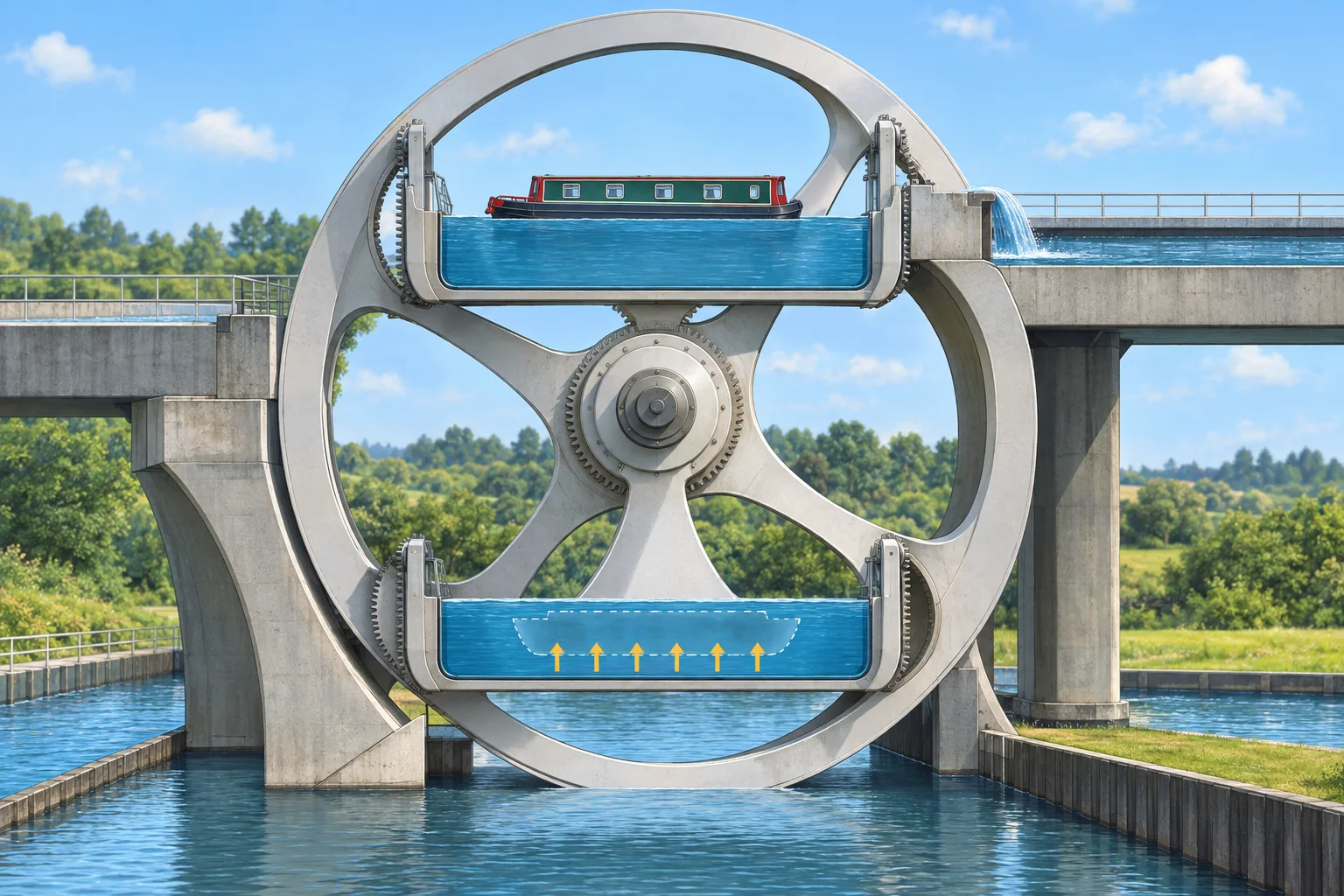
The wheel opened in 2002. The Association for Project Management’s project profile identifies it as the world’s only rotating boat lift. Two gondolas sit opposite each other on the structure, and each one is a floating canal basin large enough to carry a boat and its water.
Why a boat does not throw the balance off
The useful trick comes from buoyancy. A boat entering a gondola pushes aside an amount of water equal to its own weight. Water spills away as the boat comes in, so the gondola with the boat weighs the same as the opposite gondola holding water alone. That shared weight allows the wheel to rotate with a surprisingly small energy demand.
Scottish Canals says a rotation uses 1.5 kilowatt-hours of electricity. The wheel itself performs the main 24-metre lift; boats then use two locks and an aqueduct to complete the climb to the Union Canal. The journey connects two pieces of the Lowland canal network while turning a basic physical principle into an event worth watching.
A ride with real operating rules
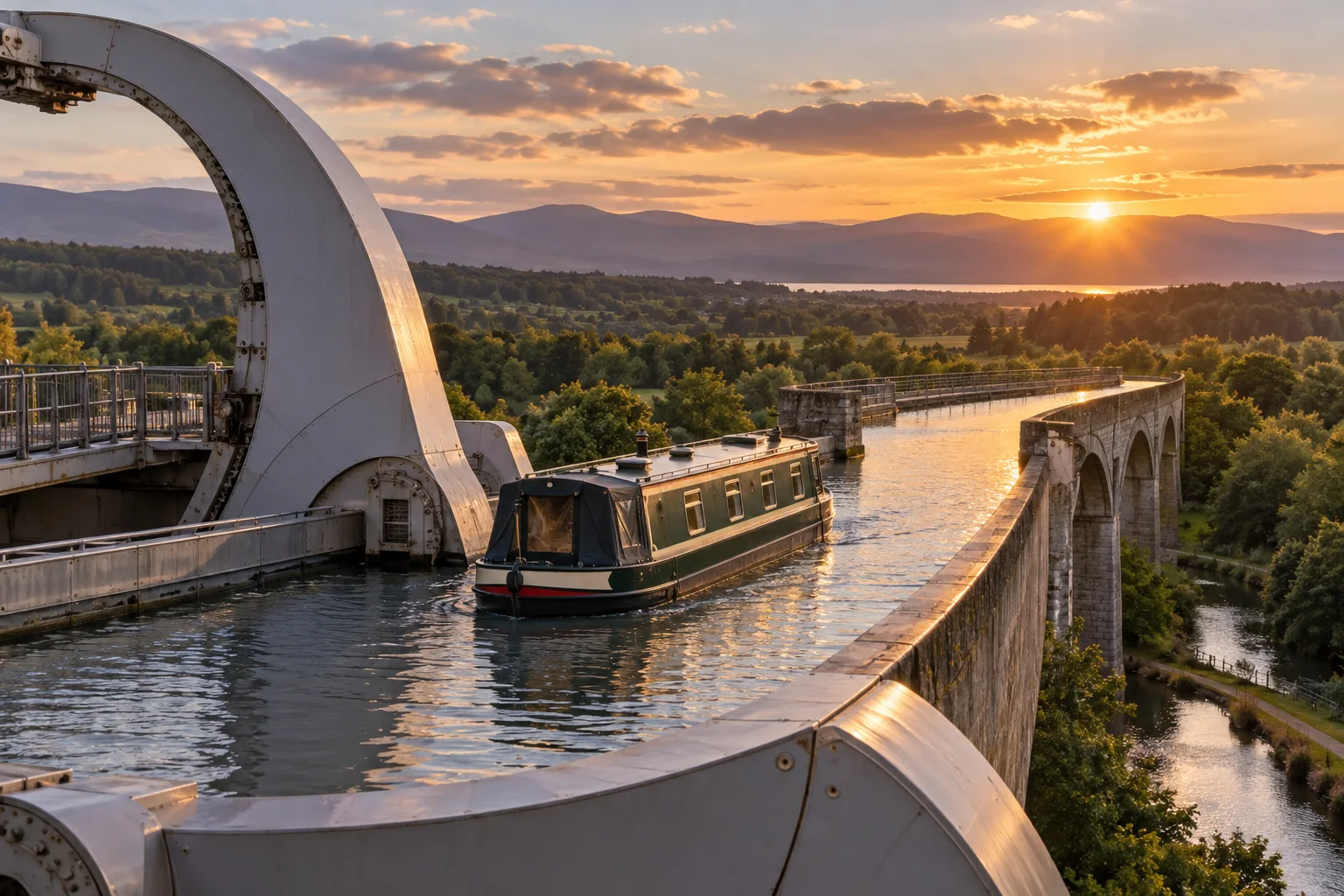
The wheel remains a working waterway, with staff managing vessel movements and safety. The Scottish Canals skipper’s guide sets out practical limits for craft using the passage and asks boaters to follow the gondola operator’s instructions. That operational detail is part of the appeal: the landmark is a piece of public engineering that still has a daily task.
Its silhouette invites comparisons with a Ferris wheel, yet the experience is closer to riding inside a carefully balanced canal. The water stays level inside each gondola as the structure turns. For the people aboard, the unusual view arrives through a simple promise: a boat can travel uphill while floating in the same water.
A very visible lesson in old physics
The Falkirk Wheel belongs to a long line of engineering shaped by Archimedes’ principle. Its drama comes from making that idea easy to see. One basin rises, one descends, and each remains equally heavy because the displaced water has already done the accounting.
That makes the wheel more than a striking stop on a canal route. It is a large, moving explanation of buoyancy—built so that a quiet canal boat can take the scenic way up.
Sources: Scottish Canals; Association for Project Management.