Category: Peculiar Traditions

  • Why U.S. Mail Still Travels by Mule to Supai

    Why U.S. Mail Still Travels by Mule to Supai

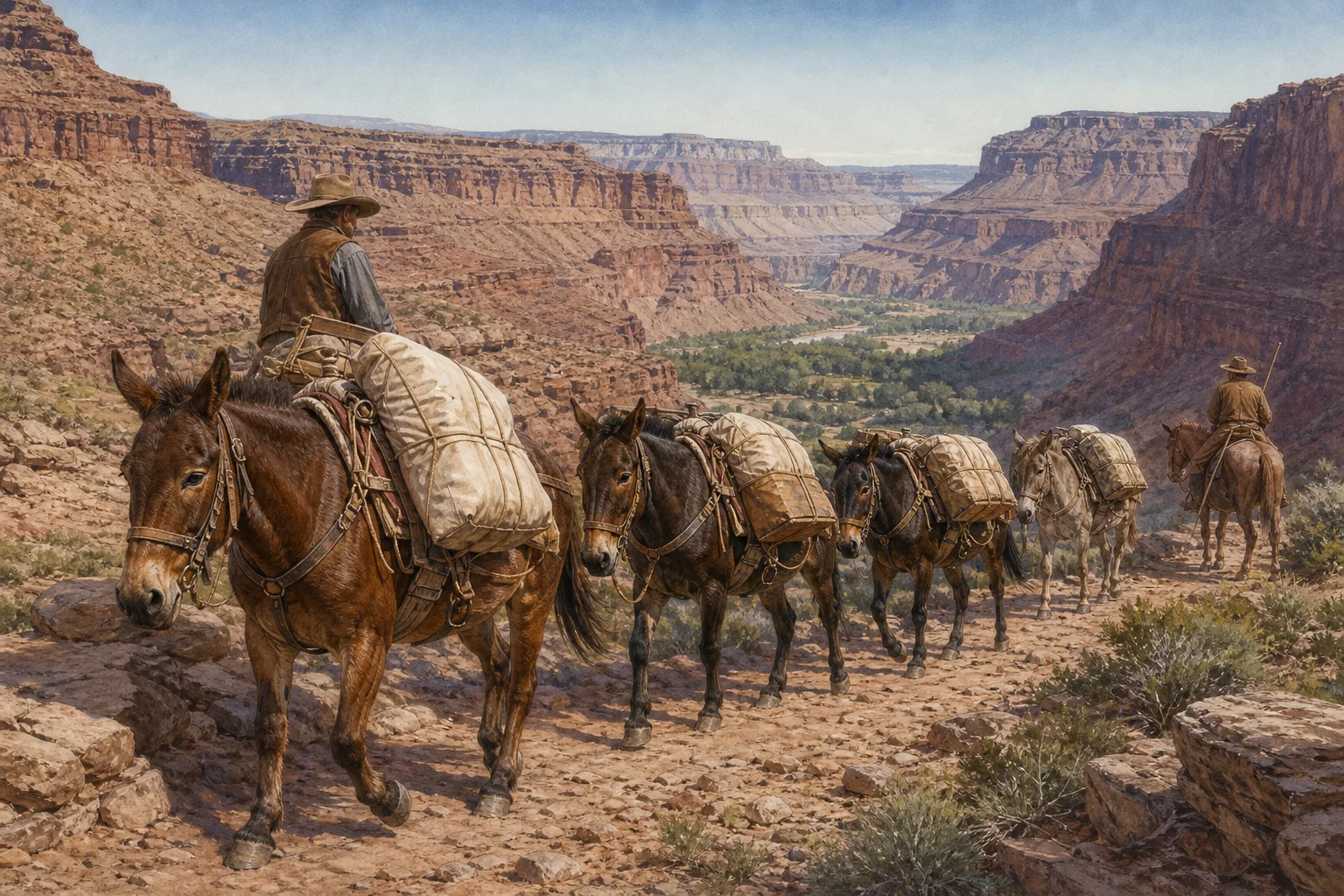
    Editorial illustration of a mule train carrying balanced mail sacks and supplies along a rocky canyon trail toward a green oasis.

    Editorial illustration: a working mule train on a canyon route.

    Most mail reaches a post office in a truck. Mail for Supai, Arizona, still has a final stretch that is much older: it goes down a canyon trail on the backs of mules.

    The United States Postal Service says mules have carried mail and goods to the Havasupai people since the 1930s. Its current Postal Facts page describes a weekday delivery using 10 to 22 mules and a wrangler on horseback, travelling nine miles down to the Supai Post Office. The agency says the descent takes about three hours and the return about five.

    A route shaped by geography

    Supai is in Havasu Canyon, a tributary on the south side of the Colorado River. The National Park Service says the village is not accessible by road, and that the Havasupai Tribe administers the reservation outside Grand Canyon National Park’s boundary and jurisdiction. That distinction matters: the canyon’s geography explains the route, but the community and its land are not a park attraction.

    For visitors, the Park Service lists an eight-mile hike from Hualapai Hilltop to Supai. USPS describes its delivery run as nine miles. Rather than turn the small difference into a mystery, this feature keeps each number with the agency that gives it: the Park Service’s visitor route and the Postal Service’s working delivery route are not presented as the same measurement.

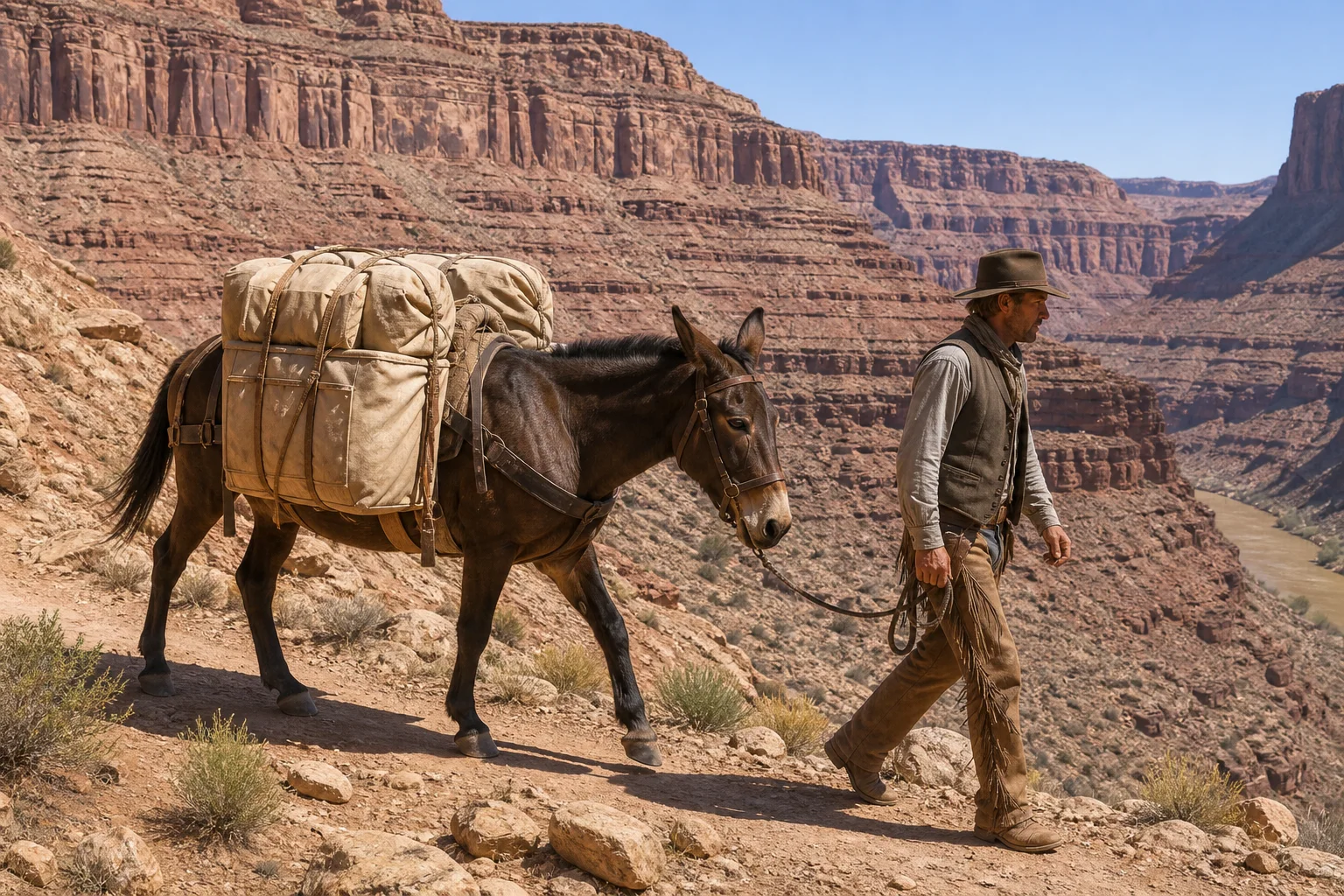
    USPS says each mule can carry up to 200 pounds, with weight divided between both sides for balance. The train carries more than letters and packages: the Postal Service also describes it as carrying goods. Outgoing mail travels back up the canyon, so this is a two-way postal link rather than a ceremonial one-way delivery.
    Editorial illustration of a pack mule with evenly balanced canvas loads walking beside a wrangler on a desert canyon trail.

    Editorial illustration: balanced loads on a working pack mule.

    Why the mules are still there

    The oddity is not that a modern post office somehow forgot about roads. It is that the route has a roadless destination. A mule train can use the canyon trail without turning a remote community’s connection to the mail into a reason to build a road through it.

    USPS has called the Supai service its most unusual delivery method. Its postal-history material has also described the route as the nation’s last mule-train delivery. Those are agency characterizations of a real, continuing service—not evidence for a larger frontier myth. The useful verified facts are narrower: there is an operating Supai Post Office, the community lacks road access, and USPS says a mule train carries its mail and goods on the canyon route.

    Fact, folklore, and the limits of the story

    Documented fact: USPS and the National Park Service independently describe the mail service and Supai’s roadless setting. The Postal Service’s current figures for mule count, weekday schedule, travel time, load capacity, and nine-mile delivery run are attributed to USPS rather than treated as independently measured here.

    Folklore and shorthand: Calling the route a living version of the Pony Express can make a tidy headline, but it is only a comparison. The available official sources describe a modern contract delivery service for a present-day community, not a reenactment of a 19th-century system.

    What this feature does not claim: It does not claim that every item destined for Supai arrives only by mule, that the trail is open to casual day visitors, or that the delivery route establishes ownership or jurisdiction over Havasupai land. The verified strange part is enough: a working U.S. post office is still linked to the national mail by a carefully loaded mule train.

    Sources

  • Why U.S. Mail Still Travels by Mule to Supai

    Why U.S. Mail Still Travels by Mule to Supai

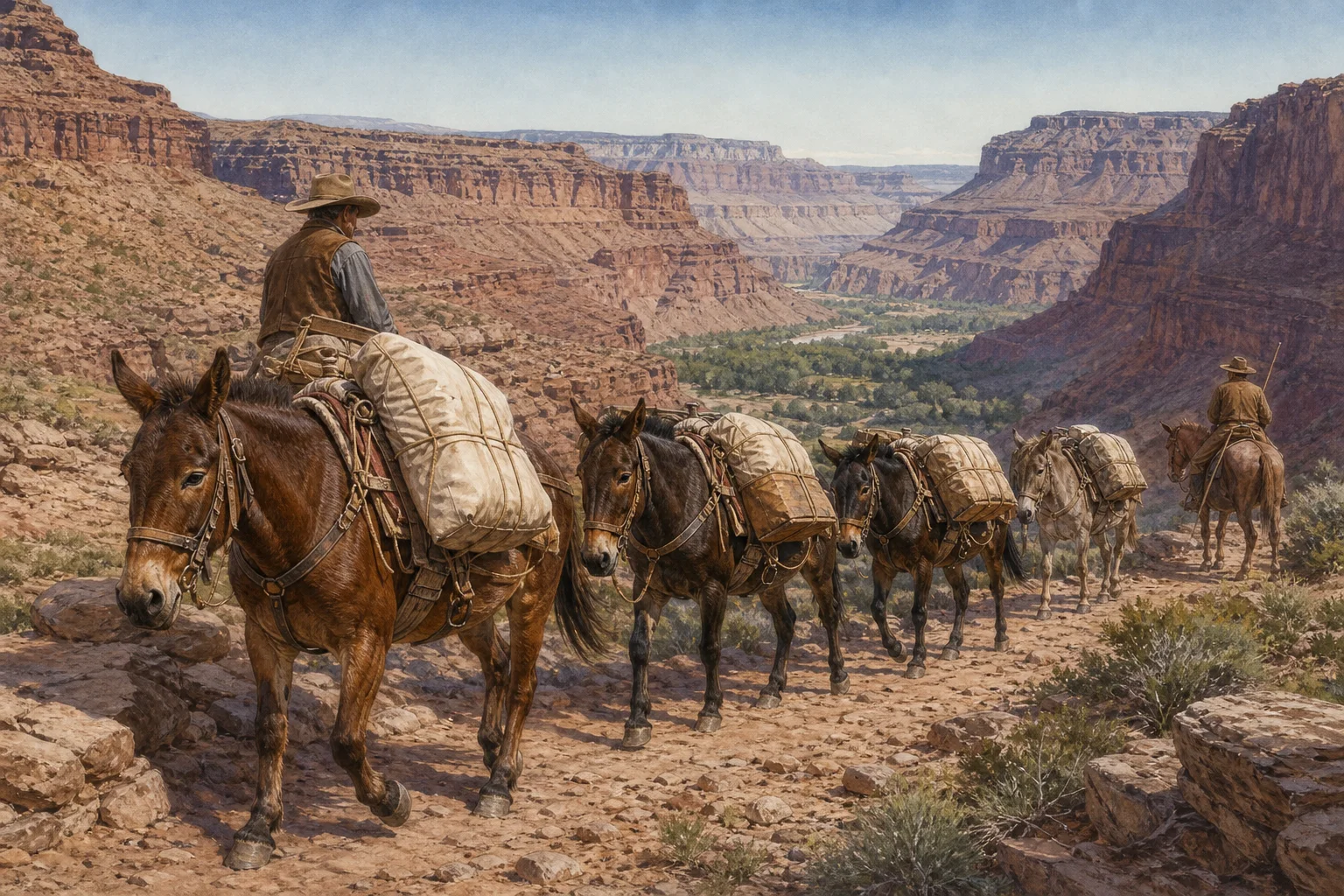
    Editorial illustration of a mule train carrying balanced mail sacks and supplies along a rocky canyon trail toward a green oasis.

    Editorial illustration: a working mule train on a canyon route.

    Most mail reaches a post office in a truck. Mail for Supai, Arizona, still has a final stretch that is much older: it goes down a canyon trail on the backs of mules.

    The United States Postal Service says mules have carried mail and goods to the Havasupai people since the 1930s. Its current Postal Facts page describes a weekday delivery using 10 to 22 mules and a wrangler on horseback, travelling nine miles down to the Supai Post Office. The agency says the descent takes about three hours and the return about five.

    A route shaped by geography

    Supai is in Havasu Canyon, a tributary on the south side of the Colorado River. The National Park Service says the village is not accessible by road, and that the Havasupai Tribe administers the reservation outside Grand Canyon National Park’s boundary and jurisdiction. That distinction matters: the canyon’s geography explains the route, but the community and its land are not a park attraction.

    For visitors, the Park Service lists an eight-mile hike from Hualapai Hilltop to Supai. USPS describes its delivery run as nine miles. Rather than turn the small difference into a mystery, this feature keeps each number with the agency that gives it: the Park Service’s visitor route and the Postal Service’s working delivery route are not presented as the same measurement.

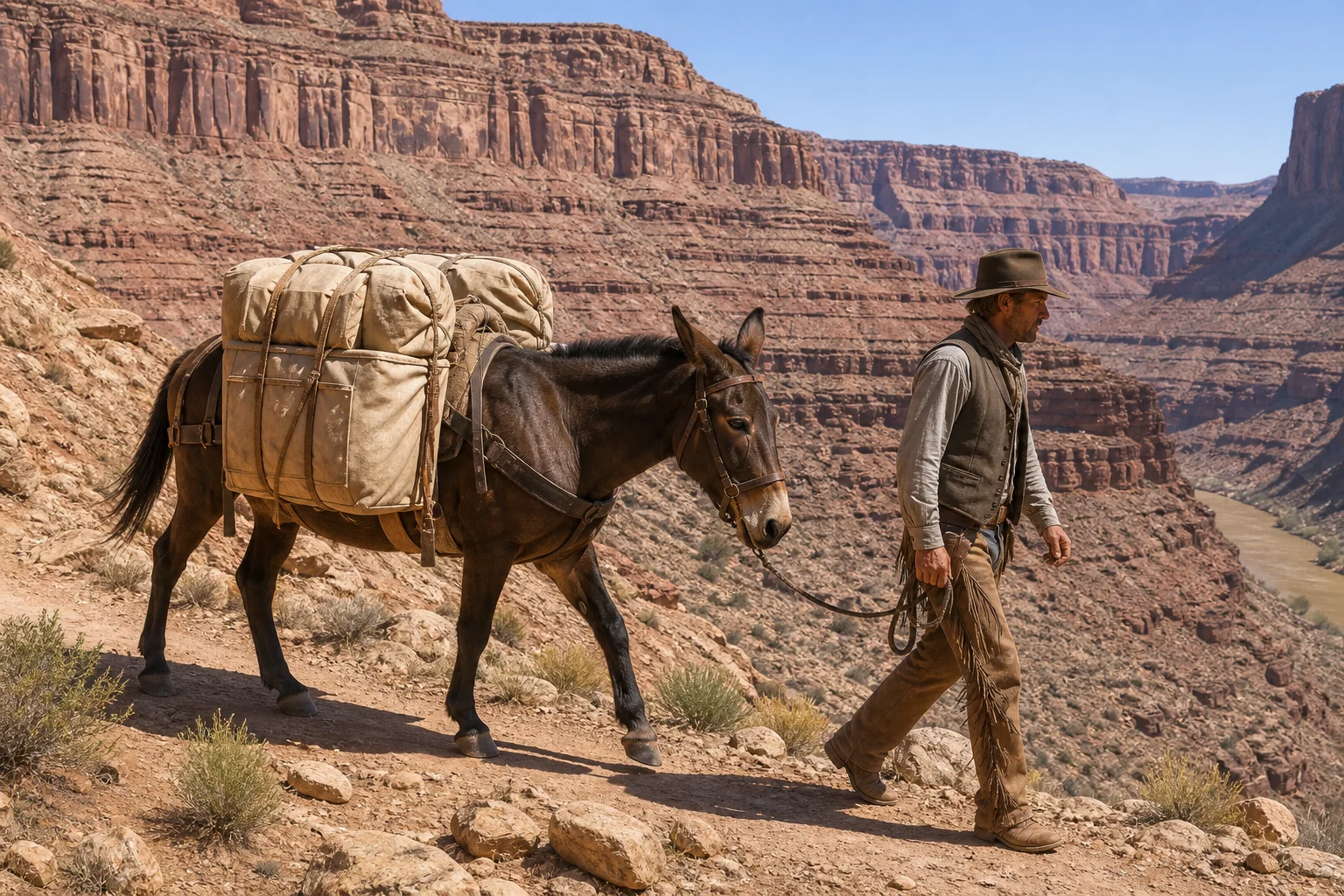
    USPS says each mule can carry up to 200 pounds, with weight divided between both sides for balance. The train carries more than letters and packages: the Postal Service also describes it as carrying goods. Outgoing mail travels back up the canyon, so this is a two-way postal link rather than a ceremonial one-way delivery.

    Editorial illustration of a pack mule with evenly balanced canvas loads walking beside a wrangler on a desert canyon trail.

    Editorial illustration: balanced loads on a working pack mule.

    Why the mules are still there

    The oddity is not that a modern post office somehow forgot about roads. It is that the route has a roadless destination. A mule train can use the canyon trail without turning a remote community’s connection to the mail into a reason to build a road through it.

    USPS has called the Supai service its most unusual delivery method. Its postal-history material has also described the route as the nation’s last mule-train delivery. Those are agency characterizations of a real, continuing service—not evidence for a larger frontier myth. The useful verified facts are narrower: there is an operating Supai Post Office, the community lacks road access, and USPS says a mule train carries its mail and goods on the canyon route.

    Fact, folklore, and the limits of the story

    Documented fact: USPS and the National Park Service independently describe the mail service and Supai’s roadless setting. The Postal Service’s current figures for mule count, weekday schedule, travel time, load capacity, and nine-mile delivery run are attributed to USPS rather than treated as independently measured here.

    Folklore and shorthand: Calling the route a living version of the Pony Express can make a tidy headline, but it is only a comparison. The available official sources describe a modern contract delivery service for a present-day community, not a reenactment of a 19th-century system.

    What this feature does not claim: It does not claim that every item destined for Supai arrives only by mule, that the trail is open to casual day visitors, or that the delivery route establishes ownership or jurisdiction over Havasupai land. The verified strange part is enough: a working U.S. post office is still linked to the national mail by a carefully loaded mule train.

    Sources