On a rocky hillside in Northumberland, a country house grew into a Victorian experiment powered by the landscape around it. At Cragside, William and Margaret Armstrong used lakes, streams and carefully arranged machinery to bring water, light and small mechanical conveniences into daily life.
The Armstrongs began with a modest sporting lodge in 1863. Over the next three decades, the house and grounds expanded into a place where engineering met domestic comfort: gravity-fed plumbing, a hydraulic lift, electric lighting and a kitchen spit turned by water all belonged to the same estate.
A lake helped run the house
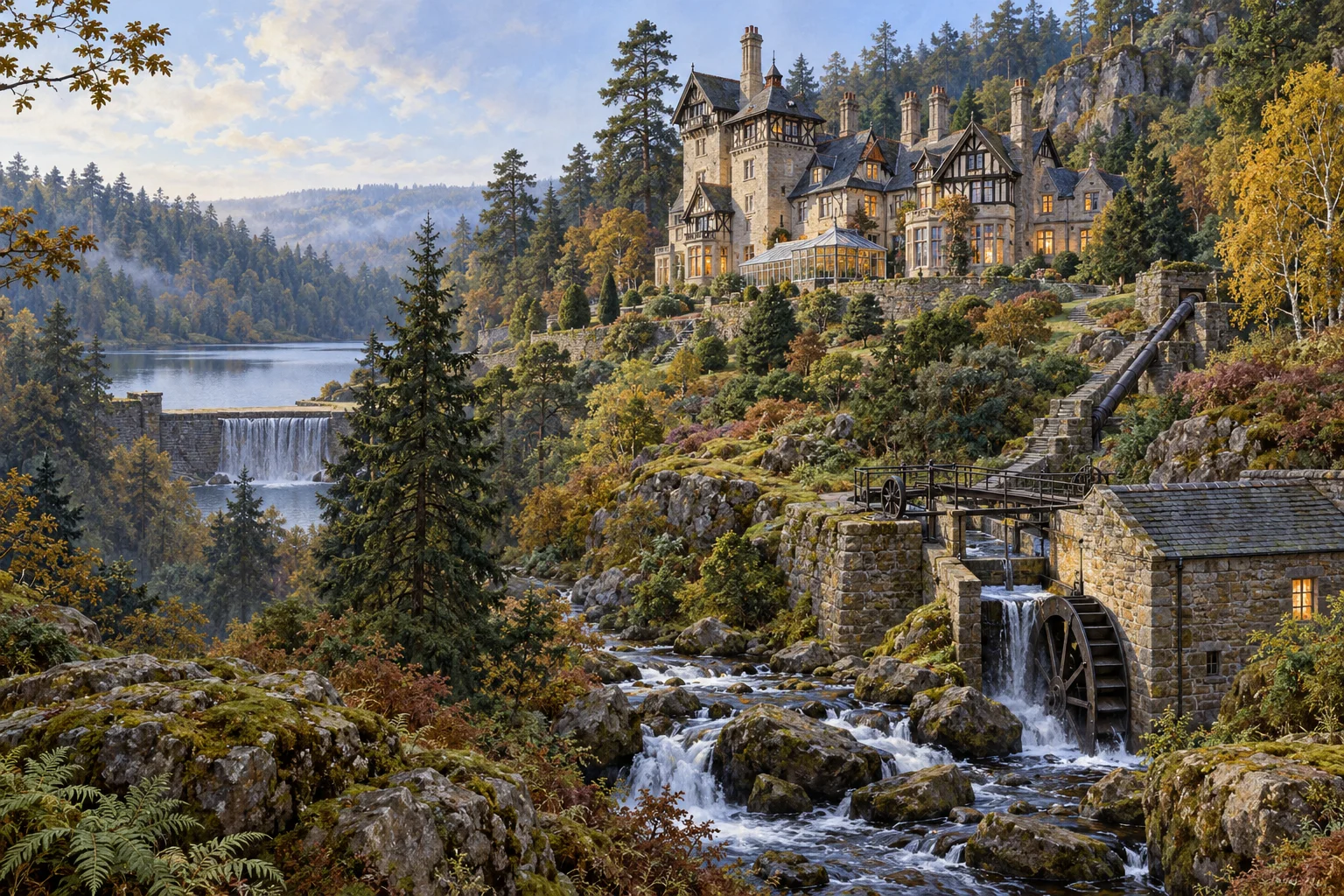
One early piece of the system began at Tumbleton Lake. Water powered a machine that pumped spring water to a reservoir above the house. From there, gravity carried it down to the rooms, supplying plumbing and helping operate a hydraulic lift. In the kitchen, a miniature water mill turned the roasting spit.
William Armstrong adapted emerging technology to the terrain, while Margaret Armstrong brought botanical knowledge and a shared interest in natural science to the estate’s gardens. The couple transformed a bare moorside into a designed landscape of engineered waterfalls, planted slopes and five artificial lakes. The National Trust describes the grounds as both beautiful and functional: water served as a resource and as part of the garden’s drama.
Electric light arrived in stages
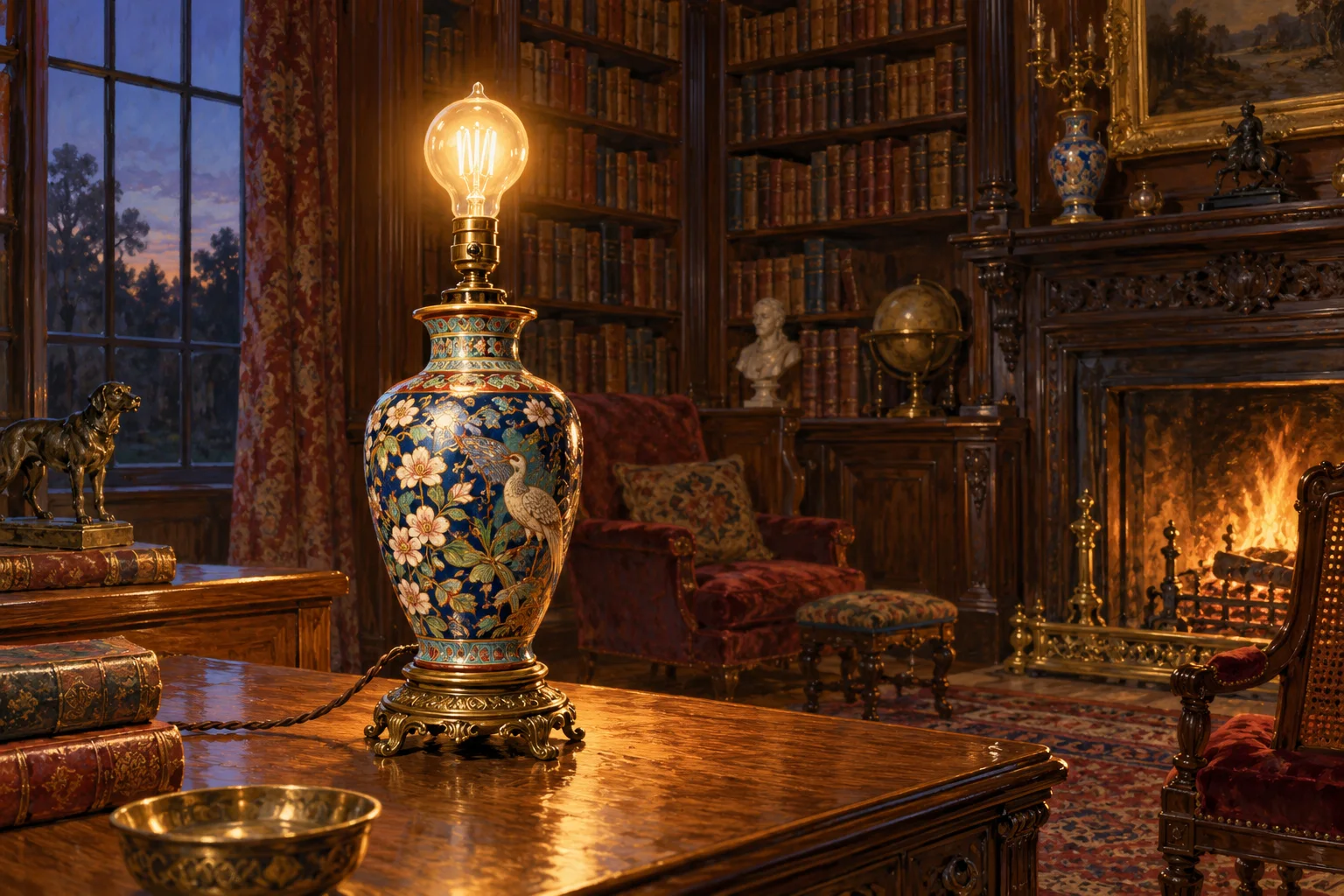
Cragside’s first electric lighting appeared in the Gallery in 1878, using carbon-arc lamps. In 1880, the Library received incandescent bulbs developed by Joseph Swan, a Newcastle inventor who worked with Armstrong. The National Trust identifies the installation as the first domestic use of Swan’s incandescent bulbs.
The Library’s incandescent bulbs sat atop cloisonné vases adapted as lamp stands—a decorative object turned into part of the electrical design. The National Trust describes the room as the place where electric light began at Cragside.
The lighting project kept evolving. Armstrong later built a second hydroelectric station as demand grew, with water from the Nelly’s Moss lakes supplying turbine-driven dynamos. Cragside’s unusual character came from the way its systems connected: a lake could feed a pump, a reservoir could send water through the house, and a room’s lamp could draw its current from the same carefully managed landscape.
Today, Cragside is cared for by the National Trust. Its story offers a close-up view of Victorian invention at home, where ambitious engineering showed up in everyday details—from a rising lift to a lamp switched on by setting down a vase.